
Source: YouTube
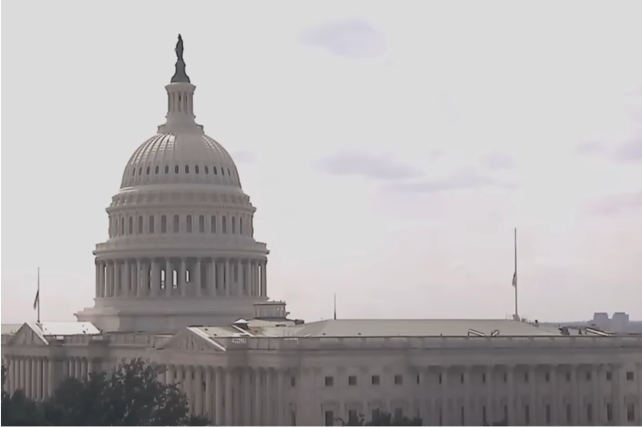
On Wednesday, the House soundly rejected a GOP funding plan proposed by Speaker Mike Johnson, marking a major setback for Republican leadership. In a 220-202 vote, 14 Republicans crossed party lines by joining Democrats to block the bill, which also included the controversial SAVE Act. This vote intensifies the looming threat of a government shutdown, with funding set to expire on September 30.
What the GOP Funding Plan Entailed
Johnson’s funding plan sought to extend federal funding for six months while incorporating the SAVE Act, a measure that would require proof of U.S. citizenship to register to vote in federal elections. This addition faced strong opposition from Democrats and even some Republicans, who felt the voting provision was unnecessary and a distraction from pressing fiscal concerns.
The SAVE Act has long been championed by Donald Trump, who falsely claims widespread voter fraud in previous elections. Noncitizen voting is already illegal in federal elections, and there is little evidence of fraud. However, the SAVE Act’s inclusion was seen as a political gesture to energize Trump’s base ahead of the November election.
Democrats Favor a Three-Month Plan
Democrats have pushed for a three-month funding extension rather than the six-month plan. They believe a shorter extension provides a practical timeframe to negotiate long-term spending agreements after the November elections. By delaying major decisions until after the election, Democrats argue that Congress can tackle fiscal issues more effectively without rushing into compromises that could harm national security or other priorities.
Additionally, Democrats oppose the SAVE Act’s inclusion, asserting that it is redundant and politically charged. Noncitizen voting is already illegal, and they view the act as an unnecessary distraction from fiscal responsibilities. By advocating for a clean, short-term funding plan, Democrats aim to avoid political roadblocks and maintain focus on critical budget negotiations.
14 Republicans Break Rank
The rejection of the bill was largely expected, given the dissent within the GOP itself. Fourteen Republicans, ranging from fiscal conservatives to defense hawks, opposed the six-month extension. Fiscal conservatives want spending cuts, while defense-focused members expressed concern that a six-month extension would prevent long-term planning for national security.
Johnson’s failure to rally support raises questions about his leadership and the Republican Party’s ability to stay unified ahead of crucial budget negotiations. Without an alternative funding plan, a government shutdown is a very real possibility.
Trump Called for a Government Shutdown
GOP Presidential nominee Donald Trump played a significant role in the downfall of this funding bill. Hours before the vote, Trump took to social media and urged Republicans to vote down any plan that didn’t fully include the SAVE Act. His call for a shutdown if election security measures weren’t passed placed GOP lawmakers in a difficult position. With Trump still wielding considerable influence over the party, many Republicans find themselves torn between his demands and the reality of a looming government shutdown.
Despite Trump’s insistence, many Republicans, including Senate Minority Leader Mitch McConnell, have publicly voiced their opposition to a shutdown, arguing that it would be politically damaging so close to the election.
What’s Next for Speaker Mike Johnson?
Following the bill’s defeat, Speaker Johnson faces the unenviable task of crafting a new funding plan. While some Republicans are pushing for a clean three-month extension that would avoid a shutdown, this could alienate the far-right faction of the party, which opposes any plan that doesn’t include cuts or the SAVE Act.
With just days left until the September 30 deadline, Johnson must balance the demands of his party’s various factions and find a compromise that prevents a shutdown while preserving GOP unity. The rejection of the GOP funding plan underscores the deep divisions within the Republican Party. With Trump pushing for stricter election security measures and some Republicans focused on avoiding a shutdown, Speaker Johnson’s leadership is being tested. As the government shutdown deadline approaches, all eyes are on the GOP to see whether they can come together or face political fallout.
Do you agree with calls for a government shutdown? Or, do you prefer a GOP funding plan that includes the SAVE Act? Tell us what you think!
Social Post: The House has rejected Speaker Johnson’s #GOPFundingPlan. 14 Republicans crossed the aisle, while Trump pushes for a government shutdown. #TheCapitalist