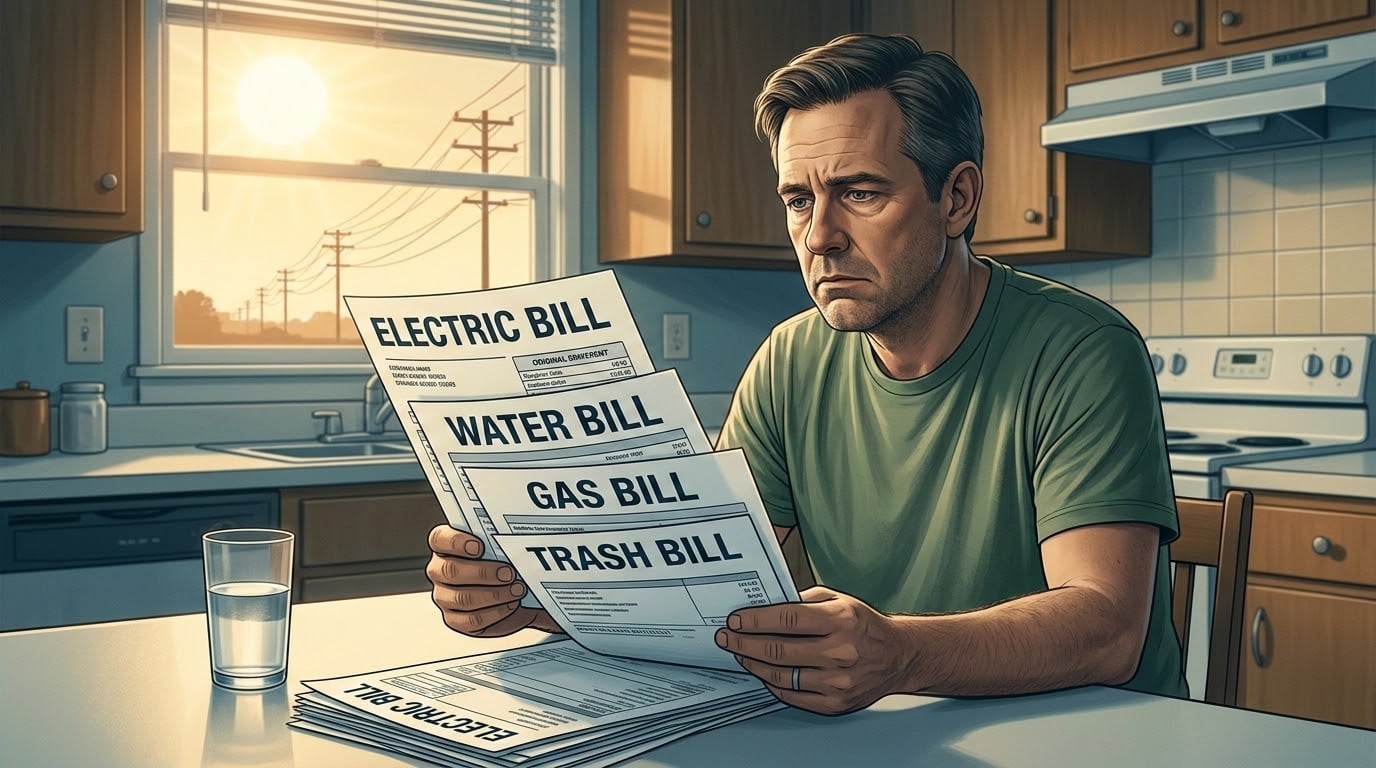

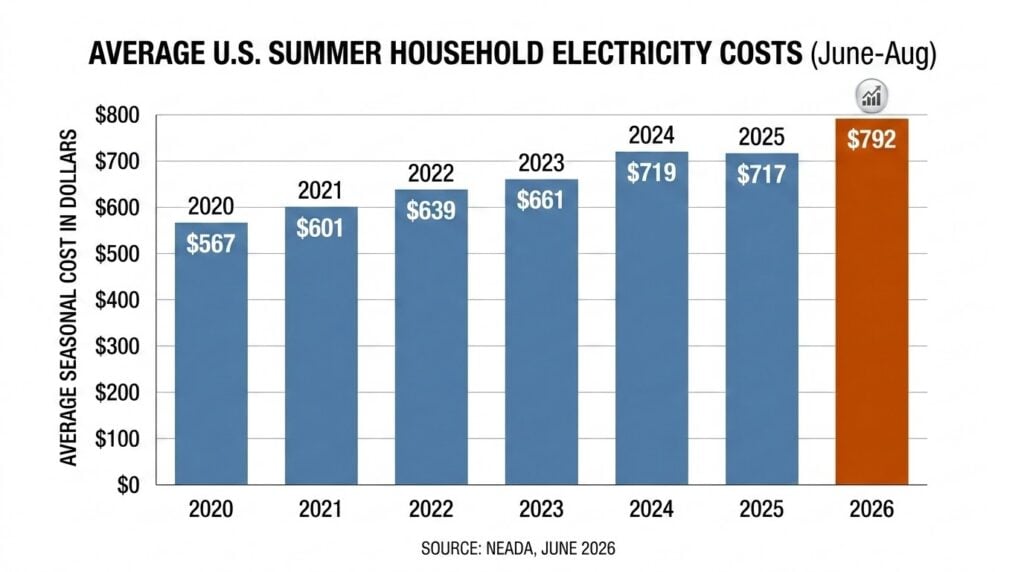
One in six American households can’t pay electric bills right now. That figure comes from the National Energy Assistance Directors Association’s June 2026 summer cooling report, and it isn’t a forecast. It’s where things stand today, before July and August bills arrive. The average summer electricity bill is projected at $792 this season, up 10.5% from $717 last summer and up nearly 40% since 2020, according to NEADA. The national average monthly residential bill climbed from $121 in 2021 to $156 in 2025, a 29% increase over four years, according to U.S. Energy Information Administration data. This summer extends that trend.
Four mechanisms are driving the increase at the same time. State utility commissions are approving rate hike requests at more than double their prior pace: utilities sought or secured more than $34 billion in rate increases in the first three quarters of 2025 alone, according to consumer advocacy organization PowerLines. Data centers now account for 4% of total U.S. electricity consumption, a figure the EIA expects to more than double by 2030, and industrial demand competes directly with residential load. Utilities are spending billions to modernize aging grid infrastructure, and those costs pass to every ratepayer regardless of region. Tariffs on steel and aluminum, the primary materials used to build and repair transmission lines, have added further to construction costs that now show up on your bill.
None of these four drivers is reversing in 2026. Industry experts were direct about it in January. “Customers, don’t expect electric bill relief in 2026,” one utility industry analysis concluded. “The cake is baked.”
Why So Many Americans Can’t Pay Electric Bills Right Now
For the 40% of households earning under $50,000 that report difficulty paying energy bills, per NEADA, the documented next step is a shutoff notice. Utilities disconnected service 3.5 million times in 2024, a number NEADA projects could reach 4 million in 2025 as delinquency spreads into middle-income households for the first time. Energy bills are now straining the finances of 68% of Americans, according to a Consumer Reports survey of more than 2,100 adults conducted in November 2025. A follow-up survey in March 2026 found that many Americans had paid utility bills late in the prior six months, and 84% said they were at least somewhat concerned that energy costs would be an increased burden going forward.
The people who can’t pay aren’t abstract data points. Rick Martin, a retired mechanic on a fixed income, told a North Carolina public hearing on proposed Duke Energy rate increases: “I spend a lot of my time worrying about every bill that I receive. I cannot stretch my money any further.” In West Virginia, Rebecca Michalski, who lives on a fixed income and uses a walker, got a February charge of $940.08, more than her monthly check. She took out a loan after a shutoff notice arrived during an extended cold snap. “Every time you see that power bill, you’re just sick,” she said.
This is happening in the same budget environment where household debt is reaching post-Depression highs and national debt interest payments now consume more federal spending than Medicare. The pressure’s coming from multiple directions at once.
You’re Also Paying for the Neighbors Who Couldn’t Afford to Pay Electric Bills
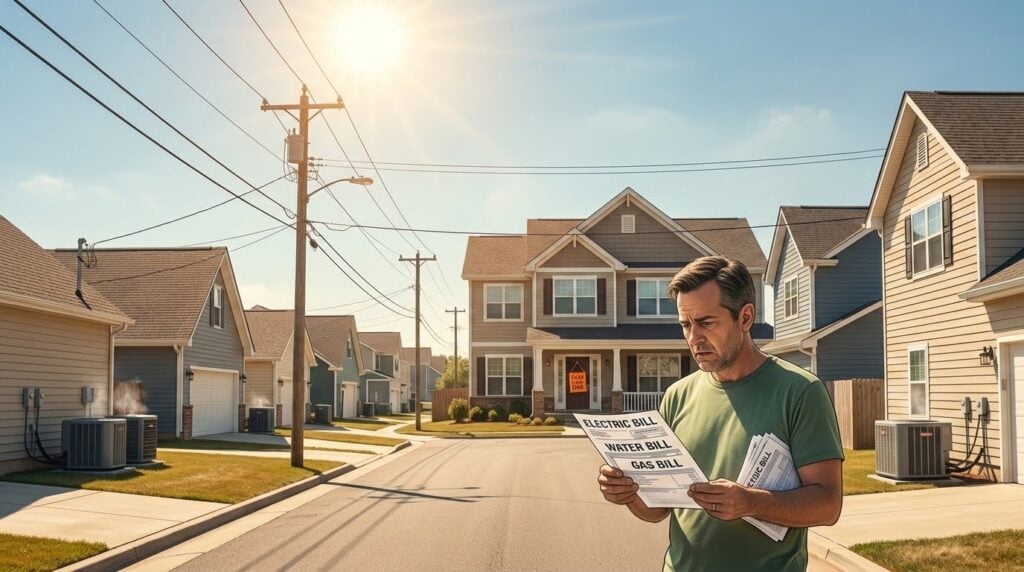
Those unpaid balances don’t disappear from the system. State utility commissions allow utilities to recover delinquent debt through rate adjustments applied to every paying customer on the grid. The household that wrote its check on time is quietly absorbing part of the balance the one next door couldn’t. Total utility debt is projected to reach $23 billion by the end of 2026, per NEADA, the highest level since 2021. That figure will eventually land on every ratepayer’s statement, distributed across future rate cycles approved by state commissions with little public notice.
NEADA executive director Mark Wolfe named the bind plainly: “A lot of people are just living paycheck to paycheck. They’ve seen the cost of gas go up with the war, now electricity is going up.” For families already behind, he added, higher cooling costs force “difficult choices between paying utility bills and covering other necessities such as food, rent, or medicine.”
The policy response is fragmented. Nineteen states and the District of Columbia now provide some protections against summer utility shutoffs. Thirty-one states have none at all. Congress hasn’t acted. President Donald Trump’s proposed budget includes eliminating LIHEAP, the Low Income Home Energy Assistance Program, the primary federal tool for helping households cover utility costs. NEADA is calling on Congress to provide $7 billion for LIHEAP in fiscal year 2027. That request is pending.
Three Steps to Take Before September’s Electric Bill Arrives
- Set your thermostat to 78 degrees when the AC is running. Each degree saves roughly 3% in cooling costs, per EPA estimates.
- Run your dishwasher, laundry, and other high-draw appliances after 9 p.m. to take advantage of off-peak pricing where available.
- Check your utility’s website for time-of-use rate plans, which can cut costs significantly during overnight hours.
If your household income qualifies, apply now for LIHEAP federal cooling assistance. It’s a federal grant, not a loan, and it doesn’t require repayment. Many eligible households never apply. Contact your utility directly if you’re already behind on payments. Most have arrearage management plans that let customers reduce past-due balances while staying current on new charges.
For more on what’s driving the broader inflation squeeze hitting household budgets this summer, the structural forces behind electricity, groceries, and gas are all moving in the same direction at the same time.
The grid instability behind these disconnection numbers reflects a broader structural exposure. For households building a financial buffer against service disruptions or extended outages, ReadyWise emergency food storage provides a practical baseline that removes one variable from a tight budget when the power goes out.
Diane Voss spent eleven years as a policy analyst and financial writer focused on Social Security, Medicare, and federal retirement benefits before moving to journalism. At BreakingNewsAlerts.com, she covers Social Security, Medicare, federal benefits restructuring, and the inflation and tariff conditions that directly affect retirement purchasing power. All content is for informational purposes only and does not constitute financial advice.
Frequently Asked Questions
Why can’t American households pay electric bills this summer?
Average summer electricity costs are projected at $792 in 2026, up 10.5% from 2025 and nearly 40% since 2020, according to NEADA. Four compounding drivers: utility rate hikes approved by state commissions, grid modernization costs passed to ratepayers, growing data center electricity demand, and tariffs on steel and aluminum used in grid construction. None of these is reversing in 2026.
What happens to people who can’t afford to pay electric bills?
Utilities disconnected service 3.5 million times in 2024, per NEADA, with projections approaching 4 million in 2025. Thirty-one states have no summer shutoff protections. Consequences include reconnection fees and credit damage. Households behind on payments can apply for LIHEAP federal cooling assistance, a grant that doesn’t require repayment.
How much will the average electric bill cost in summer 2026?
NEADA projects the average U.S. household will spend $792 on electricity between June and September 2026, up from $717 in 2025. Arizona faces the highest projected costs at $1,060. Washington and North Dakota are lowest at $488.
What can I do to lower my electric bill right now?
Set your thermostat to 78 degrees during AC use (each degree saves roughly 3% on cooling costs per EPA data). Run high-draw appliances after 9 p.m. during off-peak hours. Check your utility for time-of-use pricing plans. Apply for LIHEAP cooling assistance if income-eligible before peak billing season ends in September.