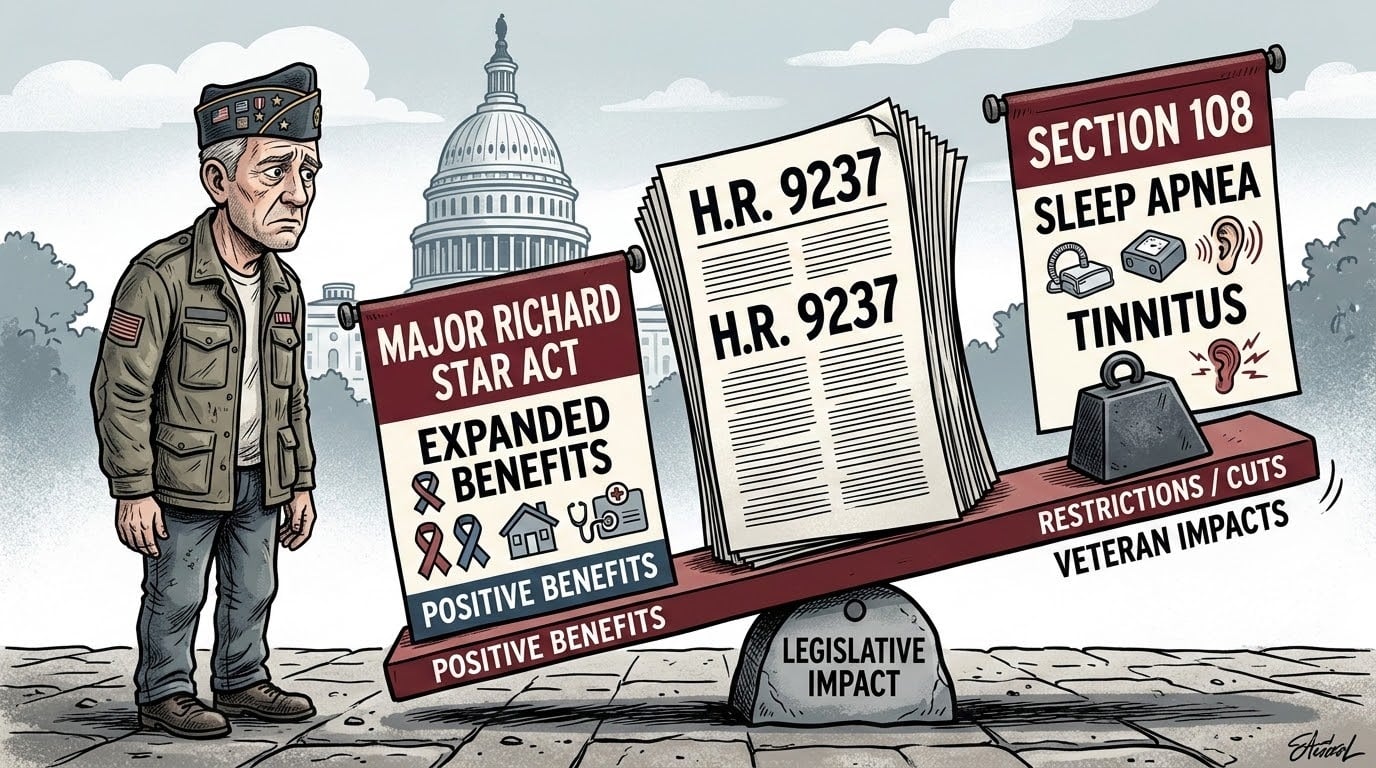

H.R. 9237, the Take Care of America’s Veterans Act, is being pitched as a major veterans package. It would fold the long-stalled Major Richard Star Act into a broader bill with more than 60 other veterans measures. Supporters say that could finally deliver full retirement and disability pay to many combat-injured retirees.
But the fight is now centered on Section 108. That section would rewrite future VA disability ratings for sleep apnea and tinnitus, two of the most common claims in the VA system. The bill text says those changes would apply to claims filed after the bill becomes law. It also says that current compensation already in effect on the day before enactment could not be reduced under the new rating schedule.
That protection matters. It means the bill is not written as a direct cut to veterans already receiving sleep apnea or tinnitus compensation.
The bigger issue is what happens next.
Veterans groups warn that H.R. 9237 would make it much harder for future claimants to receive the same level of compensation. DAV says a VA analysis found the proposal could affect up to 1.5 million veterans and reduce future disability compensation by as much as $57 billion over 10 years.
What Section 108 would change
For sleep apnea, the bill would set a 0 percent rating when the condition is asymptomatic, even with treatment. It would set 10 percent when treatment gives incomplete relief. A 50 percent rating would be available only when treatment is ineffective, or the veteran cannot use treatment because of another medical condition. A 100 percent rating would require end-organ damage.
For tinnitus, H.R. 9237 says tinnitus generally could not receive a separate compensable rating. A 10 percent rating would be allowed only when tinnitus is tied to service-connected hearing loss that otherwise does not qualify for compensation.
Why supporters back the package
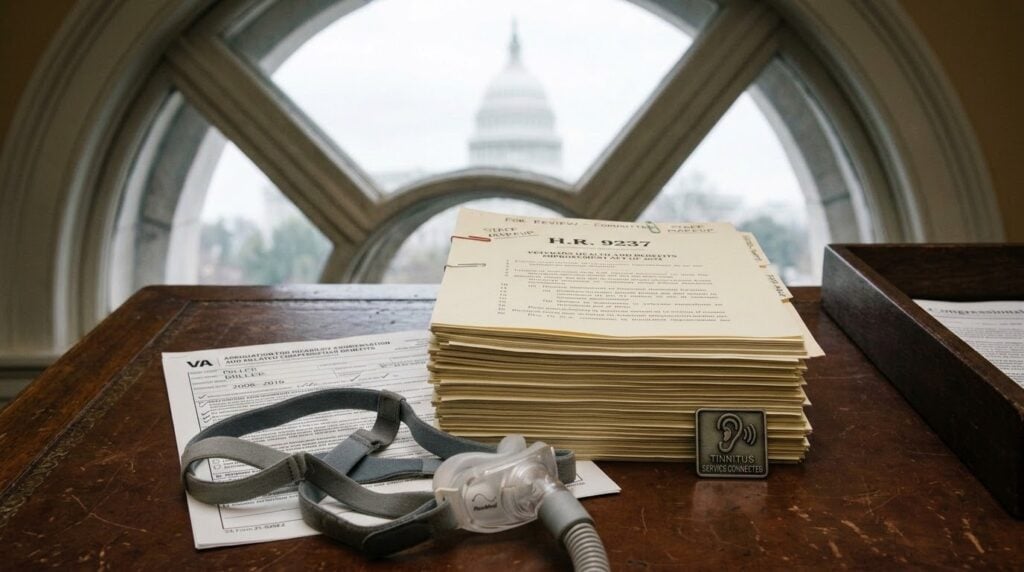
Supporters argue that H.R. 9237 is the best available path to pass long-delayed veterans priorities in one bill. The House Veterans’ Affairs Committee says the package includes the Major Richard Star Act and more than 60 bipartisan bills covering health care, benefits, survivors, caregivers, education, and VA administration.
The American Legion has also framed the bill as a way to keep any savings from VA rating changes inside veterans programs, rather than letting that money flow back into the general federal budget.
Why opponents call it a benefits cut
Opponents say the tradeoff is the problem. They argue Congress should not pay for new veterans benefits by narrowing disability compensation for other veterans.
DAV called Section 108 a “poison pill” and said H.R. 9237 would reduce compensation for many veterans with sleep apnea and tinnitus. The group supports several pieces of the larger package, including the Major Richard Star Act, but rejects using future disability reductions as the offset.
Labor groups have raised another concern. AFGE says the Take Care of America’s Veterans Act would move roughly 5,000 VA psychologists into a personnel system with narrower collective bargaining rights, limiting their ability to negotiate over workplace issues such as scheduling, staffing, and grievances.
Where the bill stands
The House Rules Committee reported a closed rule for H.R. 9237, meaning floor debate would be tightly controlled. The committee also listed Democratic amendments aimed at striking Section 108 and replacing the offsets. Those efforts were not adopted in committee.
A planned House vote was later canceled after opposition grew from Democrats, veterans service organizations, and labor groups.
Bottom line for veterans
H.R. 9237 would not automatically reduce existing sleep apnea or tinnitus compensation, according to the bill text.
But it would change the rules for claims filed after enactment. That is why veterans groups are treating Section 108 as a major benefits fight. The bill offers real gains for some veterans, especially combat-injured retirees waiting on the Major Richard Star Act. It also asks future claimants with sleep apnea and tinnitus to live under a narrower rating system.
That is the tradeoff now driving the fight on Capitol Hill.
Frequently Asked Questions
Would H.R. 9237 cut current VA sleep apnea or tinnitus ratings?
The bill text says the new ratings could not be used to reduce, discontinue, or otherwise harm compensation that was already in effect the day before enactment.
Who would be affected by Section 108?
The rating changes would apply to claims filed after the bill becomes law. DAV says the proposal could affect up to 1.5 million veterans over 10 years.
Why is the Major Richard Star Act part of this debate?
H.R. 9237 includes the Major Richard Star Act, which would help certain combat-injured military retirees receive full retirement pay and VA disability compensation without the current offset.