
Image source: YouTube
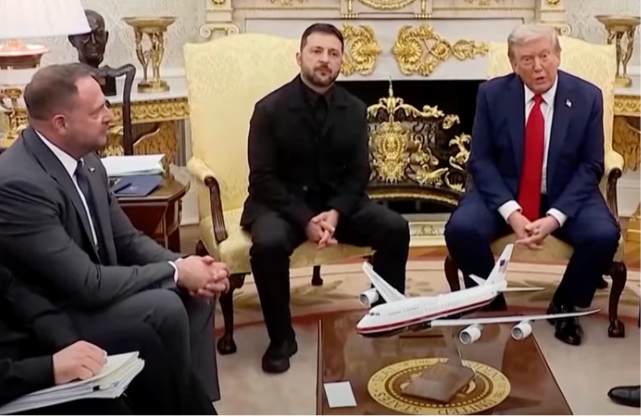
Yesterday, President Donald Trump said that Ukraine may receive U.S. air support as part of a peace framework designed to end its war with Russia. The American leader clarified that while American ground troops will not deploy to Eastern Europe, U.S. forces could contribute through aerial operations. The announcement followed an extraordinary White House summit yesterday with Ukrainian President Volodymyr Zelenskyy and key European leaders. This gathering reshaped the political conversation about how the United States and its allies intend to pursue peace in the region.
Trump’s statement emphasized a balance between restraint and engagement. He stressed that American service members would not be fighting directly on Ukrainian soil. However, he pointed out that air support could involve defensive measures, including missile defense systems or enforcement of restricted air zones. While details remain vague, the shift indicates a willingness to project U.S. power in ways that stop short of full-scale intervention.
Summit with Zelenskyy and European Leaders led to U.S. Air Support for Ukraine
The announcement to provide U.S. air support came one day after Trump hosted a high-profile summit at the White House with President Zelenskyy and senior officials from Europe. The meeting centered on security guarantees and financial backing for Ukraine’s defense. Reports indicated that Trump floated the idea of a $90–100 billion weapons package. Funding would rely heavily on European contributions but would still place the United States at the center of logistics and oversight.
Zelenskyy welcomed the talks as a “major step forward,” although the precise commitments remain under negotiation. European leaders, including those from Germany, France, and Italy, pushed for conditions such as a firm ceasefire and guarantees that Russia would face sustained deterrence. The summit ended without a clear roadmap but demonstrated that Washington remains pivotal in directing peace efforts.
Trump also raised the possibility of arranging a trilateral summit involving himself, Zelenskyy, and Russian President Vladimir Putin. While no date or agenda was set, the suggestion underscored his intent to play a direct role in shaping negotiations. Moscow has yet to signal interest in such a meeting, but the idea alone marks a change in tone from earlier U.S. positions.
A Tactical Shift in U.S. and Global Politics
The decision to emphasize U.S. air support highlights an evolving strategy in American foreign policy. By declining to send ground troops, Trump can appeal to Americans who are wary of getting involved in prolonged overseas conflicts. At the same time, the pledge of air support keeps the United States firmly engaged in European security debates. This balance aims to demonstrate resolve without entangling America in another long-term land war.
For European leaders, Trump’s comments served as reassurance that the United States remains committed, albeit under different terms. NATO allies have sought consistent signals of U.S. involvement, especially after periods of skepticism about American reliability. The mention of air support gives them a visible sign of Washington’s continued participation in defense planning, though it also raises questions about long-term burden-sharing.
The global political stage is equally affected. Russia’s response to potential U.S. air involvement will shape its approach to negotiations and military operations. Moscow may see American air power as a direct obstacle to its campaign objectives, which could either harden its stance further or push it toward compromise. Other global actors, including China, will view these developments as an indicator of how far the United States is willing to extend its influence in the contested regions.
The Political Stakes Have Just Been Raised
The success of this American-European strategy depends on whether the promise of U.S. air support translates into a credible deterrent and a meaningful negotiating tool. Without clarity on operational scope, questions remain about how much risk Washington is prepared to assume. Moreover, Congress may demand oversight on both the financial and military commitments. Trump’s ability to rally domestic support while coordinating with skeptical European partners will define whether this peace effort gains traction.
The move also plays into broader U.S. political debates. Supporters may see it as a pragmatic way to reduce war costs while upholding American leadership. Critics may argue that leaving the door open to air strikes risks escalation without ensuring a durable peace. As talks continue, Trump’s approach reflects an attempt to balance domestic political needs with international expectations.
Do you support President Trump’s plan to provide U.S. air support to Ukraine as part of a peace deal? Tell us what you think.