
QUICK SUMMARY: Four House seats in Old Dominion just changed hands, and no one ran for them. The Virginia redistricting vote passed on April 21 by 3 points, shifting the state’s delegation from 6-5 Democratic to a projected 10-1. Gov. Abigail Spanberger signed the bill in February. Almost immediately, a Tazewell County judge blocked the map a day after the vote.
Four House seats in Virginia just changed hands, and no one ran for them.
That is what voters did on April 21. The Virginia redistricting vote passed by 3 points, and with that margin, the state’s Democratic-controlled legislature got permission to throw out the congressional map and draw a new one. The delegation was split 6-5 in Democrats’ favor before Tuesday. The new map makes it 10-1. Four Republican seats moved before a single midterm ballot was cast.
One day later, a state judge blocked the whole thing. Tazewell County Circuit Court Judge Jack Hurley called the ballot language “flagrantly misleading” and ordered officials not to certify the results. Virginia Attorney General Jay Jones is appealing. The Virginia Supreme Court now decides whether the new map actually takes effect.
So the story is not over. It is also not subtle. Voters were asked to undo an institution they built five years ago, and they did.
What Did the Virginia Redistricting Vote Actually Change?
In 2020, Virginia voters approved a constitutional amendment taking the power to draw congressional districts away from politicians. They gave it to a bipartisan commission made up of eight citizens and eight legislators. The idea was to end mid-decade map fights. That amendment passed with 66 percent of the vote.
The 2026 amendment suspends that commission until after the 2030 census. It passed with 53 percent. Same voters, roughly the same state, five years apart. In 2020 they wanted a commission. In 2026, they voted to let the legislature bypass it.
Then, something changed their minds.
Why Did Virginia Redraw Its Map?
Texas is what changed their minds. Or at least, that is the story Democrats told voters, and the timeline backs it up.
In 2024, President Trump publicly pushed Republican-led states to redraw their congressional maps mid-decade to protect the GOP House majority. Texas did it first, in 2025, and picked up an estimated five GOP seats on paper. Missouri and North Carolina followed with smaller redraws. California voters approved a counter-referendum to flip five seats back toward Democrats. Virginia Democrats filed their amendment in October 2025.
Gov. Abigail Spanberger signed the enabling bill on Feb. 6. Her stated reason: Virginia could not sit out while other states redrew. That explanation is partly true. Texas really did go first. Other states really did follow. If Virginia had done nothing, Republicans would have picked up House seats from the redraw cycle without paying any political cost.
It is also true that Spanberger campaigned for the 2020 commission. During that debate, she called gerrymandering “detrimental to our democracy.” She campaigned for the new Virginia redistricting map anyway. Both things can be true at once, and voters deciding whether to call that principled or hypocritical is exactly the kind of judgment a 3-point margin reflects.
What Does the New Congressional Map Actually Look Like?
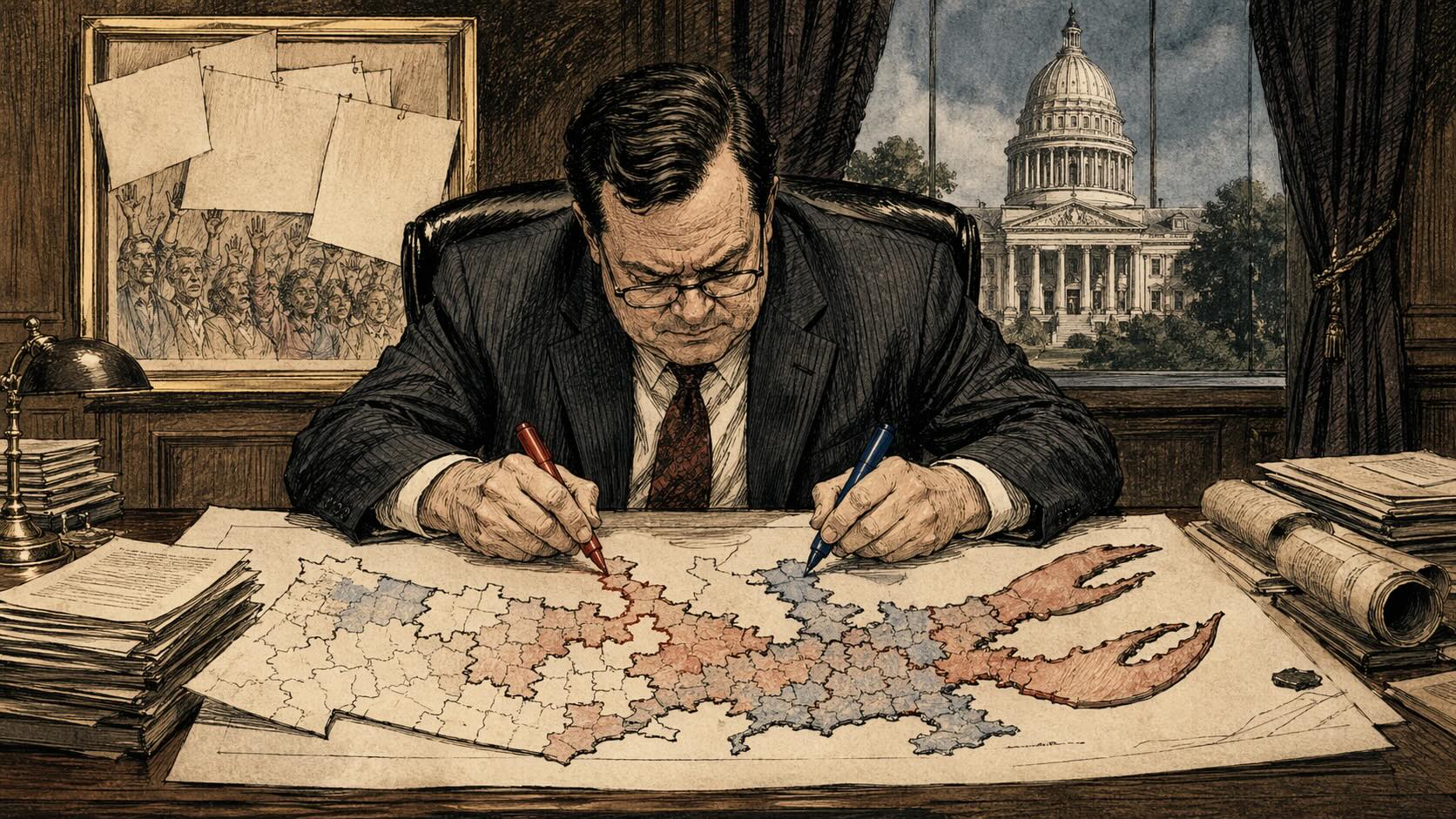
The map packs Republican voters into one safe district in southwest Virginia and spreads Democratic voters across the other ten. Some Rockingham County voters who lived in the solid-Republican 6th District are now drawn into a new 11th District that reaches all the way to Fairfax County, a two-hour drive away. The redrawn 7th District curls through Northern Virginia and the Shenandoah Valley in a shape local reporters have compared to a lobster.
Harris won Virginia by 6 points in 2024. Spanberger won the governor’s race by 15 in 2025. Those are real margins, but they are not 91 percent margins. The new map gives Democrats 91 percent of Virginia’s House seats in a state that votes somewhere between 53 and 57 percent Democratic in real elections.
That is the gap between how Virginians actually vote and how their new map says they vote.
Why Did Judge Hurley Block The Virginia Redistricting Measure?
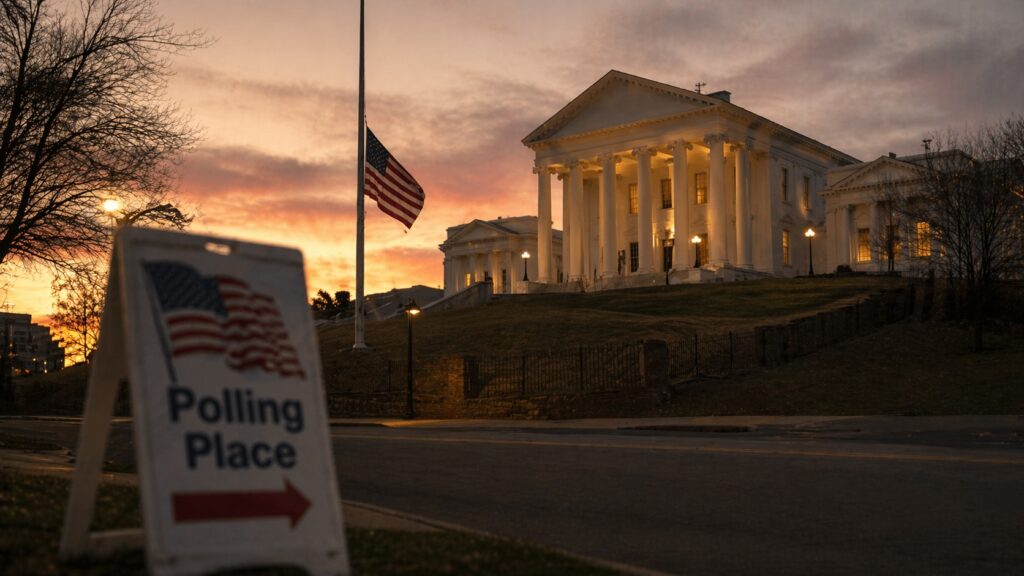
Judge Hurley ruled that the special legislative session that put the amendment on the ballot was outside its original scope, and that the ballot question itself misled voters about what they were actually approving. His order bars state officials from certifying the result or drawing up the new map.
This is not Hurley’s first time ruling on this. He said the amendment was illegal back in January, before the Virginia Supreme Court stayed his order and let the vote proceed. Now the same case returns to the same Supreme Court, except this time with an election result attached to it.
If the court upholds the amendment, the 10-1 Virginia redistricting map will govern the November midterms. If it strikes the amendment down, Virginia reverts to the 2023 court-drawn map and the delegation stays 6-5. Either way, a court decides what voters thought they had decided.
What Does This Mean for the November Midterms?
The House majority is being decided in state capitals this year, not at ballot boxes. Texas took five seats through legislative action. Virginia took four through a referendum. California took five through its own counter-referendum. Missouri and North Carolina each took one.
None of the voters in those states got to vote directly on the actual districts that will govern their November election. They voted on whether to let politicians draw new districts, or they did not get to vote at all. The districts came later. The districts always come later.
Both parties are doing this now. Neither side has clean hands. The 2020 commission Virginians approved two-to-one is suspended. The Republican states that started the cycle did not bother with referendums. And whoever wins this round sets the precedent everyone uses next time a majority party wants four House seats without fielding four new candidates.
Four seats just moved. Voters are the last people at the table.
Frequently Asked Questions
What did the Virginia redistricting amendment actually change?
It temporarily suspended the state’s 2020 bipartisan redistricting commission and returned congressional mapmaking authority to the General Assembly through the 2030 census. After 2030, the commission resumes. The 2020 commission was approved by 66 percent of Virginia voters. The 2026 suspension was approved by 53 percent.
How many seats does the new map flip?
The map shifts Virginia’s congressional delegation from 6-5 Democratic to a projected 10-1 Democratic. That is a swing of four GOP seats before a single midterm ballot is cast.
Why did the judge block the new map?
Tazewell County Circuit Court Judge Jack Hurley ruled April 22 that the ballot language was “flagrantly misleading” and that the special legislative session that put the amendment on the ballot was outside its original scope. His order bars state officials from certifying the result. Virginia Attorney General Jay Jones is appealing. The Virginia Supreme Court decides next.
Why did Virginia redraw its map now?
Texas Republicans redrew their congressional map in 2025 to add up to five GOP seats at President Trump’s urging. Missouri, North Carolina, and California followed with their own redraws. Virginia Democrats proposed the amendment in October 2025. Gov. Spanberger said she signed it “to let voters respond to extreme measures taken by other states.”