
Source: YouTube
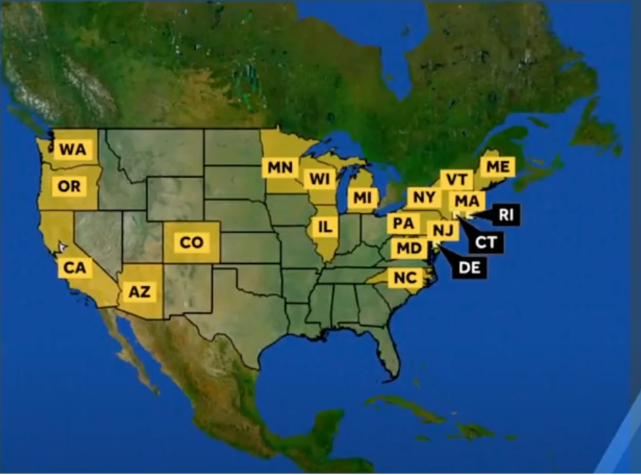
Twenty states are suing the Federal Emergency Management Agency (FEMA) for eliminating a grant program that supports disaster mitigation projects. The Building Resilient Infrastructure and Communities program (BRIC) helped cities and towns fund efforts that reduce the impact of floods, hurricanes, wildfires, and earthquakes. The lawsuit argues that the Trump administration violated federal law when it canceled the program in April without congressional approval. The states suing FEMA are Arizona, California, Colorado, Connecticut, Delaware, Illinois, Maine, Maryland, Massachusetts, Michigan, Minnesota, New Jersey, New York, North Carolina, Oregon, Pennsylvania, Rhode Island, Vermont, Washington, and Wisconsin.
States Suing FEMA For Irresponsible and Illegal Cuts to BRIC Program
The joint complaint was filed in federal court in Massachusetts and accused FEMA of overstepping its authority. Attorneys general from 19 states and the governor of Pennsylvania claim that Congress never authorized FEMA to shut down the BRIC program. The legal filing also notes that FEMA’s acting administrator at the time had not met the legal requirements for holding the position. The BRIC program was created during Trump’s first term to replace an older disaster readiness initiative. BRIC gained bipartisan support and even received a $1 billion boost through President Biden’s infrastructure law, which required at least $200 million per year for pre-disaster mitigation through 2026.
Suing FEMA For Putting Many Communities Vulnerable After Funding Losses
Local officials across multiple states report that the loss of BRIC funding has already caused setbacks. Hillsborough, North Carolina, planned to move a wastewater pumping station out of a flood zone with nearly $7 million from FEMA. When Tropical Storm Chantal hit before construction began, the station was damaged and forced offline. Officials in Mount Pleasant had engineering plans ready to go for a stormwater project aimed at protecting a historic theater and nearby businesses. With funding pulled, construction is halted. Frustrated local leaders say they cannot afford to start over.
New Jersey Attorney General Matthew Platkin said his state has seen the deadly impact of natural disasters like Hurricane Sandy. He warned that the loss of BRIC funding would leave communities without critical protection. Massachusetts Attorney General Andrea Joy Campbell said the cancellation was abrupt and dangerous. She pointed to recent floods in Texas and the Northeast as proof that federal support is still needed.
In New York alone, over $325 million in projects are affected. These include improvements to flood walls, electric systems, and building code enforcement. State leaders say they cannot replace that funding with local budgets. Without BRIC, they warn, the cost of rebuilding after disasters will rise for everyone. In upstate New York, the Vischer Ferry Dam project was set to receive $24 million to manage ice jam flooding along the Mohawk River. Central Harlem was also in line for $50 million to reduce the risk of flash flooding for more than 45,000 residents. With the BRIC cancellation, funding to complete these projects remains uncertain.
Executive Action Vs Congressional Power
Prior to the states suing FEMA, the agency released a statement in April describing the BRIC program as “wasteful and ineffective.” That statement has since been removed from the agency’s website. The agency offered no evidence to support its claims. Instead, it accused BRIC of prioritizing political goals over actual disaster relief.
Earlier this year, President Donald Trump suggested that FEMA should be phased out entirely after the 2025 hurricane season. Critics reacted to the statement by arguing that his administration is weakening disaster response at a time when extreme weather events are increasing in both frequency and cost.
The action suing FEMA highlights a key separation-of-powers issue. Attorneys general say the executive branch cannot cancel programs funded by Congress without legal authority. They also allege that FEMA’s acting administrator, Cameron Hamilton, did not have the proper authority to make the decision. He was later removed from his position.
The civil complaint also noted that mitigation efforts save money and lives. Studies cited in the case show that every $1 spent on disaster mitigation saves $6 in post-disaster recovery. The plaintiffs say that by ending the BRIC program, the administration increased both fiscal risk and physical danger.
Do you agree with FEMA’s decision to cancel disaster mitigation programs that Congress previously approved and funded? Tell us what you think.