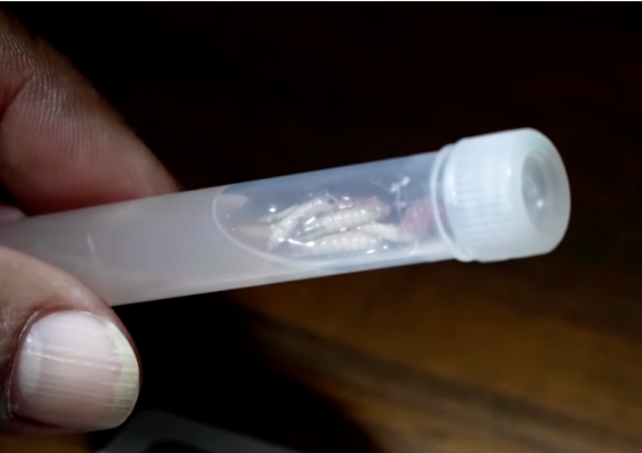

Image source: YouTube
The Department of Health and Human Services has confirmed the first human case of New World screwworm infestation in the United States. Officials said the patient, who returned from El Salvador earlier this month, was diagnosed on August 4. The infection known as myiasis occurs when fly larvae infest human tissue and if left untreated, consume living flesh.
Health authorities emphasized that the case was isolated and identified quickly, reducing the risk of broader transmission. The patient has been treated and is recovering, but the announcement has renewed attention to a parasite that the U.S. had declared eradicated more than three decades ago. The Centers for Disease Control and Prevention (CDC) noted that while the immediate threat to the public is low, vigilance is necessary to ensure the parasite does not re-establish itself in the country.
What Is the New World Screwworm?
The New World screwworm is a parasitic fly native to South and Central America. Its larvae infest open wounds of humans and animals, feeding on living tissue rather than dead matter. The condition can progress rapidly, leading to severe pain, tissue destruction, and secondary infections if not addressed. Historically, the parasite has caused significant damage to both livestock and wildlife, costing farmers billions in losses before eradication programs successfully eliminated it from the U.S. by 1982.
Public health officials stressed that while the parasite is rare in humans, the threat to agriculture remains serious. If the screwworm population were to take hold again, it could devastate cattle and other livestock industries. That is why strict border controls and animal health monitoring have been maintained for decades, with sterile fly release programs used to keep the parasite at bay.
How Did the New World Screwworm Case Occur?
According to health officials, the patient likely contracted the parasite during travel in El Salvador, where the screwworm is still present. The infestation was identified by laboratory testing after medical staff detected larvae in a wound. Immediate treatment involved removing the larvae and administering antibiotics to prevent secondary infections. The patient’s recovery is ongoing, and the CDC confirmed no further cases linked to this incident have been reported.
Authorities are now working with customs and agricultural agencies to ensure surveillance remains in place for both humans and animals entering the United States. Officials said there is no current evidence of the parasite spreading within the country.
Public Health Response and Warnings
The Department of Agriculture (USDA) and CDC urged healthcare providers to remain alert for potential cases, particularly in patients returning from regions where the screwworm remains endemic. Livestock owners were also reminded to report suspicious animal wounds immediately, since early detection is critical to stopping outbreaks.
Experts say this case highlights the need for continued investment in surveillance and biosecurity. While one case does not indicate a widespread threat, it serves as a reminder that parasites eradicated domestically can still return through international travel and trade. Public health agencies have pledged to step up communication with border states and increase testing where needed.
Yes, Concerns About the New World Screwworm Matter
For many Americans, the confirmation is alarming because of the screwworm’s gruesome reputation. The parasite’s ability to consume living tissue makes it one of the more dangerous pests known to humans and animals. Although the immediate health risk remains low, officials warn that complacency could allow the parasite to resurface after decades of control. The case illustrates how global travel can reintroduce diseases long thought under control, pressing the need for vigilance at every level of public health.
Should the U.S. expand surveillance and border protections after the first human case of New World screwworm in decades? Tell us what you think.