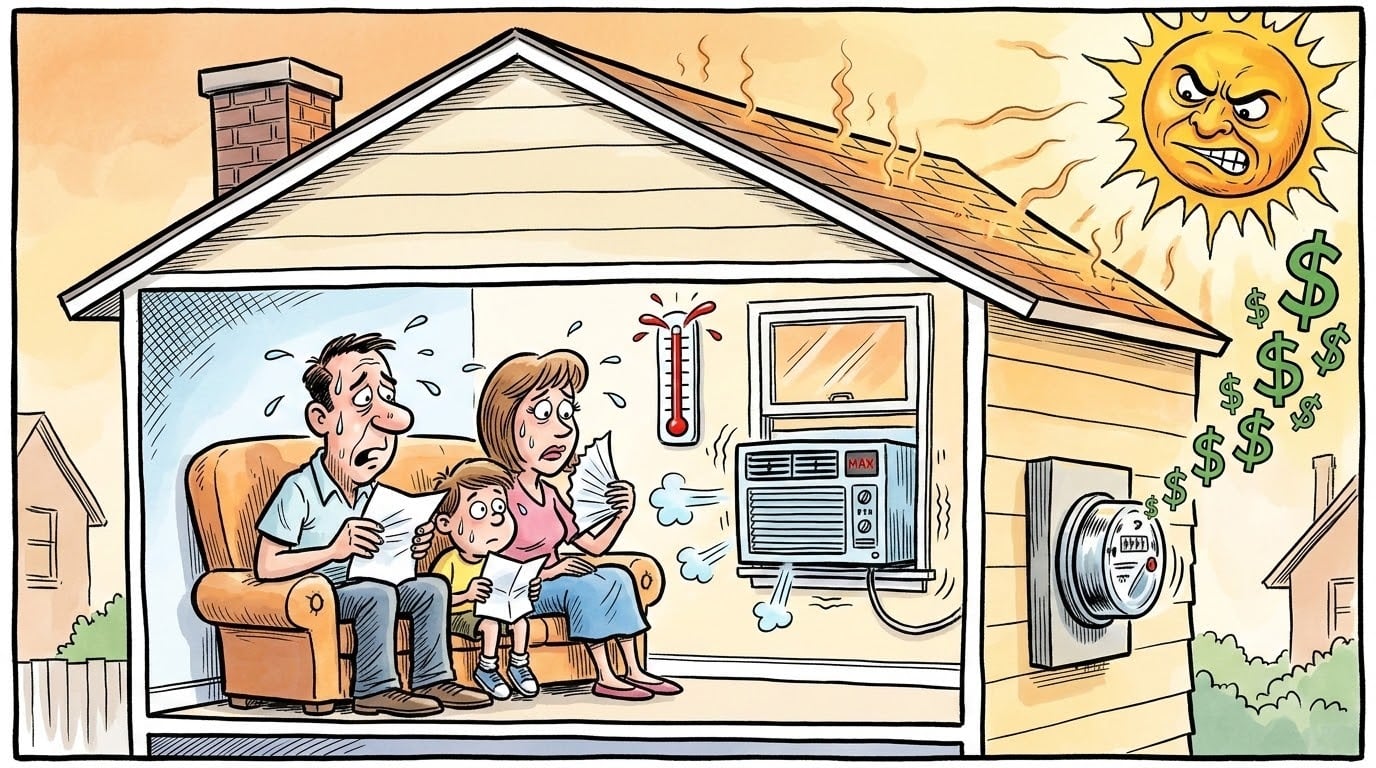

Summer electricity bills are on track to set records in 2026, and the reason runs deeper than a hot forecast. Federal regulators expect Americans to use more power this summer than in any of the last five years, and a national group projects that the average household will spend about $778 to stay cool from June through September. That figure is an 8.5 percent increase from last year and nearly 37 percent higher than in 2020. For anyone on a fixed income, or counting the years down to retirement, that increase arrives at the hardest time of the year, when the air conditioner runs the most, and there is the least room to cut back.
What Is Pushing Summer Electricity Bills to a Record
The increase is not only about the heat, and that is the part most coverage skips. There are two forces working at the same time. The first is price. Electricity prices have been climbing faster than inflation, driven by higher fuel costs, spending on the power grid, and utility rate increases. The second is use. As the weather gets hotter, air conditioners run longer and more often, so households end up paying a higher price for more power at once.
The heat this year is expected to be severe. The Federal Energy Regulatory Commission found in its 2026 Summer Energy Market and Electric Reliability Assessment that electricity consumption is expected to be higher this summer than in each of the previous five summers, with federal forecasters projecting above-average temperatures across much of the country. Growing electricity demand from data centers is adding to the load on the grid as well. Mark Wolfe, who heads the National Energy Assistance Directors Association, stated in the organization’s 2026 Summer Cooling Release that families are being squeezed from both directions by paying more for electricity while needing more of it to stay safe.
How Much More Will You Pay This Summer?
The national average points to about 8.5 percent more, but the number is higher in some parts of the country. In the South Atlantic, from Maryland to Florida, cooling costs for the season are projected to rise about 13.5 percent to roughly $860. In the West South Central region, including Texas and Louisiana, costs are expected to climb about 11.5 percent to around $924. If you live in the South or the Plains, in other words, the record is not an abstract national figure. It is your bill.
Michael Ryan, a finance expert and founder of MichaelRyanMoney.com, said families absorbing $800 or more in summer power bills, on top of rent or a mortgage, have little left to handle an emergency. For a reader within a few years of retirement, that is the real concern. It is not just this month’s bill. It is what a string of record summers does to the money that is supposed to last.
Your Bill Can Stay High After the Heat Breaks
Here is the point that often goes unsaid. A cooler stretch of weather later in the summer will help less than you would expect, because the price of the power has already gone up. Retail electricity prices have risen faster than overall inflation in recent years, driven by fuel costs, grid investment, and data center demand. Once those price increases are set, they tend to stay in place.
That means the size of your bill is determined by two things: the price of power and how much you use. You can use less on a mild day, but you cannot undo the higher rate. So a bill can stay high into the fall even when the temperature drops, and that is why this is a cost-of-living story, not just a weather story.
Where the Squeeze Lands Hardest
The households with the least cushion feel a record summer first. Lower-income families spend a much larger share of their income on energy than higher earners do, so the same percentage increase hits them harder. One in six U.S. households is already behind on its energy bills, with total utility debt across the country sitting at a staggering $25 billion.
That number tells you this pressure did not start this summer. Millions of households were already stretched before the cooling season began. A record summer, arriving on top of existing debt, is what NEADA describes when it calls for emergency funding, and it is the situation many readers in the South and South Central are walking into right now.
With prices expected to stay high, a smart thermostat is one of the tools households are turning to because it can hold a steady schedule and avoid cooling an empty home. It will not undo a utility rate increase. But for readers looking to take back some control over the part of the bill they can actually affect, it is one place many are starting.


Affiliate disclosure: BreakingNewsAlerts.com participates in affiliate programs, including Amazon Associates. If you buy through a link in this article, we may earn a commission at no extra cost to you. This never influences our coverage. See our editorial standards.
Frequently Asked Questions:
Why are summer electricity bills setting records in 2026?
Federal regulators expect power demand to top the last five summers, and a national group projects the average cooling bill at about $778, up 8.5% from last year. The drivers include rising electricity prices, data center demand, utility rate increases, and grid upgrades.
How much higher will my bill end up this year?
The national average points to about 8.5% more from June through September. The South Atlantic and West South Central regions are projected to see the steepest increases, at 13.5% and 11.5%, respectively.
Will my bill go back down when the heat breaks?
Often not. Electricity prices have been rising faster than inflation, and price increases tend to stay in place, so your bill can remain high even after temperatures ease.
Which states will see the highest summer electricity bills?
The South, Southwest, and Plains are forecast to be hotter than average. The South Atlantic and West South Central regions are projected to see the steepest cost increases.
Can a smart thermostat lower my summer electricity bills?
It can cut usage by avoiding cooling an empty home, but it will not offset a utility rate increase.