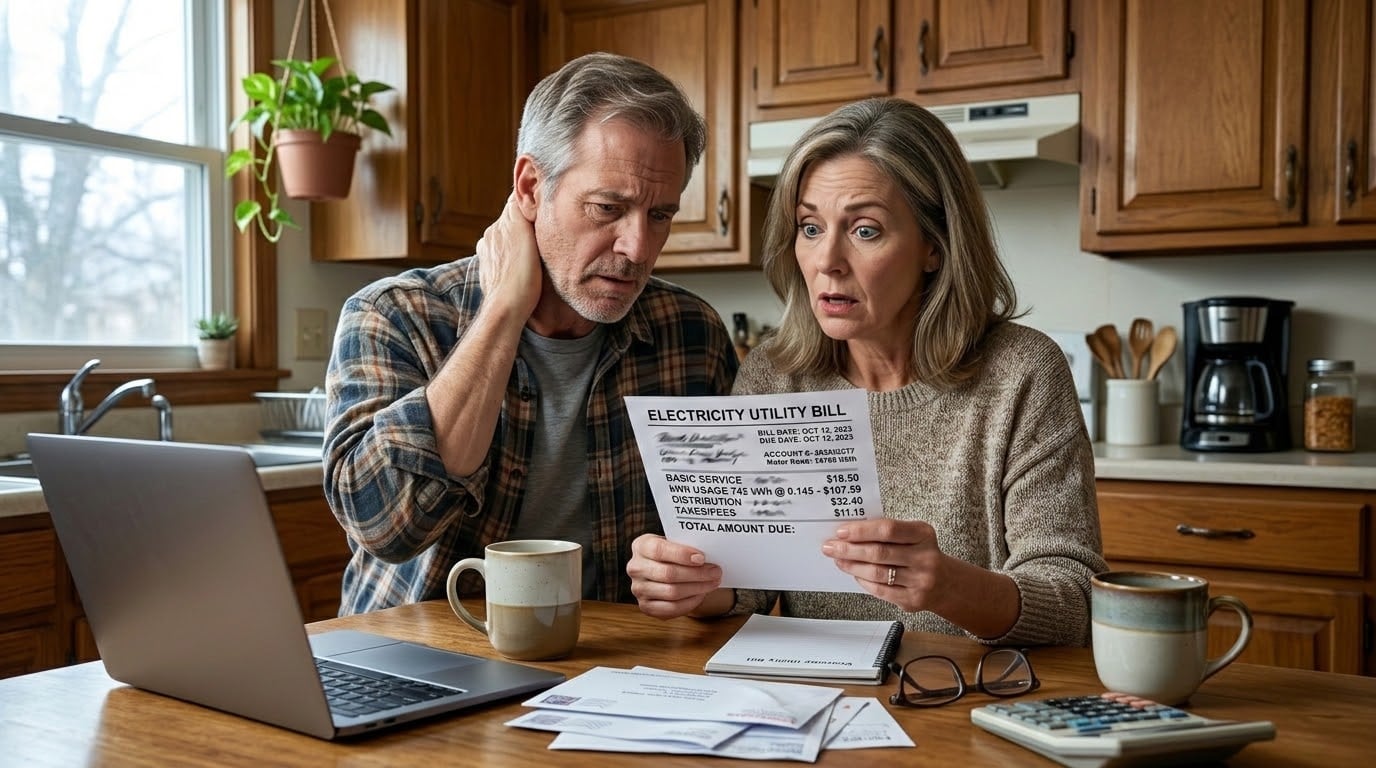

QUICK SUMMARY: Your electricity bill is projected to jump 8.5% this summer, costing the average household up to $778 for the season. Grocery prices never reversed. Food at home rose 0.7% in April alone, with beef up nearly 20% year-over-year and coffee up 4.7%. Both your grocery and electricity bills are rising together, driven by structural forces that will outlast the season.
The federal government made it official on May 12: electricity and grocery bills are both going up this summer, and the forces behind each have been building for years before either bill arrived in your mailbox.
This is not two separate stories. It is one squeeze hitting your household from two directions at the same time. The average American household already spends roughly $504 a month on groceries, according to Bureau of Labor Statistics data. Add a summer electricity bill projected at $778 for the season, and you are carrying two costs that have each risen sharply since 2021 with no near-term reversal in sight.
Why Are Electricity and Grocery Bills Rising at the Same Time?
The short answer is that two separate structural cost cycles, one in energy and one in food supply, have converged this summer. Neither was caused by the other. Both are now landing on the same household budget at the same time.
The national average residential rate reached 18.05 cents per kilowatt-hour as of May 2026, up 5.4% year-over-year and roughly 30% since 2021.
Those numbers come from U.S. Energy Information Administration data. The summer projection is sharper. Households in Florida, Texas, and the Carolinas are looking at seasonal bills that could exceed $920, with some states facing steep power cost increases as much as 13.5%. Illinois utility ComEd filed a 12% supply rate increase effective June 1, adding an estimated $10 to $15 a month for average residential customers.
The mechanism behind these increases is named. Data centers now account for 4% of total U.S. electricity consumption, and that demand is expected to more than double by 2030. Utilities are spending billions to harden aging grid infrastructure against extreme weather, and those costs pass directly to ratepayers. Tariffs on steel and aluminum, the primary materials used to build and repair transmission lines, have added to construction costs that now show up on your bill.
One Reddit homeowner described their recent bill as something that “felt like someone was giving me a shakedown.” They are not alone. Up to four million households experienced utility disconnections in 2025, nearly 500,000 more than the year before.
When Will Grocery Prices Actually Come Down?

Food at home rose 0.7% in a single month in April 2026 and is up 3.2% year-over-year, according to the BLS April CPI release. That is not a slowdown for any household writing a check at the register.
Specific categories are running far hotter than the headline number. Beef wholesale prices are up nearly 20% year-over-year, and no meaningful price relief is projected before late 2027. Coffee and beverages are up 4.7%. Sugar and sweets are up 8.1%. The U.S. cattle herd is at a 70-year low. An agricultural economist at Oklahoma State University noted the herd cannot be rebuilt quickly. An industry executive at one of the country’s largest beef retailers confirmed the same timeline to NewsNation: late 2027 at the earliest.
Since February 2020, grocery prices have risen 29% cumulatively, according to USDA Economic Research Service forecast data. The comparison to the 11.4% peak of August 2022 makes today’s pace look slower. Compared to what you paid three years ago, prices are not slow at all.
What Can You Do Right Now to Lower Both Bills Before September?
Set your thermostat to 78 degrees when the AC is running. Each degree of difference represents roughly 3% in savings. Shift your dishwasher, laundry, and other high-draw appliances to off-peak hours, typically after 9 p.m. Check your utility’s website now to see whether a time-of-use pricing plan is available in your area. These changes require no new equipment and no upfront cost.
If your current thermostat does not allow scheduling, a programmable model is one of the few home upgrades that pays for itself within a single billing season. The Amazon Smart Thermostat runs on Honeywell Home technology, installs via the Alexa app without an electrician, and is ENERGY STAR certified. At current electricity rates, the EPA estimates certified smart thermostats save an average of $50 a year — and energy providers in many states offer rebates that bring the upfront cost down further.


On groceries: beef is the most exposed category right now. Chicken and pork are not subject to the same cattle supply constraint. Buying staple items like coffee in bulk at current prices locks in today’s cost before further increases arrive.
Your electricity and grocery bills are not rising because of a single season or a single policy decision. The structural forces behind both, from grid modernization costs to a decade-long cattle cycle, will outlast this summer. Planning around them now is not pessimism. It is the math your household needs to do before September arrives.
Frequently Asked Questions
Why are my electricity and grocery bills going up this summer?
The national average residential electricity rate reached 18.05 cents per kilowatt-hour as of May 2026, up 5.4% year-over-year. Summer AC demand, aging grid upgrades, data center growth, and tariffs on steel and aluminum used in grid construction are all driving the increase. Households in the South face the steepest increases, with some states projected at 11% to 13.5% for the season. Meanwhile, overall grocery inflation has slowed from its 2022 peak but has not reversed. Food at home rose 3.2% year-over-year in April 2026. Beef is not expected to see meaningful price relief until late 2027. The U.S. cattle herd is at a 70-year low, and rebuilding it takes years. Other categories, including coffee and sugar, are also still rising.
Which states will see the biggest electricity rate increases this summer?
Florida, Georgia, the Carolinas, Texas, and Oklahoma face the largest projected increases, with some states looking at seasonal bill jumps of 11% to 13.5%. Illinois ComEd customers face a 12% supply rate increase effective June 1. Southern states carry the heaviest exposure due to dependence on air conditioning during summer months, where bills can exceed $920 for the season.
What can I do right now to lower my electricity and grocery bills?
For electricity: set your thermostat to 78 degrees during AC use (each degree saves roughly 3%) and run high-draw appliances after 9 p.m. when rates are lower. Check your utility for time-of-use pricing options. For groceries: substitute chicken or pork for beef, and buy coffee and other rising staples in bulk now before further increases hit.
How much has the average household’s grocery spending increased since 2020?
Since February 2020, grocery prices have risen 29% cumulatively, according to BLS data. The average household now spends roughly $504 a month on food at home. Certain categories have risen far more than the headline figure: beef is up nearly 20% year-over-year, and sugar and sweets are up 8.1% in 2026.
Why are data centers contributing to higher electricity bills?
Data centers now account for approximately 4% of total U.S. electricity consumption, a figure expected to more than double by 2030. That rising industrial demand competes with residential load on the grid that utilities are already spending billions to upgrade. Those infrastructure costs pass directly to ratepayers, including every residential customer, regardless of region.