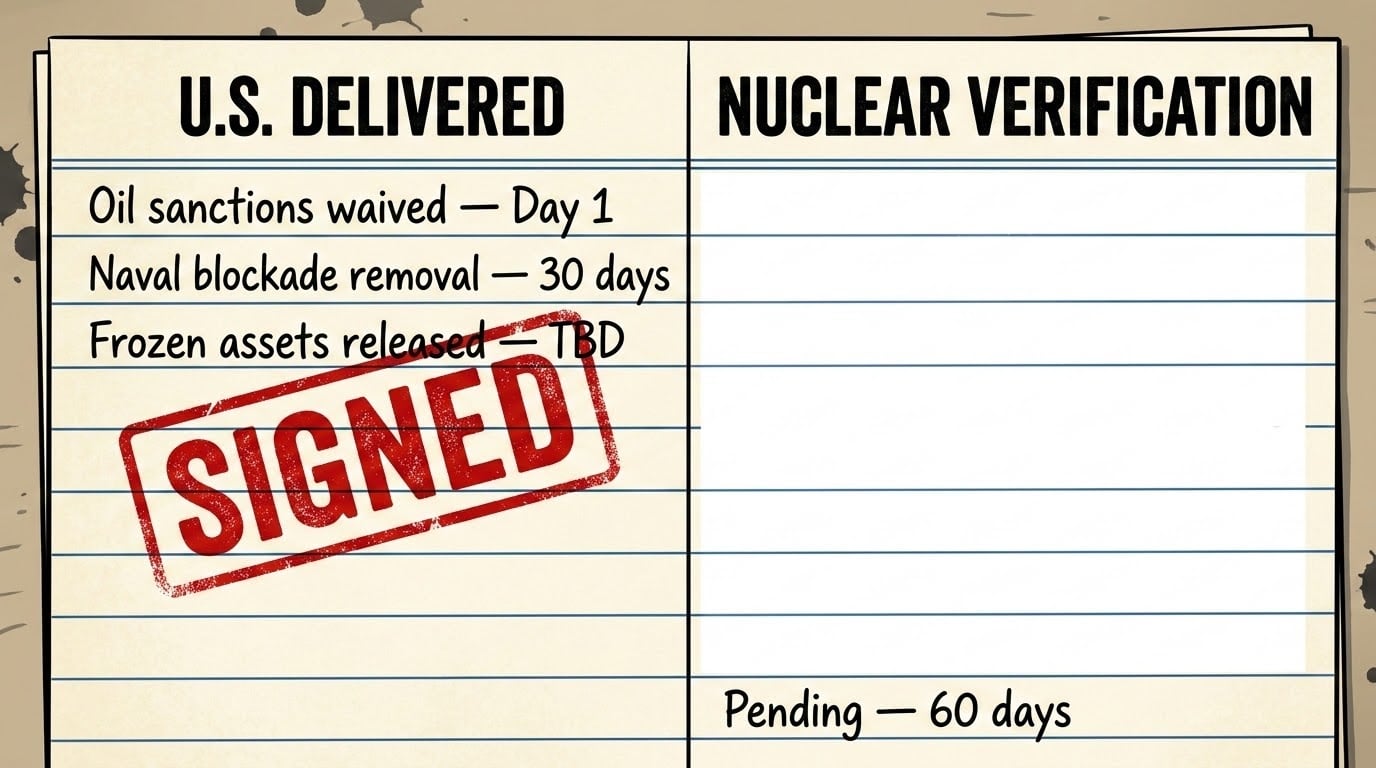

The United States signed the Iran nuclear ceasefire deal on June 17, 2026, committing to immediate oil sanctions waivers, full removal of its naval blockade within 30 days, and the release of frozen Iranian assets — before a single international nuclear inspector has confirmed access to an Iranian facility.
The 14-point memorandum of understanding, obtained and published by Military Times, was digitally signed June 15 by President Donald Trump and Vice President JD Vance for the United States. Iranian President Masoud Pezeshkian signed remotely from Tehran. Iran’s Parliament Speaker Mohammad Bagher Ghalibaf led Tehran’s negotiating team. A formal ceremony followed at the Palace of Versailles on June 17. The agreement sets a 60-day window for technical negotiations to address the thorniest unresolved questions: enrichment limits, the scope of IAEA access, Iran’s ballistic missile program, and its network of armed proxies across the Middle East.
The U.S. committed to concrete, immediate economic relief. The nuclear verification comes later.
What Did the U.S. Agree to Give Iran Before the Nuclear Talks Even Start?
The MOU text is specific on what the United States delivers up front.
The Treasury Department is directed to issue waivers for the export of Iranian crude oil, petroleum products, and derivatives, along with all associated services including banking, insurance, and transportation, effective immediately upon signing. The U.S. naval blockade of Iranian ports begins lifting immediately and must be fully removed within 30 days. Frozen Iranian assets are to be made “fully available for use,” with the specific procedures for release to be negotiated during the 60-day window.
The United States committed to sanctions relief, blockade removal, and asset release before the 60-day nuclear negotiation has produced a single verified outcome.
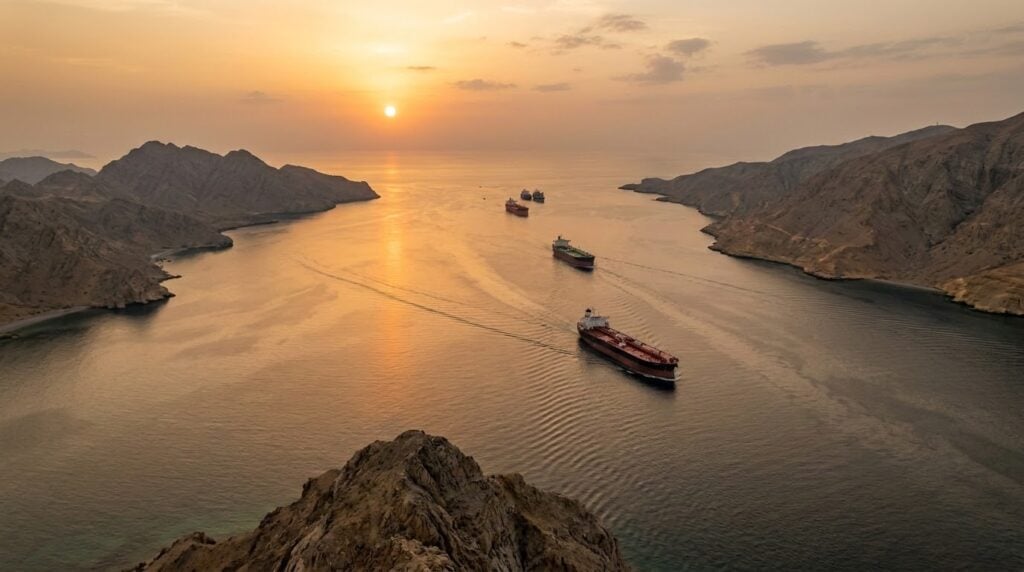
The Strait of Hormuz, closed by Iran in response to Israeli strikes in Lebanon, is to be reopened for toll-free commercial passage for 60 days. Iran committed to demining and removing technical obstacles within 30 days to restore traffic to pre-conflict levels. Long-term administration of the strait remains to be negotiated with Oman and regional partners.
Following the Switzerland talks on June 21 and 22, the U.S. granted Iran a formal 60-day sanctions waiver. Iran’s Foreign Minister Abbas Araghchi confirmed publicly that his country had received waivers for oil and petrochemical exports, the lifting of the port blockade, the release of some frozen assets, and the launch of what he described as a reconstruction and development plan.
What Does the Iran MOU Actually Leave Out?
The MOU does include one nuclear commitment. In Clause 8, Iran reaffirms it shall not procure or develop nuclear weapons, a restatement of its longstanding position rather than a new concession. The same clause establishes a mechanism to resolve the fate of Iran’s enriched uranium stockpile, with downblending on-site under IAEA supervision set as the minimum methodology. These commitments have not yet been operationalized.
What the MOU does not address: enrichment limits, the scope of IAEA access, Iran’s ballistic missile program, and its network of armed proxies in Lebanon, Yemen, Iraq, and Syria.
As of June 16, 2026, the IAEA had been locked out of key Iranian nuclear facilities for at least 107 days, according to IAEA report GOV/2026/8 and analysis by the Institute for Science and International Security. That report documents 440.9 kilograms of Iranian uranium enriched to 60% purity. Weapons-grade uranium is 90%. The MOU does not require Iran to address this stockpile before sanctions relief begins.
Iran’s 440.9 kilograms of 60%-enriched uranium are acknowledged in Clause 8 but not resolved. Disposing of that stockpile would require, by Vance’s own estimate, roughly 1,000 Americans entering some of Iran’s most sensitive nuclear sites.
Enrichment limits, the full scope of IAEA verification access, and the timeline for compliance on Clause 8 all remain deferred to the 60-day negotiation now underway.
Did Iran Actually Agree to Let Nuclear Inspectors Back In?
On Monday, June 22, Vance told reporters in Switzerland that Iran had agreed to allow IAEA nuclear inspectors back into the country. “The Iranians have agreed to invite IAEA inspectors back into their country. That is a major milestone for the American people and the first step in permanently denuclearizing Iran,” Vance said. He described it as “probably what we’re most excited about as Americans.”
Iran’s Foreign Ministry spokesman Esmaeil Baghaei responded the same day. “According to informed officials about the details of yesterday’s talks in Switzerland, during the 18-hour negotiations, Iran did not hold any discussions on the nuclear file and has not accepted any new commitments,” Baghaei said.
Both statements are from named officials. Both are on the record. They cannot both be accurate.
The United States and Iran have produced two different accounts of what was agreed on nuclear inspectors. The 60-day technical negotiation is now the only mechanism to resolve which account holds.
Vance acknowledged the verification problem directly. “Letting in the inspectors is a big deal, but, again, we’re going to see what they actually let the inspectors do once they’re in the country. That’s going to continually be a part of our negotiation,” he told reporters in Switzerland. He added his own caution about the process: “You can’t trust anybody’s words. You have to trust what they actually do.”
What Is the $300 Billion Dispute Really About?
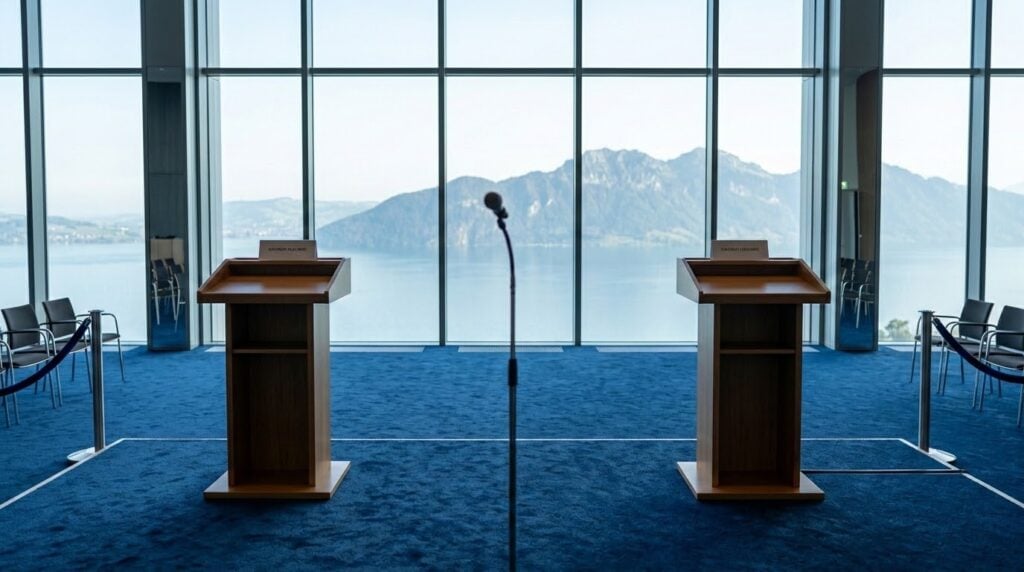
In Switzerland, Vance described a mechanism proposed by Jared Kushner to unfreeze Iranian assets for the purchase of U.S. agricultural goods. “That money is not going to be unfrozen unless we continue to see progress,” Vance said. President Donald Trump confirmed the arrangement to reporters: “Money that’s being unfrozen is going to be used to buy food, and the food’s going to be bought exclusively through the United States from our farmers. Corn, soybeans, all of the things they need are going to be bought from our farmers.”
Reports of a $300 billion reconstruction package for Iran drew a sharp response from Trump, who called the figure “fake news” and denied any government investment in Iran was part of the deal. The MOU text confirms frozen assets will be released, with procedures to be “mutually agreed upon during negotiations.” The specific dollar amount attached to those assets remains disputed. The asset release mechanism does not.
Trump confirmed frozen Iranian assets will be unfrozen. He disputed the dollar figure attached to them. The MOU text confirms the release mechanism exists.
Vance declined to name who would fund any reconstruction package, speculating that both governmental and private investors might be involved. The national debt interest payments now run $2.96 billion per day, which frames the fiscal context for any reconstruction commitment the U.S. might absorb.
What Happens If the 60-Day Window Fails?
The Lebanon de-confliction cell established in Switzerland is the first test of the agreement. Iran has stated that continued Israeli military operations in Lebanon constitute a violation of MOU terms requiring a halt to hostilities on all fronts. Israeli Prime Minister Benjamin Netanyahu has vowed to maintain a security zone in southern Lebanon and said Israeli forces retain “full freedom of action” against any threat. Vance acknowledged that Israeli operations have at times complicated negotiations. Israel was not a signatory to the MOU and has not agreed to its terms.
The Strait of Hormuz communications line, established to manage incidents and ensure safe passage for commercial shipping, is now operational. Tanker traffic began recovering after the Switzerland talks concluded. The toll-free arrangement runs 60 days only. Long-term access terms remain to be negotiated.
The MOU requires hostilities in Lebanon to end on all fronts. Israel was not a party to the agreement. That gap does not close itself.
Technical nuclear talks are expected to continue at the Bürgenstock resort. The 60-day window runs to approximately August 18, 2026. The White House has already transmitted the MOU to Congress, triggering a 30-day review window under the Iran Nuclear Agreement Review Act of 2015. A senior Atlantic Council fellow told Al Jazeera the technical phase could prove far more challenging than the political agreement itself and may ultimately take longer than the timeline allows.
For now, the sanctions waivers are active. The naval blockade is coming down. The frozen assets are moving. The nuclear verification has not started.
Frequently Asked Questions
What did the U.S. agree to in the Iran nuclear ceasefire deal?
The U.S. committed to immediately issuing sanctions waivers for Iranian oil exports, removing the naval blockade of Iranian ports within 30 days, and releasing frozen Iranian assets. These commitments take effect before the 60-day nuclear negotiation produces a verified outcome.
Did Iran agree to let nuclear inspectors back in?
Vice President JD Vance said yes on June 22, 2026. Iran’s Foreign Ministry said no nuclear discussions took place and no new commitments were made the same day. The contradiction is unresolved. Technical talks are the only current mechanism to settle it.
What does the Iran MOU actually leave out?
The MOU does not address enrichment limits, Iran’s ballistic missile program, or its network of armed proxies in Lebanon, Yemen, Iraq, and Syria. Clause 8 includes Iran’s reaffirmation against nuclear weapons development and a downblending mechanism for its enriched stockpile. Enrichment limits and the full scope of IAEA access remain deferred to the 60-day negotiation.
Is the $300 billion Iran reconstruction figure real?
President Donald Trump called the $300 billion figure fake news. The MOU text confirms frozen Iranian assets will be released, with the specific amount and procedures to be mutually agreed upon during negotiations. Vance confirmed a Kushner-proposed mechanism to unfreeze assets for Iranian purchases of U.S. agricultural goods. The total figure is disputed. The asset release mechanism is not.
Who actually signed the Iran nuclear ceasefire deal?
President Donald Trump signed the MOU at the Palace of Versailles on June 17, 2026. Iranian President Masoud Pezeshkian signed remotely from Tehran. Iran’s Parliament Speaker Mohammad Bagher Ghalibaf led Tehran’s negotiating team in Switzerland. JD Vance led the U.S. delegation. Pakistan and Qatar mediated.
What does Clause 8 of the MOU say about Iran’s nuclear program?
Clause 8 states that Iran reaffirms it shall not procure or develop nuclear weapons. It also establishes a mechanism for the fate of Iran’s enriched uranium stockpile, with on-site downblending under IAEA supervision set as the minimum methodology. Enrichment limits and the scope of IAEA access remain to be negotiated during the 60-day window.
Is Israel bound by the Iran ceasefire deal?
No. Israel was not a signatory to the MOU. Prime Minister Benjamin Netanyahu stated Israel retains full freedom of action in Lebanon. The MOU requires hostilities to end on all fronts, including Lebanon. Iran has cited continued Israeli operations as a potential trigger for a violation.