
A federal judge on Wednesday permanently blocked President Donald Trump’s executive order requiring proof of citizenship to register to vote in federal elections.
U.S. District Judge Denise Casper, an Obama appointee sitting in Boston, converted a preliminary injunction she issued a year ago into a permanent ban. Her 59-page ruling covers the core of Trump’s March 2025 executive order “Preserving and Protecting the Integrity of American Elections,” which directed federal agencies to implement proof of citizenship requirements on the national voter registration form and threatened to withhold federal election security grants from states that refused to comply.
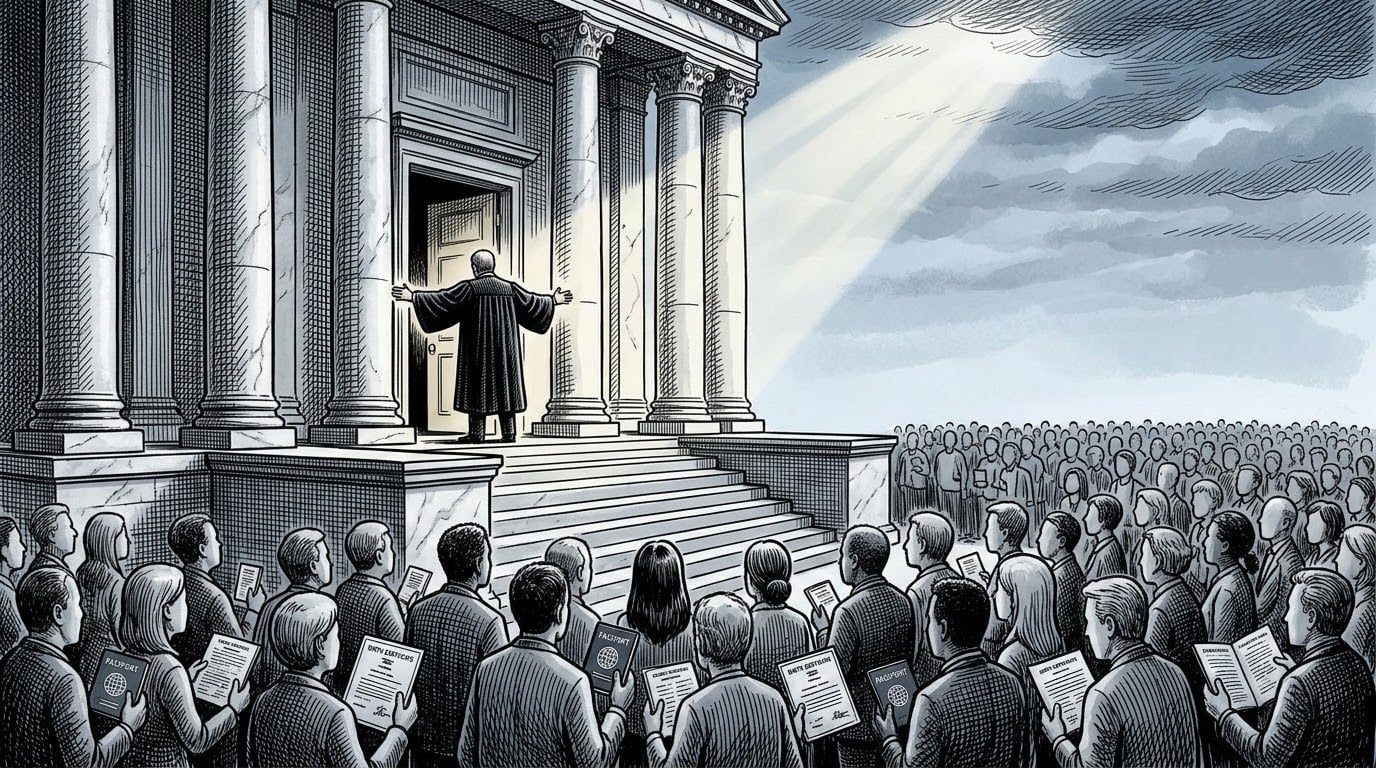
Casper’s reasoning was direct: the Constitution gives states and Congress authority over elections. It does not give that authority to the president. “While the Constitution vests the President with ‘executive Power,'” she wrote, “it does not grant the President any specific powers over elections.”
A Gallup poll from October 2024 found 83% of Americans support requiring proof of citizenship when registering to vote for the first time, including 96% of Republicans and 66% of Democrats. A single unelected federal judge in Boston just placed herself between that majority and the policy they want.
One Judge in Boston Just Overruled 83% of American Voters on Proof of Citizenship
Judge Casper’s ruling permanently bans proof of citizenship requirements on the federal voter registration form, mail-in ballot deadlines, and state compliance penalties.
The Casper ruling does not touch legislation. It blocks executive action only. It permanently bars the administration from requiring proof of citizenship on the federal voter registration form, from enforcing an Election Day deadline on mail-in ballots, and from penalizing states that refuse to comply with those requirements.
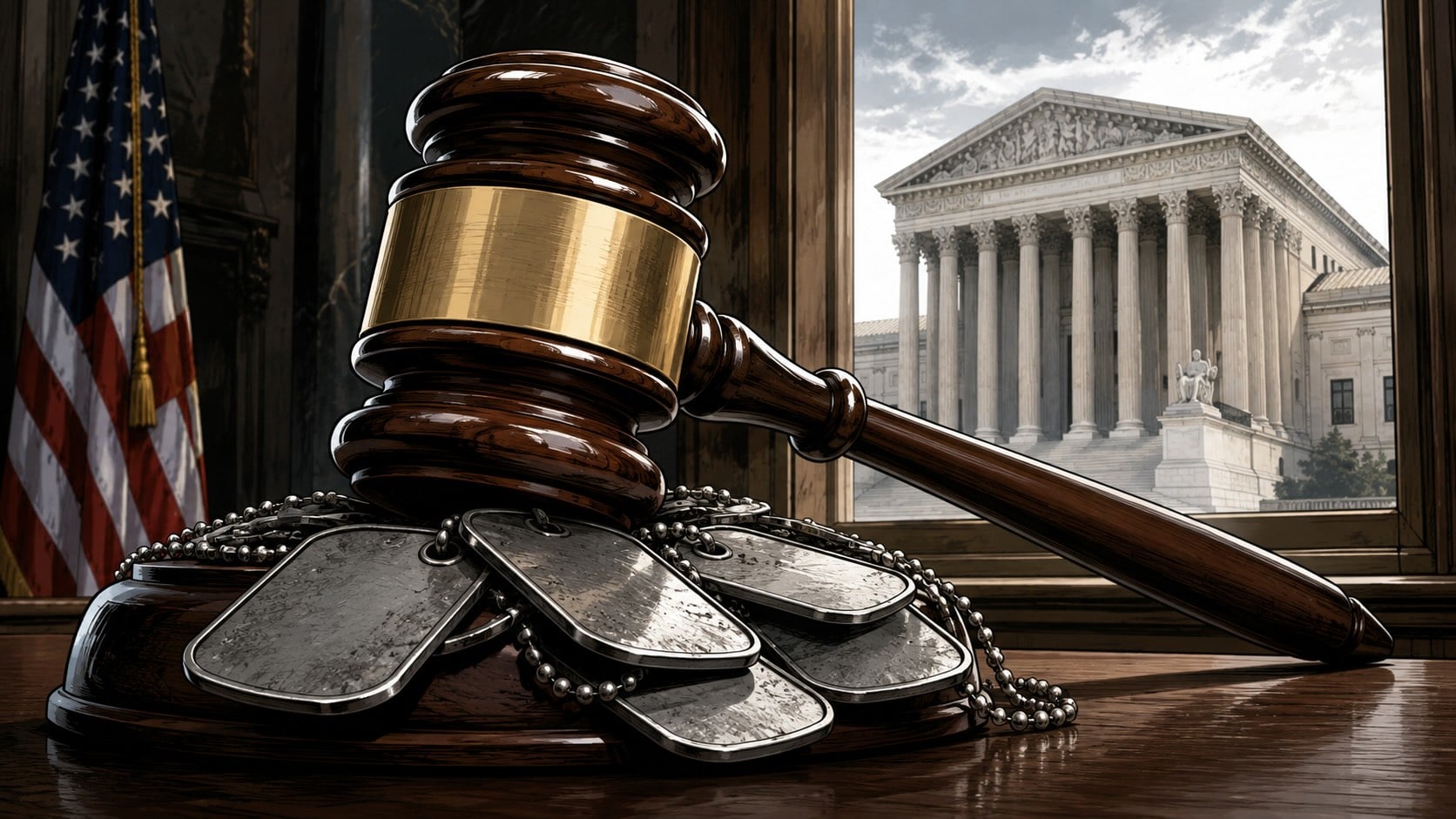
This is the third separate federal ruling blocking pieces of Trump’s election executive orders in the past year. A separate judge in Washington, D.C., previously blocked the administration from adding proof of citizenship to the federal registration form. That same judge later barred the Defense Secretary from requiring documentary proof of citizenship when military personnel register to vote. And on June 22, U.S. District Judge Sparkle Sooknanan in Washington blocked the administration’s revamped immigration database, known as the SAVE system, from being used to verify citizenship on state voter rolls.
Three judges. Three separate blockades. All targeting proof of citizenship enforcement. All within twelve months. This is not one judge having a bad day. It is a coordinated legal strategy by Democratic state attorneys general playing a long game in federal courts. Federal judges have also been the instrument of choice in the redistricting fight: BNA covered how a Virginia judge stepped in to block a congressional map that would have flipped four Republican House seats.
Four Republicans Are the Reason the SAVE America Act Keeps Dying in the Senate
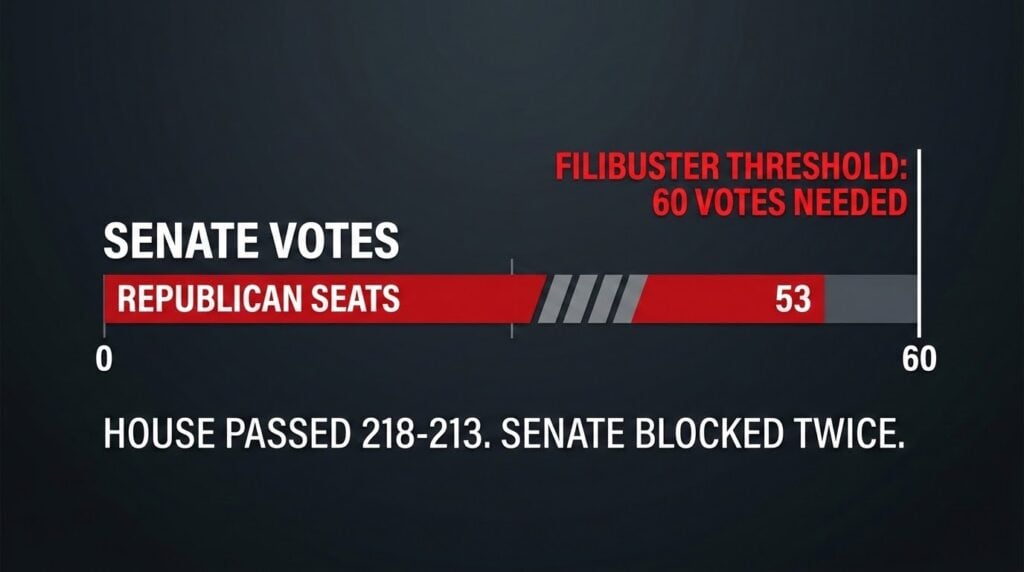
The SAVE America Act passed the House 218 to 213 in February 2026 and has been blocked in the Senate ever since by a Democratic filibuster that four Republicans have refused to break.
The SAVE America Act requires proof of citizenship for voter registration, photo ID at the polls, and mandates that states use federal databases to purge noncitizens from voter rolls. Election officials who register voters without verifying proof of citizenship face criminal penalties under the bill.
Republicans hold 53 Senate seats. They need 60 votes to break a Democratic filibuster, which means seven Democratic votes that have not appeared. But the filibuster is not the only obstacle. Four Senate Republicans voted against the SAVE America Act’s core provisions: Susan Collins of Maine, Lisa Murkowski of Alaska, Mitch McConnell of Kentucky, and Thom Tillis of North Carolina. McConnell, Murkowski, and Tillis opposed both Senate attempts. Collins voted against the Graham amendment in the first round but supported a narrower Lee amendment in the second.
Senate Majority Leader John Thune has been blunt. “We don’t have the votes,” he has said repeatedly. He has declined to trigger filibuster reform to force the bill through. “The goal of the US Congress is not to represent the American people,” one conservative analyst wrote after the second failed vote. “Their goal is to maintain the status quo.”
Trump Canceled the Housing Bill Signing Over This Standoff
President Donald Trump did not absorb Wednesday’s ruling quietly. Hours after Casper’s decision came down, he canceled the scheduled signing of a bipartisan housing affordability bill, the 21st Century ROAD to Housing Act, which had passed the Senate 85 to 5. The bill would have streamlined environmental reviews for homebuilders and boosted federal housing subsidies, a rare area of bipartisan agreement ahead of the midterms.
Trump posted that he will not sign any legislation until Congress passes the SAVE America Act, which he called a “National Emergency.” He told House Republicans in February: “I’m not going to sign anything until this is approved. It’ll guarantee the midterms.”
Thune held a closed-door lunch with the president Wednesday afternoon. By Thune’s own account, it was mostly Trump explaining how important the SAVE America Act is to him. The votes have not changed.
The midterm elections are five months away.
Three Remaining Paths to Proof of Citizenship in Federal Elections
Proof of citizenship in federal elections is not finalized as a policy. Three pathways remain open.
First, the Supreme Court. A separate case on whether mail ballots must arrive by Election Day is still pending before the justices. That ruling could signal how the Court views congressional and presidential authority over election administration and set the table for a broader constitutional challenge to the Casper decision.
Second, filibuster reform. Trump has pushed the Senate to eliminate the 60-vote threshold for the SAVE America Act. Thune has resisted. But the four Republican defectors are a known number with known names: Collins, Murkowski, McConnell, Tillis. That arithmetic does not change unless the political cost of blocking proof of citizenship requirements becomes greater than the cost of supporting them.
Third, the courts on appeal. The Casper ruling is a district court decision. The administration can appeal to the First Circuit and, ultimately, to the Supreme Court. The constitutional question looks different if Congress passes the SAVE America Act first: legislative authority over elections is on much stronger footing than executive orders.
For now, proof of citizenship requirements sit where they have sat for over a year: passed in the House, blocked in the Senate, blocked in three separate federal courts, and supported by the same 83% of Americans who have been watching Washington not act on it.
“We need to be able to trust that only eligible Americans are casting ballots,” reads the Restoration of America ad campaign that spent $5 million pressuring the Senate this spring. The Senate heard it. It did not move.
Frequently Asked Questions
What did the judge rule on proof of citizenship for voting?
U.S. District Judge Denise Casper in Boston permanently blocked President Donald Trump’s executive order requiring proof of citizenship to register to vote. She ruled that the Constitution gives election authority to states and Congress, not the executive branch.
What is the SAVE America Act?
The SAVE America Act is federal legislation requiring proof of citizenship for voter registration and photo ID at the polls. It passed the House in February 2026 by a vote of 218 to 213 but has stalled in the Senate, where Democrats are using the filibuster to block it and four Republican senators have voted against its core provisions.
Which Republican senators voted against the SAVE America Act?
Susan Collins of Maine, Lisa Murkowski of Alaska, Mitch McConnell of Kentucky, and Thom Tillis of North Carolina voted against the SAVE America Act’s core provisions. McConnell, Murkowski, and Tillis opposed both Senate attempts. Collins voted against the first attempt but supported a narrower version in the second vote.
What did Trump do after the ruling?
President Donald Trump canceled the scheduled signing of the 21st Century ROAD to Housing Act, a bipartisan bill that had passed the Senate 85 to 5, saying he will not sign any legislation until Congress passes the SAVE America Act.
Can proof of citizenship for voter registration still become law?
Yes. The Casper ruling blocks executive action, not legislation. If the SAVE America Act clears the Senate and is signed into law, proof of citizenship for voter registration would be established through congressional authority, which is on a stronger constitutional footing than an executive order.