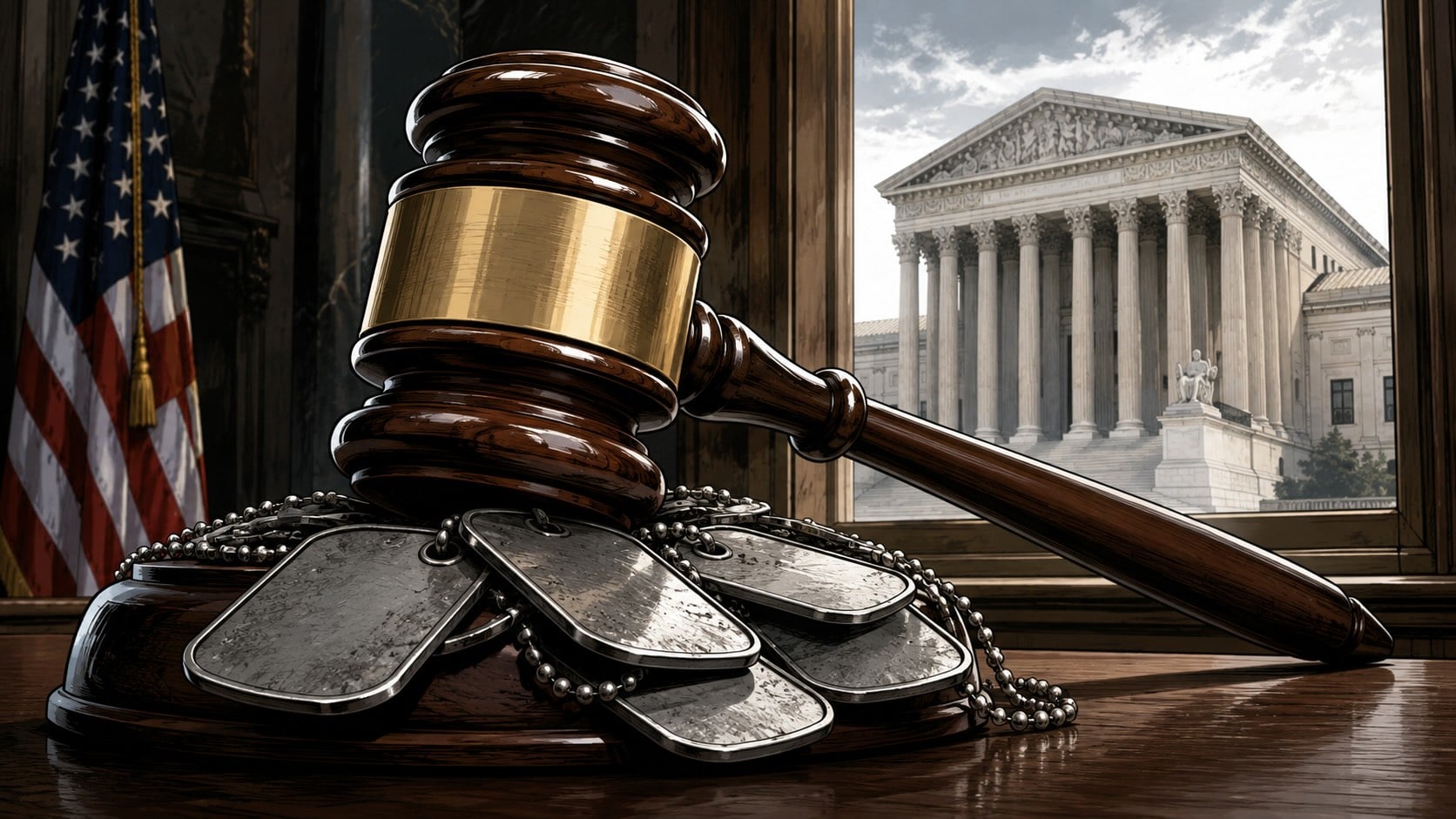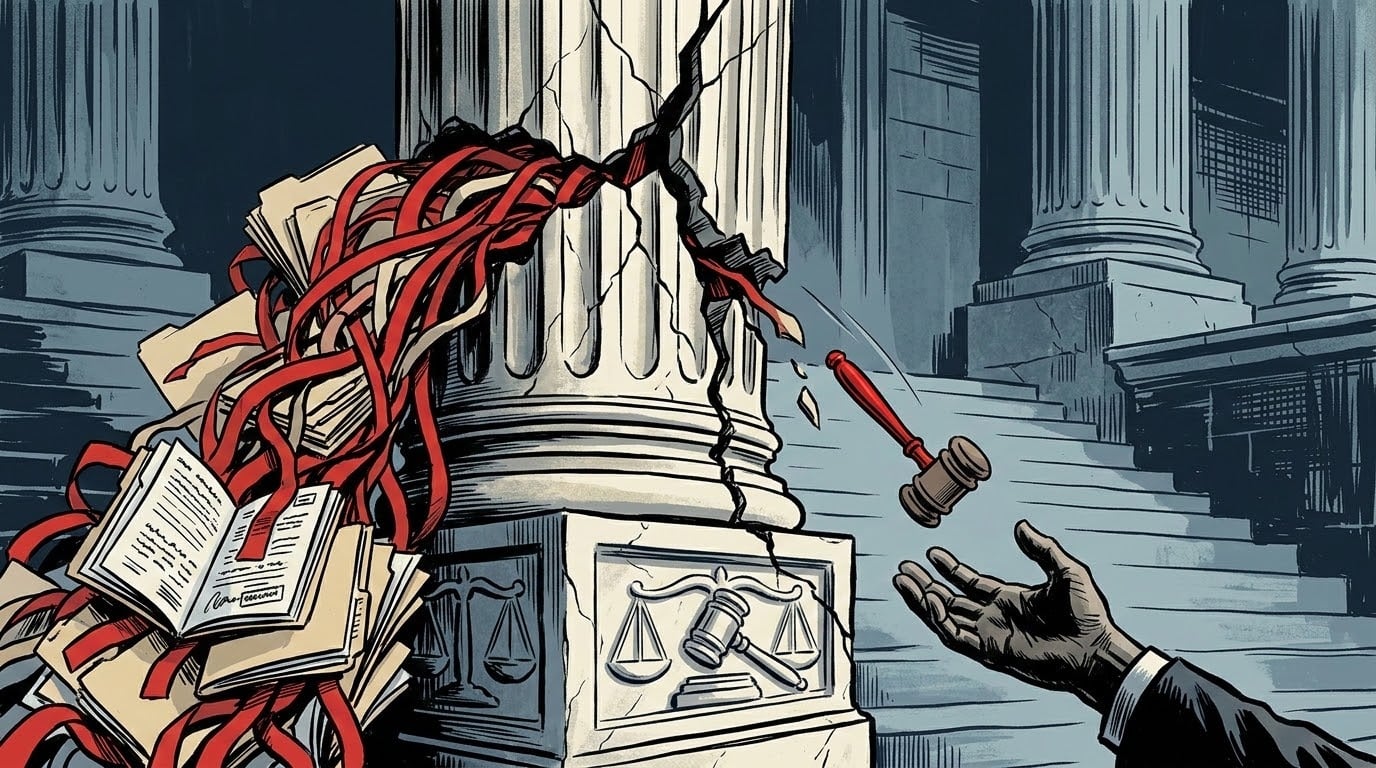

The Supreme Court ruled Monday that President Donald Trump can fire independent agency officials at will, striking down a 90-year-old precedent that let unelected commissioners outlast the presidents who appointed them and the voters who never chose them.
The 6-3 decision in Trump v. Slaughter overturned Humphrey’s Executor v. United States, the 1935 case that gave Congress the power to shield agency commissioners from presidential removal except for cause like neglect of duty or misconduct. Chief Justice John Roberts wrote the line that ends nine decades of legal cover for that arrangement: “If anything more is left of Humphrey’s, we overrule it.”
The case started with one firing. Trump removed Federal Trade Commissioner Rebecca Slaughter in March 2025 without citing cause, telling her only that her continued service was “inconsistent” with his administration’s priorities. Slaughter sued. A district court ordered her reinstated. An appeals court agreed. The Supreme Court just settled it for good, and the answer favors the people who actually won an election.
Who Controlled What You Couldn’t Touch
Independent agencies were built on a simple idea: insulate certain regulators from politics by making them hard to fire. Congress wrote that protection into the FTC’s founding law in 1914. The Supreme Court upheld it in 1935 after Franklin Roosevelt tried to remove a commissioner who wouldn’t fall in line with the New Deal.
What that protection actually did was create a layer of federal power that answered to no election. Roberts spelled out exactly how much power that layer holds today: “In its present form, the FTC enforces and administers some 80 statutes, which cover almost every facet of our Nation’s economy. The tasks it undertakes are ‘the very essence of execution of the law,’ precisely the president’s constitutional role.”
That’s an agency writing rules that touch nearly every business in the country, run by people a president couldn’t remove no matter how badly they ignored his priorities or the priorities of whoever voted him in.
What the Supreme Court Opinion Actually Said
Roberts grounded the ruling in the founding design of the executive branch itself. He traced it back to the constitutional convention, where delegates debated a multimember council instead of “unity in the Executive magistracy,” which they feared would serve as “the foetus of monarchy.” But unity won out. The Framers’ choice, Roberts wrote, “was not made lightly.”
From that foundation, the structural fix follows directly: “Our Constitution creates three branches, but only one president. Subordinates who exercise the president’s power are subject to removal by him. Then, and only then, can they remain accountable to the president, and the president to the people.”
That’s the mechanism restored. Accountability runs from the agency, to the president, to the voters who hired him. For 90 years, the last link in that chain was broken by court order.
Justice Neil Gorsuch’s concurrence said what the ruling means in six words: “Independent agencies are not so independent after all.”
Why This Decision Reaches Far Beyond One Commissioner
The ruling’s logic doesn’t stay contained to one commissioner at one agency. Legal protections nearly identical to the FTC’s cover roughly two dozen other multimember bodies, and this decision stands to impact roughly two dozen multimember agencies across the government, allowing a president to install appointees who fit his political mold. Those agencies regulate vast swaths of American life, including labor disputes, federal employee rights, workplace discrimination, credit unions, product recalls, plane accidents and more.
That list includes the National Labor Relations Board, the Merit Systems Protection Board, and the Consumer Product Safety Commission, bodies Trump had already moved to fire members from while this case worked through the courts.
The One Carve-Out
The ruling has a single, deliberate exception. In a separate 5-4 decision issued the same day, the Court blocked Trump’s attempt to fire Federal Reserve Governor Lisa Cook, preserving the central bank’s independence for now. Roberts drew the line himself, describing the Fed as a uniquely structured institution with its own historical tradition dating to the First and Second Banks, different in kind from a regulatory commission like the FTC.
The Court was careful to say the FTC ruling doesn’t reach that far. The accountability fix applies to the regulators who write the rules. It does not apply to the institution that sets interest rates.
How the Right Is Reading This
Conservative legal and policy circles called the ruling exactly what Raymond’s been waiting to hear confirmed by the nation’s highest court. The Competitive Enterprise Institute called it a major win for constitutional accountability, writing that independent regulatory agencies are “anathema to Constitutional design and democratic accountability” and that the ruling “reaffirmed a central constitutional principle: officials who execute federal law must remain accountable within the executive branch.”
Breitbart’s coverage focused on the Court’s own reasoning for finally letting the precedent go, noting the FTC’s powers had “expanded to cover virtually every corner of the American economy” in the 90 years since Humphrey’s Executor was decided, making the old carve-out unworkable.
The Daily Signal put it in the plainest terms available: the ruling delivered a “massive blow to the deep state, reversing 90-year precedent.”
Trump’s own reaction matched the mood on the right. He called it the “Greatest Increase in Presidential Power in the last 100 years. Such a Monumental Ruling at such an important time!”
Solicitor General D. John Sauer, who argued the case for the administration, had told the justices in December that Humphrey’s Executor “hasn’t withstood the test of time” and had produced exactly the kind of unaccountable bureaucracy Roberts’ opinion now dismantles.
What Really Changed Monday
For 90 years, a president could win an election and still find federal agencies run by people he didn’t choose, couldn’t fire, and couldn’t hold accountable for the decisions they made in his name. That ended Monday. Roberts didn’t soften the scope of it: “All we do today is recognize what has been clear for a century, that those who fall within the President’s ‘general administrative control’ must be removable by the President at will.”
The Federal Reserve stays out of reach for now. Everything else just got a lot more answerable to whoever actually won.
Frequently Asked Questions
Can Trump fire independent agency officials now?
Yes. The Supreme Court ruled 6-3 that the president can fire heads of independent agencies like the FTC at will, overturning the 1935 precedent in Humphrey’s Executor.
What is Humphrey’s Executor and why was it overturned?
Humphrey’s Executor was a 1935 ruling that let Congress shield agency commissioners from being fired without cause. The Supreme Court overturned this rule today, ruling the protection violated separation of powers.
Does this ruling affect the Federal Reserve?
No. A separate 5-4 ruling the same day blocked Trump from firing Fed Governor Lisa Cook, keeping the central bank’s independence intact.
Which agencies does this reach beyond the FTC?
Roughly two dozen multimember agencies, including the National Labor Relations Board, the Merit Systems Protection Board, and the Consumer Product Safety Commission.