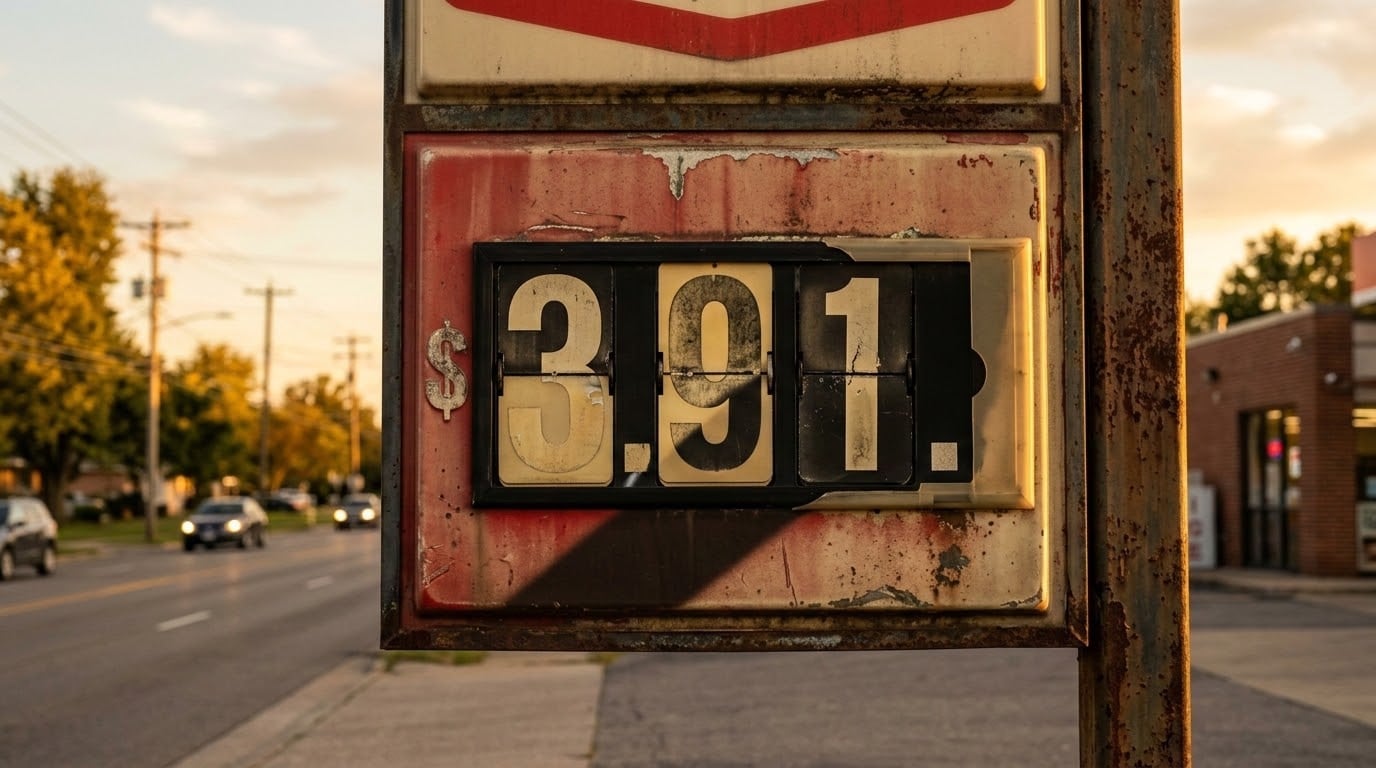

Crude oil fell below $70 a barrel on Wednesday for the first time since the Iran war started. Before the U.S. and Israel launched strikes on Iran on February 28, you were paying $2.98 a gallon. Today you’re paying $3.91.
Crude has given back almost everything the war added to its price. Your pump price hasn’t.
President Donald Trump posted on Truth Social shortly after midnight Tuesday: “The big Oil Companies are not dropping their price at the pump commensurate with the sharply lower prices they are paying for Oil. Those prices are dropping like a rock! In other words, customers are being ‘gouged.’ I have instructed the DOJ to immediately start looking into this. Gasoline prices better start going down a lot faster than what I’m seeing!”
The Department of Justice confirmed the probe the same day, telling ABC News that fuel prices are “not only a national security issue” but something that “impacts the wallet of every American.”
Despite Falling Oil Prices, Gas Prices Only Dropped 64 Cents
West Texas Intermediate crude peaked at $114.58 a barrel on April 7, according to Center Square reporting, then fell after the U.S. and Iran signed a memorandum of understanding on June 16 to reopen the Strait of Hormuz. As of Wednesday, WTI closed at $70.34, down $44 from that peak.
Energy markets follow a rough rule: every $10 drop in crude translates to about 25 cents at the pump over the following weeks. A $44 crude drop implies roughly $1.10 in pump relief. The national average has dropped 64 cents from its May peak of $4.55, according to AAA.
The other 46 cents hasn’t arrived yet. On a 13-gallon fillup, that’s $6 per tank you’re still paying that crude prices say you shouldn’t be. Fill up twice a week and that’s $48 a month sitting in the gap between where oil is and where your gas station’s sign hasn’t moved.
Why Do Oil Companies Say the Lag Is Normal?
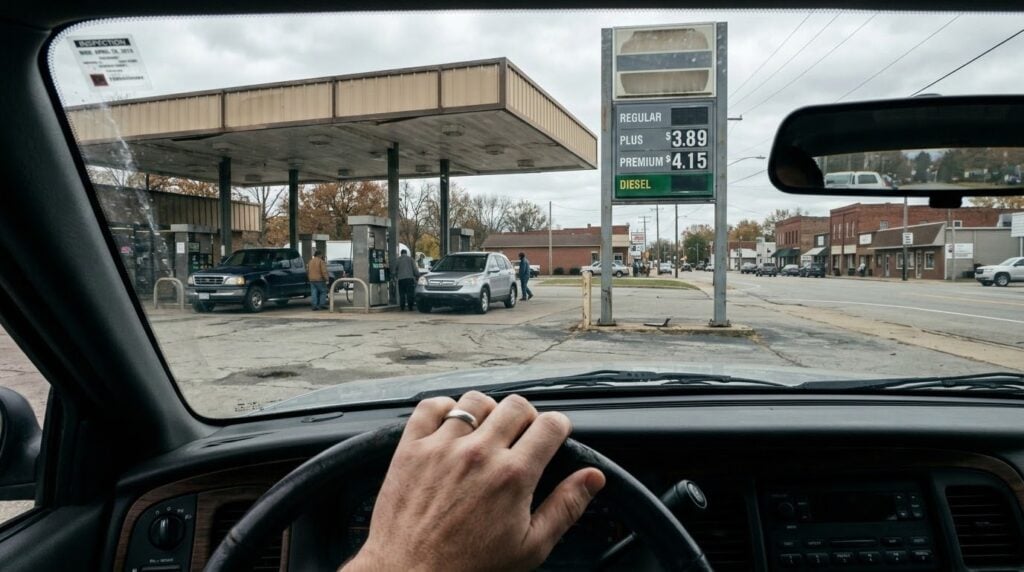
The American Petroleum Institute pushed back on Trump’s probe within hours. Spokesperson Bethany Williams told NBC News the industry “shares the goal of delivering relief at the pump,” but that “gasoline prices don’t move in lockstep with crude oil, especially during a major global disruption that is still affecting supply, refining and inventories.”
The mechanics are real. Crude drilled today doesn’t reach your tank this week. It moves through tankers, refineries, fuel terminals, and distribution networks over several weeks. Refiners bought higher-cost crude during the spring spike and are still working through it before they can pass cheaper barrels to the pump.
Energy economists call the pattern “rockets and feathers.” Pump prices shoot up the moment crude spikes. They drift down slowly when crude falls. Michael Noel, a professor of economics at Texas Tech University, told TIME the current pace of decline is “largely normal” given the mechanics of a supply chain that takes months to move oil from the ground to your tank.
Normal doesn’t mean fast. And normal has never meant the savings arrive on your schedule.
Have Past Presidents Ever Translated Falling Oil Prices into Lower Gas Prices Immediately?
Trump’s DOJ instruction follows a pattern that goes back three decades. The Clinton, Bush, Obama, and Biden administrations all launched investigations or called for probes into pump price lag after crude drops, as Axios reported Wednesday. None produced enforcement action against a major oil company for the timing of retail price adjustments.
That track record doesn’t make this probe meaningless. Oil company executives know a DOJ investigation generates congressional scrutiny and the possibility of subpoenas regardless of how it ends. Trump compounded that pressure Tuesday at a Mack Trucks factory in Pennsylvania, telling the crowd oil would continue “to come charging down.” Energy Secretary Chris Wright said Sunday that Hormuz traffic “is already back to normal” and prices “will continue to head down.”
Whether that pressure accelerates the companies’ timeline is an open question. The 60-day ceasefire is still in effect with final nuclear negotiations ongoing. If the deal holds, crude has room to fall further. If it breaks, the entire price chart reverses in a week.
When Will Gas Prices Return to Pre-War Levels?
Gas is heading down. The national average dropped from $4.05 to $3.91 in the past week alone, per AAA. More relief is coming at whatever speed the supply chain allows.
But the pre-war baseline was $2.98. [Julius: embed internal link to prior gas price article here once slug confirmed.] You’re at $3.91. That 93-cent gap is on every gallon, every fillup, every week, until the supply chain catches up completely, and that assumes the ceasefire holds.
Gas isn’t the only household cost that moved during the Iran war and hasn’t come back. The May PCE, the Federal Reserve’s preferred inflation gauge, came in at 4.1 percent annually, its highest reading since April 2023, according to the Bureau of Economic Analysis. The personal savings rate fell to 3 percent. One conflict moved your household costs sharply in a matter of weeks, and the inflation picture it accelerated hasn’t resolved just because crude crossed back below $70.
All content on BreakingNewsAlerts.com is for informational and educational purposes only. Nothing on this site constitutes legal, financial, or medical advice. Consult a licensed professional before making decisions based on any information published here.
Frequently Asked Questions:
Why is gas more expensive than crude oil prices suggest it should be?
Refiners bought crude at higher prices during the spring spike and are still selling through that inventory. The supply chain lag takes weeks as oil moves through tankers, refineries, and fuel terminals before reaching a pump. That documented mechanics gap is the difference between where crude is today and what you’re paying per gallon.
What is Trump’s DOJ probe investigating?
President Donald Trump directed the Justice Department to examine whether oil companies are deliberately holding back pump price reductions to protect profit margins. The DOJ confirmed the probe is active as of June 26. No companies have been named and no enforcement timeline has been announced.
How much more per gallon are drivers paying compared to before the Iran war?
The national average is $3.91 as of late June 2026, versus $2.98 in February before the conflict began. That’s 93 cents per gallon above where prices stood before the war started.