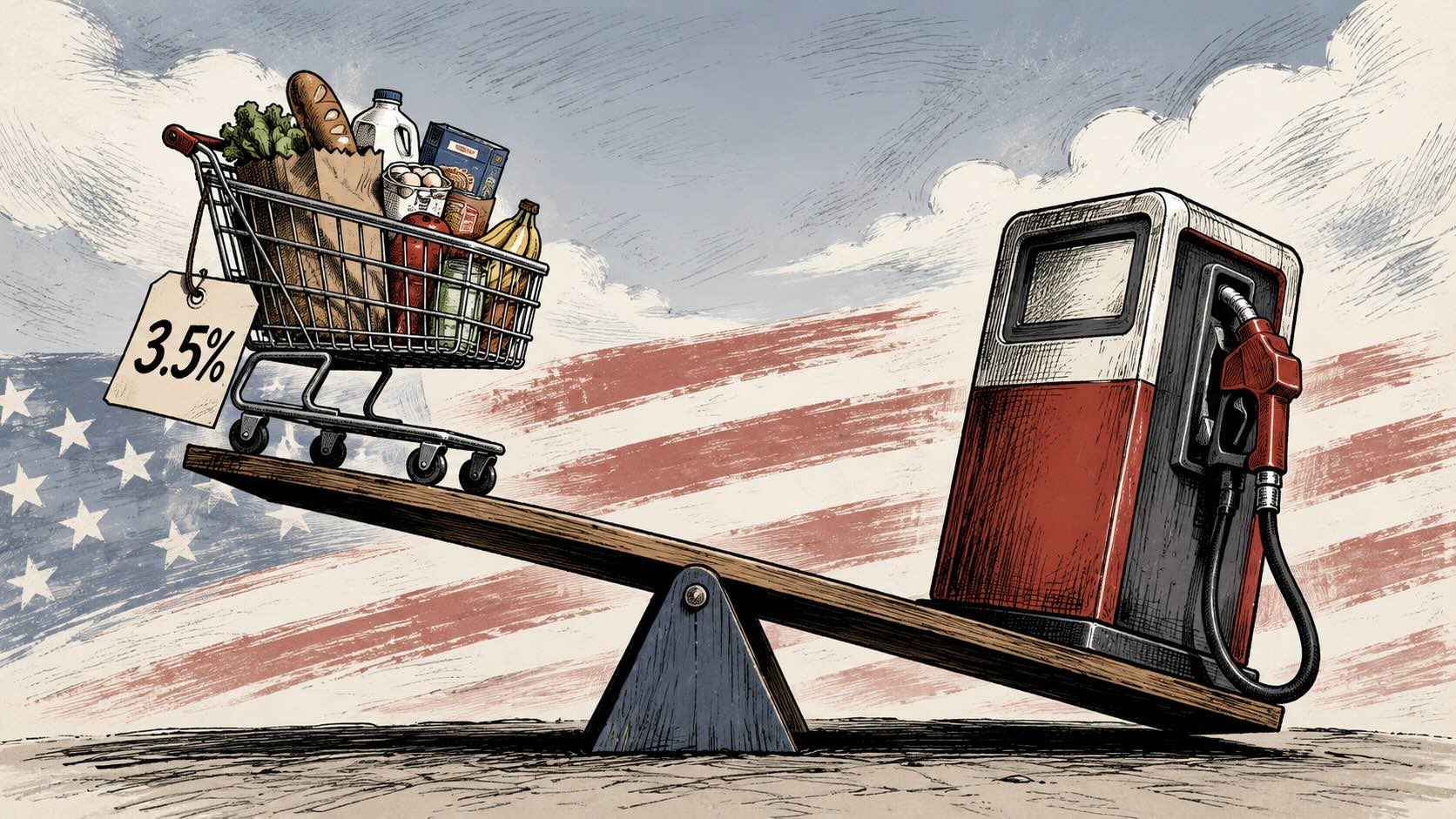

June inflation fell to 3.5%, the biggest one-month drop in consumer prices since 2020. Nearly all of that drop came from one place: the gas pump. Gas prices are already rising again.
The Bureau of Labor Statistics reported that its Consumer Price Index fell 0.4% in June from May, pulling the annual inflation rate down from 4.2% to 3.5%. Core inflation, which strips out food and energy, held flat for the month and sits at 2.6% for the year.
So What Does June Inflation at 3.5% Actually Mean?
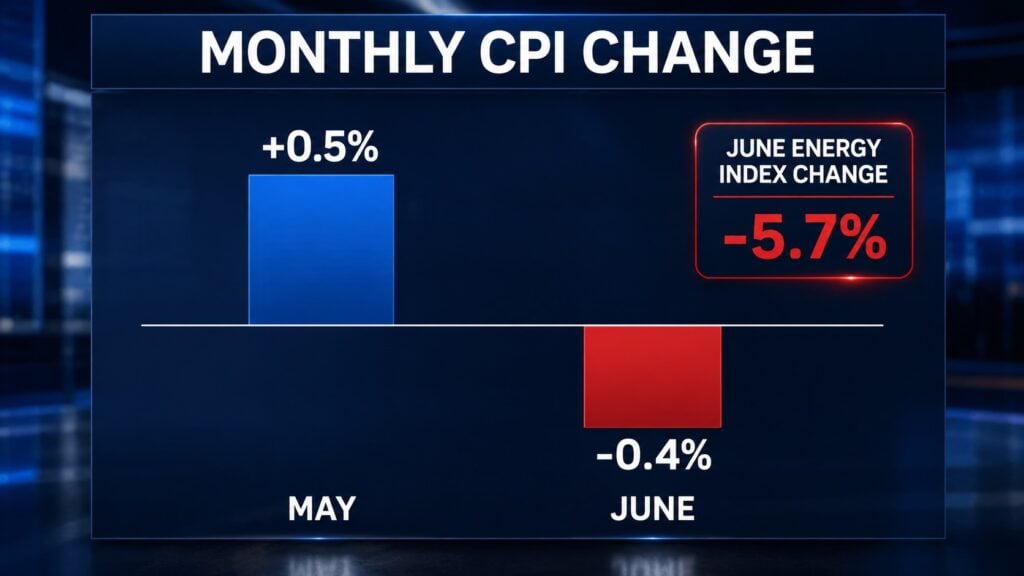
It means one category did almost all the work. The energy index fell 5.7% in June, the largest one-month drop since 2020. Gasoline alone fell 9.7%. That happened because a ceasefire between the United States and Iran, signed in mid-June, briefly cooled fears of a wider conflict and pulled oil prices down with it.
Even with the drop, energy prices are still 15.7% higher than a year ago. Gasoline is still up 26.7%. June didn’t erase the last year of increases. It paused them for one month.
Why Is Your Grocery Bill Still Climbing?
Grocery prices rose 0.2% in June and are still climbing. That’s on top of electricity and grocery bills that were already rising earlier this year. Four of the six major grocery store food categories tracked by BLS went up, not down. Beef roast prices are running about 14% higher than a year ago, tied to a U.S. cattle herd now at its 75-year low, the smallest since 1951, according to USDA’s January inventory report. That shortage doesn’t fix itself by next month’s report.
The number that made headlines this week wasn’t a grocery number. It was a gas number.
Is the Relief Already Over?
The ceasefire that drove June’s gas prices down ended this month. President Donald Trump said the U.S. would continue military action against Iran, and Iran responded by again contesting control of the Strait of Hormuz. Oil prices have already jumped since the June data was collected. GasBuddy’s Patrick De Haan says the national gas average could climb back toward $4 a gallon within about a week.
Federal Reserve Chairman Kevin Warsh testified before Congress this week that the central bank has “no tolerance” for inflation settling back in. Traders trimmed the odds of a September rate hike to 63%, down from over 75% a day earlier, according to the CME FedWatch Tool. None of that changes what’s already happening at the pump.
That same inflation data doesn’t just move markets and interest rates. It’s also the first real number behind next year’s Social Security raise.
What Does This Mean for Your 2027 Social Security Check?

Estimates released this week put the 2027 COLA between 3.6% and 3.8%, depending on which analyst you ask. AARP is forecasting 3.6%. The Senior Citizens League is holding at 3.8%. Independent analyst Mary Johnson cut her forecast to 3.7%, down from 4.7% a month ago, citing the same energy-driven dip.
The 2027 COLA range of 3.6% to 3.8% would add roughly $75 to $79 a month to the average retired worker’s check of about $2,071 a month. The official number isn’t set until October, after three more months of data.
It may not go far. Medicare Part B premiums are projected to rise to $209.50 a month in 2027, up from $202.90. The Senior Citizens League found that 89% of seniors already said this year’s 2.8% COLA fell short of their actual costs. The group’s research shows Social Security checks have lost close to 14% of their buying power since 2010 — a shortfall trust fund insolvency could make worse, not better.
What Should You Do Before the October COLA Announcement?
The 2027 COLA isn’t official until October 14, after the September inflation report comes in. Until then: pull your current benefit statement at SSA.gov, don’t assume the 3.6% to 3.8% range holds if energy prices keep climbing between now and September, and check what a higher Medicare Part B premium does to whatever raise you actually get.
The Bottom Line
June’s number was real. So is what’s already undoing it. Gas prices pulled the headline rate down for one month, grocery prices didn’t move, and the same conflict that made June’s relief possible is now working against July’s numbers. If you’re budgeting off this week’s headlines, plan for prices to climb again, not for another month like this one.
Track your own household numbers against the Social Security Administration’s COLA estimates as they update through the fall, rather than relying on any single month’s report.
Frequently Asked Questions
What is the June 2026 inflation rate?
Consumer prices rose 3.5% over the 12 months ending in June 2026, down from 4.2% in May.
Why did inflation drop in June?
Almost entirely because energy prices fell. The energy index dropped 5.7% for the month as a temporary Iran ceasefire cooled gas prices.
Are grocery prices still rising?
Yes. Food prices rose 0.2% in June, and most major grocery categories increased.
How will this affect my 2027 Social Security check?
Current estimates put the 2027 COLA between 3.6% and 3.8%, roughly $75 to $79 more a month. The official number comes in October.