
Image source: YouTube
California lawmakers approved Gov. Gavin Newsom’s proposal Thursday to put a new congressional map before voters in a special election. The plan, which would suspend the state’s independent commission lines, marks the first time in decades that California redistricting will be decided directly at the ballot box.
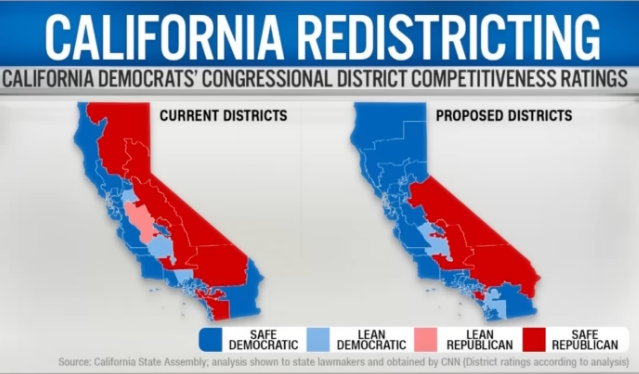
The measure, backed by Democratic leaders, would adopt a Legislature-drawn map through 2030 if voters agree. Supporters say the move is aimed at countering Republican redistricting in Texas, championed by President Donald Trump, which could give his party as many as five additional House seats. By comparison, California’s map could add roughly five new Democratic-leaning districts, though the ultimate decision rests with voters.
Breaking from California’s Redistricting Tradition
California voters established an independent citizens commission after the 2010 census to draw congressional and legislative boundaries, a reform designed to curb gerrymandering. Newsom’s plan departs from that model by allowing a one-time exception. Advocates insist the proposal is a proportional response to Texas, not a permanent rollback of reform.
If approved, the new map would govern elections starting in 2026 and remain in place until 2030. Democrats argue that letting voters decide gives the plan democratic legitimacy. Republicans and reform advocates counter that the measure undermines safeguards that took years to build, exposing the state to partisan manipulation in future battles.
Texas Map Redistrict Pushed California Into Action
The catalyst for this effort lies in Texas, where Republicans advanced a mid-decade redistricting plan with Trump’s backing. That map could cement GOP dominance by creating several new Republican-friendly districts. After Democrats failed to block the Texas plan, California Democrats moved to mount their own response through a special election.
Lawmakers initially tied the California plan directly to Texas by proposing a trigger mechanism. That language was later dropped, signaling a broader goal: secure gains at home regardless of what other states do. Legislative leaders say draft districts will be released soon, allowing campaigns and analysts to model outcomes and prepare legal arguments.
The confrontation underscores a wider trend. Redistricting typically follows the census every 10 years, but several states allow mid-decade redraws. The Supreme Court’s 2019 ruling in Rucho v. Common Cause removed federal courts from reviewing partisan gerrymanders, leaving political and state-level remedies as the only tools. The movement for a sudden California redistricting is now part of this broader arms race over congressional control.
Ballot Fight and Legal Hurdles Ahead
The coming campaign will highlight sharp differences in how voters view fairness. Supporters will frame the ballot as a way to check Republican advantages in Texas, while opponents will argue that suspending the commission sets a dangerous precedent. Legal challenges are likely before and after the election, particularly over whether the Legislature can legally suspend the commission’s authority.
For Californians, the stakes are concrete. District lines decide whether communities stay intact, which incumbents gain safe seats, and how national parties allocate resources. If both California and Texas adopt new maps, the changes could cancel each other out or further polarize Congress. Either way, voters will shape the outcome of this experiment in partisan balance.
The process now moves into a fast-paced phase. State officials must finalize ballot language, voter education materials, and timelines. Political committees will launch advertising campaigns, and lawsuits could arrive within weeks. California redistricting will remain at the center of the national fight for House control through November.
Should California redistricting proceed as a voter-approved counter to Texas, or should the state keep its independent maps in place? Tell us what you think.