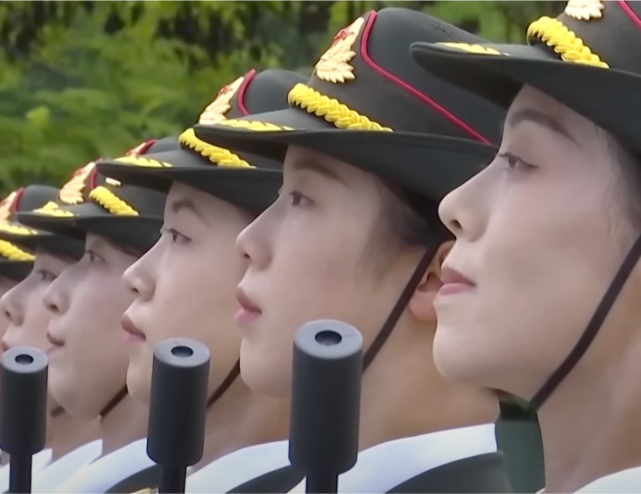

Image source: YouTube
China is set to stage a massive military parade in Beijing on September 3 marking Japan’s formal surrender in World War II. Russian President Vladimir Putin and North Korea’s Kim Jong Un will join Chinese President Xi Jinping for the ceremony. Notably, this gathering also includes 26 other foreign dignitaries, shaping it into a high-stakes diplomatic event that signals growing solidarity among U.S. rivals.
Among the confirmed attendees are Belarusian President Alexander Lukashenko, Iranian President Masoud Pezeshkian, Indonesian President Prabowo Subianto, and South Korea’s National Assembly Speaker Woo Won-shik. Their presence alongside Putin and Kim underscores Beijing’s ability to convene a broad coalition beyond the West. Assistant Foreign Minister Hong Lei framed the event as a demonstration of diplomatic unity and military pride. Meanwhile, major Western and European Union leaders were not among the 26 foreign heads of state and government attending the event, save for Slovakia’s Prime Minister Robert Fico.
A Global Stage for China’s Allies
Beijing’s upcoming military parade commemorates the 80th anniversary of Japan’s surrender in World War II, which ended the conflict in Asia in 1945. The event, formally called the “Victory of the Chinese People’s War of Resistance Against Japanese Aggression,” honors China’s wartime sacrifices and victory alongside the Allied powers. Beijing uses the occasion not only to memorialize its role in defeating Japan but also to project military strength and showcase unity with allies and partners on the global stage.
China’s military parade will feature its latest military hardware, including fighter jets, hypersonic missiles, advanced armored vehicles, which will be put on display in Tiananmen Square. Analysts say the event highlights the country’s modern capabilities and supports a growing narrative of shared resistance against Western influence. With Kim and Putin present, the parade extends beyond ceremonial commemoration into strategic theater. It projects Beijing as the hub of a tightening axis of authoritarian states.
Leaders from Iran and Belarus, both recipients of Western sanctions, will reinforce that message. Meanwhile, Indonesia represents major emerging economies in the Global South that value neutrality or balance. A surprising guest is South Korea, whose parliamentary speaker’s participation signals a cautious diplomatic move amid regional tensions. The resulting lineup creates a rare diplomatic tableau reminiscent of the Cold War–era bloc alignments.
Watchful Silence from the West
The U.S. government has not issued a formal response to the announcement. Neither President Trump nor the State Department has commented publicly on the upcoming military parade. This silence raises concern among conservative commentators who argue that lack of reaction may embolden Beijing’s messaging. Others suggest administration officials are monitoring the situation before issuing a calibrated response.
Despite the absence of a statement, the optics are clear: China has assembled a spectrum of leaders whose values and strategic alignment contrast with those of Western powers. That carries immediate geopolitical implications, from North Korea’s legitimization on the world stage to Russia’s increasingly brazen alignment.
A Signal of Strategic Alignment
For U.S. policymakers, the parade presents a growing challenge. Beijing’s success in hosting a show of military strength that unites such a diverse set of leaders raises questions about the effectiveness of America’s alliances. At this moment, China is proving capable of reorienting global diplomatic groupings even as the U.S. remains largely on the sidelines.
Does the China military parade prove an emerging anti-West bloc led by Xi, Putin, and Kim? Tell us what you think.