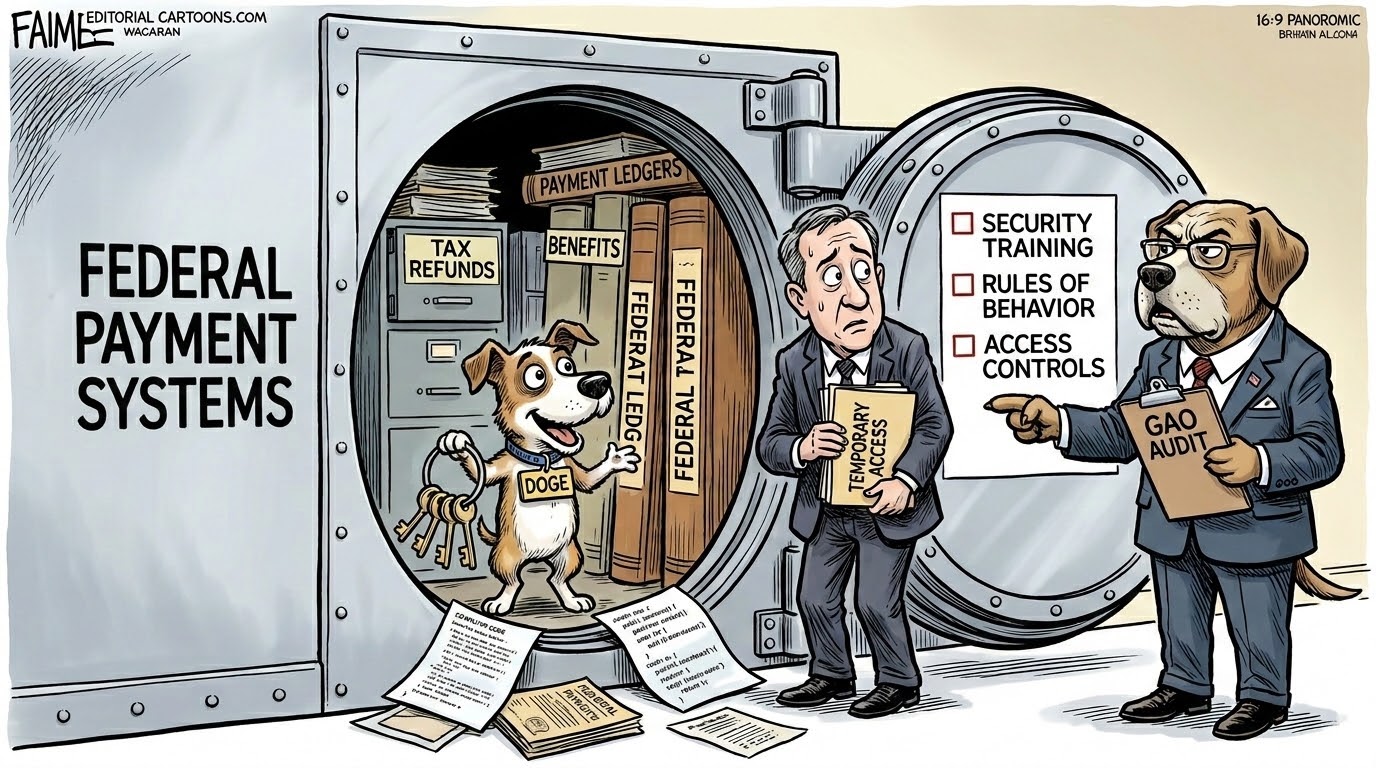

The Government Accountability Office says Treasury gave DOGE data access to federal payment systems and source codes even though required security training and IT rules paperwork were not completed.
That is the core finding in GAO-26-108131, titled Department of Government Efficiency: Treasury Needs to Fully Implement Data Protection Controls. The full report is available as a GAO PDF, with a shorter summary of findings in the GAO highlights document. It gives the DOGE data access fight something Washington usually tries to avoid: a paper trail. But’s let’s keep this clean.
GAO did not say DOGE stole data. It did not say DOGE leaked Americans’ personal information. It did not say federal payments were changed, deleted, or rigged.
What GAO did say is narrower. And still serious.
What GAO Found
Treasury’s Bureau of the Fiscal Service, the office that handles payment systems for much of the federal government, gave a DOGE-linked person access to systems tied to federal payments. That access reportedly included the ability to view, copy, and print data. It also included access to source code, according to reporting on GAO’s Treasury security findings. And according to GAO, the person had not completed required security training or signed Treasury’s IT rules-of-behavior policy. That is not a paperwork problem. That is the lock on the door. The Bureau of the Fiscal Service is not some dusty back office where nothing important happens. It helps process tax refunds, benefits, and payments across federal agencies. If Washington sends money out the door, there is a good chance this machinery is involved somewhere in the process.
So when GAO says access controls were not fully implemented, ordinary Americans have every right to ask: Who had access? Who approved it? What could they see? What could they copy? What logs exist? And who checked the exits when that access ended?
That is the part that matters.
Why Giving DOGE Data Access Matters
Taxpayers wanted waste, fraud, and abuse hunted down, which is good.
The federal government has spent years proving it can burn money faster than a teenager with Dad’s credit card. Nobody serious thinks Washington’s payment systems should be treated like sacred ground where no outsider can ask questions.
But there is a difference between cleaning up the machine and leaving it unlocked. The unprecedented DOGE data access was concerning at the least.
GAO’s finding lands right in that gap.
The watchdog found that DOGE employees inadvertently held modification and deletion authority in several systems. That does not prove they used that authority. It does mean the permission structure was not as tight as it should have been. That is the kind of detail that gets buried when the story gets shoved into the usual shouting match.
One side yells that DOGE is saving the country. The other side yells that DOGE is destroying democracy. Fine. Let them scream into the fan.
The useful question is simpler: Did Treasury data protection controls safeguard the systems that move Americans’ money while giving DOGE access?
GAO says Treasury still had work to do.
The Conservative Oversight Test
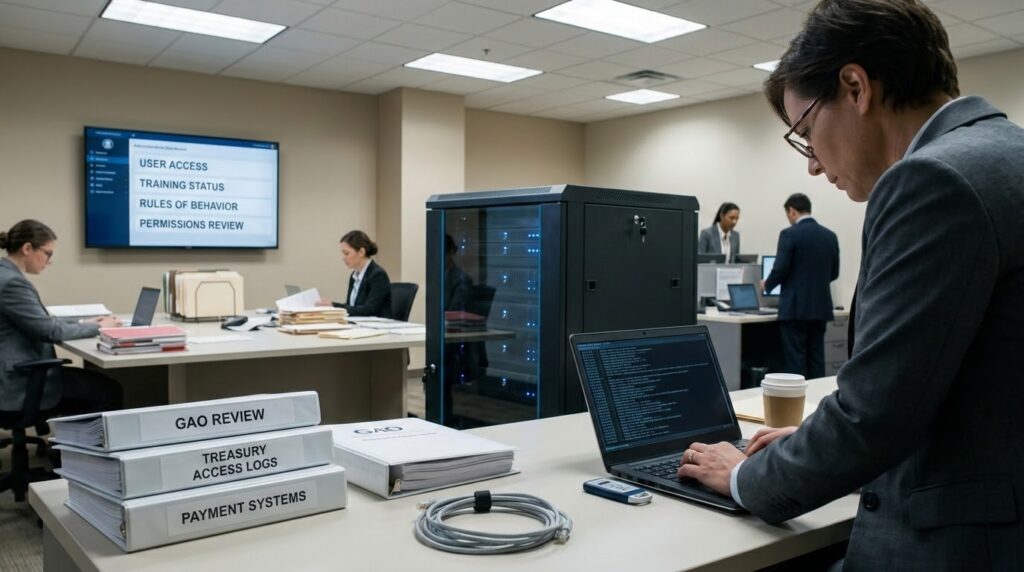
This is why the document matters. It separates the audit from the noise. It lets readers see the mechanism instead of swallowing another round of political theater.
The report also comes as DOGE’s work has stretched across several federal agencies. The Brookings Institution has documented DOGE’s disruption of Social Security operations, while the Harvard Ash Center has profiled DOGE-related database interventions and data access concerns. Congressional oversight materials have also raised questions about Social Security data frictions, with letters and evidence published through the Larson House Pressroom. Those materials are not all the same type of evidence. A GAO report, a think-tank analysis, and a congressional pressroom item do not carry identical weight. That distinction matters.
But the pattern is now clear enough to track: DOGE moved fast. It pushed into sensitive federal systems. Agencies handed over access. Now, watchdogs, lawmakers, and courts are trying to determine whether the guardrails are still in place.
That is a fair story. It is not anti-DOGE. It is pro-accountability.
If you support the mission, you should want the controls nailed down. If DOGE was hunting waste inside systems that touch refunds, benefits, and federal payments, then access logs, training rules, permission limits, and exit paperwork should have been airtight. That is not “resistance.” That is basic adult supervision.
BNA has already tracked the adjacent DOGE job cuts angle and the broader Schedule F fight. This Treasury report is a different lane: not jobs, not benefits administration, but access to the payment plumbing itself.
What GAO Did Not Prove
This point matters because sloppy claims help the people who want the whole story dismissed.
GAO did not prove DOGE stole personal data. It did not prove DOGE leaked payment records. It did not prove DOGE changed anyone’s check, refund, or benefit payment.
The report is about access controls.
That may sound dull. It is not.
Access controls decide who can get inside a system, what they can see, what they can copy, what they can change, and whether anyone can prove what happened later.
If a system moves tax refunds and benefits, access control is not red tape. It is the guardrail between oversight and chaos.
What Comes Next
GAO framed this report on DOGE data access as preliminary so more reports are expected. That means this is not the end of the DOGE data access story. It is the first clean filing in a longer record.
Here is what to watch next.
Did Treasury fully implement the missing controls? Did every DOGE-linked user have access removed when it was no longer needed? Were access logs preserved? Did anyone with modification or deletion authority actually use it? Did other agencies follow stronger rules, or did they make the same mistakes? And will GAO get the documents it needs, or will agencies slow-walk the review until the public loses interest?
That last question matters because the slow-walk is how Washington survives. Give the public a confusing story. Wrap it in acronyms. Turn it into a partisan mud fight. Then wait for normal people to get tired.
As one conservative news reader put it, “I don’t need opinion, I need someone to just tell me what actually happened without the spin.”
Exactly. So here it is.
DOGE got access to Treasury payment-system data. GAO says key safeguards were not fully in place. Treasury needs to finish the controls. More reports are coming.
No panic. No cover-up fantasy. No blind trust, either.
When a temporary government operation gets near the systems that move tax refunds, benefits, and federal payments, the question is not whether you like the mission.
The question is whether anyone kept the keys under control.
You can support the cleanup and still demand to know who had the keys.
Trust, but verify.
Frequently Asked Questions
What did GAO say about DOGE data access?
GAO said Treasury gave a DOGE-associated employee access to federal payment-system data and source code before required security training and IT rules paperwork were completed. The watchdog said Treasury still needed to fully implement data protection controls.
Did GAO say DOGE stole or leaked personal data?
No. GAO did not say DOGE stole data, leaked Americans’ personal information, or changed federal payments. The report focused on access controls, permissions, training, and safeguards.
Why does Treasury’s Bureau of the Fiscal Service matter?
The Bureau of the Fiscal Service helps run payment systems used across the federal government. Those systems are tied to tax refunds, benefits, and federal payments. That is why access controls around those systems matter.
What is the main concern in the GAO report?
The concern is that DOGE-linked personnel received access before key safeguards were fully in place. GAO also found that some DOGE employees inadvertently held modification and deletion authority in several systems.
Is this an anti-DOGE story?
No. This is an accountability story. Taxpayers can support hunting waste, fraud, and abuse while still demanding strict controls over systems that move federal money.
What happens next?
GAO described the report as preliminary and said more work is coming. The key questions now are whether Treasury finished the controls, whether access logs were preserved, and whether other agencies had similar problems.