
Image Source: YouTube
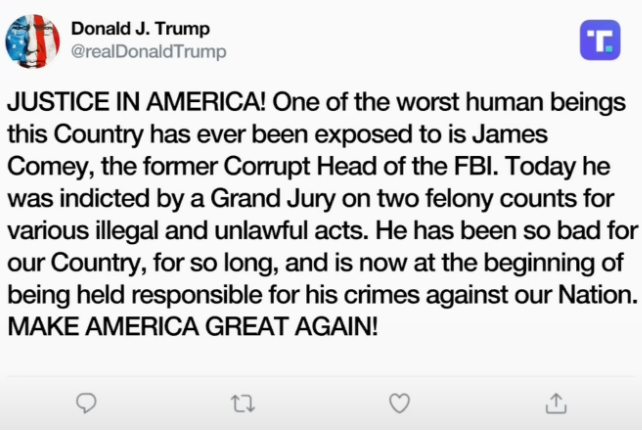
Former FBI Director James Comey has been indicted by the Justice Department on charges of making false statements and obstructing a congressional investigation. The indictment, filed Thursday, marks a dramatic escalation in President Donald Trump’s effort to pursue political retribution against his critics. If convicted, Comey could face up to five years in prison.
The charges stem from testimony and communications related to congressional inquiries into the FBI’s handling of politically sensitive cases. Prosecutors allege that Comey knowingly misled lawmakers and obstructed investigators seeking clarity on how the bureau approached probes of Trump’s allies. The indictment represents the highest-profile criminal case yet tied to Trump’s long-standing grievances with the intelligence and law enforcement communities.
A Background On The Indictment
James Comey served as FBI director from 2013 until Trump dismissed him in May 2017. That firing set off political turmoil, including the appointment of Special Counsel Robert Mueller to examine Russian interference in the 2016 election. Since then, Trump and his allies have repeatedly accused Comey of political bias and misuse of power.
The indictment suggests those grievances have now translated into direct criminal exposure. Prosecutors argue that Comey deliberately obscured facts during sworn testimony and sought to block oversight efforts in Congress. Legal experts note that obstruction and false statement charges are serious but often hinge on proving intent, which can be difficult.
Political Context And Fallout
The timing of the case underscores Trump’s aggressive stance toward his opponents. In recent months, the former president openly called for accountability against those he accused of undermining him. Critics argue that the Justice Department’s pursuit of James Comey blurs the line between legitimate legal process and political score-settling.
For Trump’s supporters, however, the indictment signals long-awaited justice against a figure they see as emblematic of partisan misuse of federal power. Some conservative commentators quickly framed the charges as vindication of claims that Comey acted improperly during his tenure. Liberal lawmakers countered that the prosecution appears politically motivated and sets a dangerous precedent for criminalizing oversight disputes.
Legal Risks For James Comey
If the case proceeds to trial, James Comey faces significant personal and professional consequences. The obstruction charge carries a potential five-year prison sentence, while a conviction for making false statements can bring steep fines and reputational damage.
Comey has not yet entered a plea, but his attorneys are expected to argue that the charges represent selective prosecution driven by Trump’s political agenda. They will likely point to years of investigations into the FBI’s conduct that produced no prior criminal charges against him. The defense may also challenge the interpretation of testimony cited by prosecutors, framing discrepancies as good-faith errors rather than intentional falsehoods.
Implications For Institutions
Beyond the courtroom, the indictment highlights the deep fractures between Trump and the nation’s security apparatus. By targeting a former FBI director, the case raises concerns about whether future law enforcement leaders may be pressured by politics rather than guided by impartial standards.
Observers warn that the prosecution could erode trust in institutions already under strain. If viewed as politically motivated, the charges may weaken confidence in the Justice Department’s independence. On the other hand, a conviction could reinforce the argument that even top officials must be held accountable for misleading Congress.
Looking Ahead
As the case unfolds, both sides of the political spectrum will claim vindication. For Trump, the indictment of James Comey represents the culmination of years spent promising retribution. For Comey’s defenders, it serves as a warning about the dangers of weaponizing justice for political gain. The trial’s outcome will shape how Americans view accountability, partisanship, and the fragile boundary between law and politics.
Do you see the indictment of former FBI chief James Comey as a legitimate effort to hold him accountable for past misgivings? Tell us what you think.