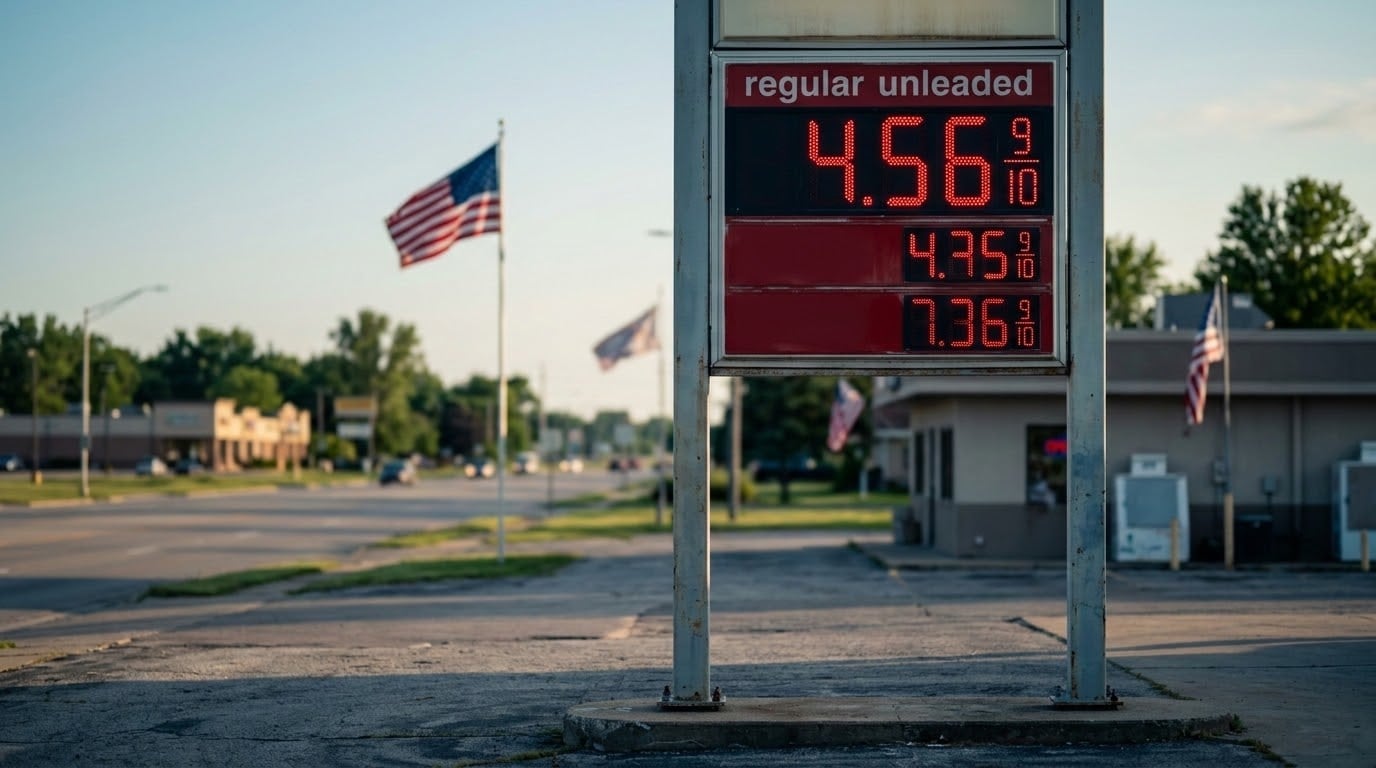

Memorial Day gas prices averaged $4.56 a gallon over the holiday weekend, the highest the nation has paid for the holiday in four years. AAA reported the figure on May 21. Every state has crossed the $4 threshold. Seven states are above $5. The cause is not weather, not transitory inflation, and not a refinery outage.
The cause has a name. Twelve weeks of war with Iran, and a Strait of Hormuz that has been at a near-standstill since February 28. GasBuddy’s Patrick De Haan, on the record to Axios: more than 90% of the year-over-year price gap is directly tied to the conflict.
On Tuesday, President Trump dismissed the spike at the pump as “peanuts” compared to keeping nuclear weapons out of Iranian hands. GasBuddy estimates Americans spent $2 billion more on gasoline over the four-day Memorial Day weekend than they did a year ago. That works out to roughly $22 million every hour the holiday weekend was on the calendar. Both numbers have been reported. They have rarely been placed next to each other.
The household math is the part most coverage leaves out. A 15-gallon fill-up at $4.56 costs $68.40. The same fill-up a year ago, at $3.18, cost $47.70. That is $20.70 more per tank. A driver filling up twice a week is now paying $2,150 more per year for the same miles. For households inside an eight- to ten-year retirement window, that is not a holiday-weekend inconvenience. It is a recurring drag on the same dollar that is supposed to be doing retirement work.
Why Are Memorial Day Gas Prices the Highest in Four Years?
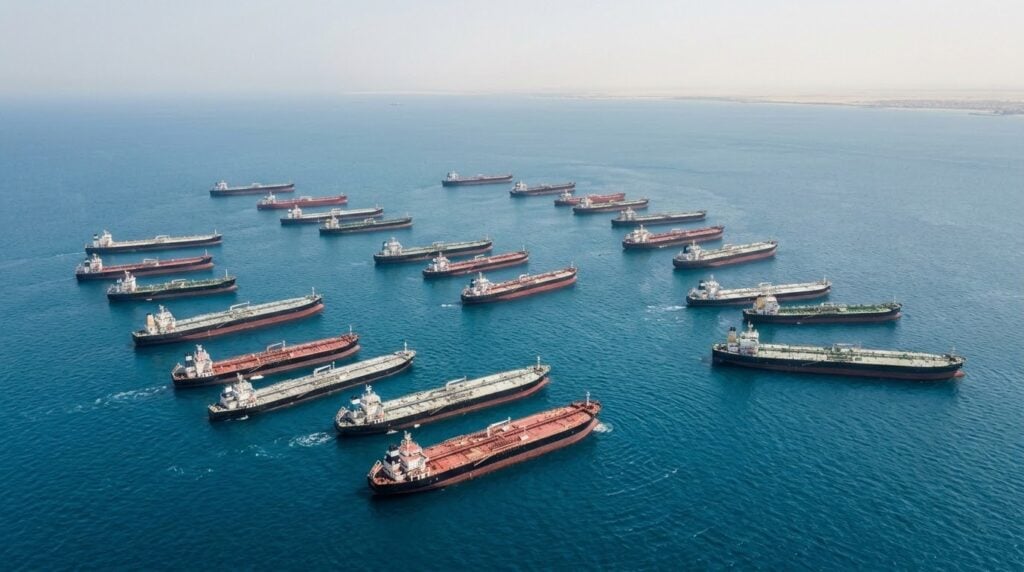
The Strait of Hormuz has been effectively closed to commercial oil shipping for twelve consecutive weeks, disrupting roughly one-fifth of global oil supply. The International Energy Agency described the disruption as the largest in the history of the global oil market. That is not a partisan characterization. That is the named position of the named multilateral energy body.
Operation Epic Fury began on February 28, 2026. Gas was at $2.97 a gallon the week before. Since the conflict began, the national average has climbed more than 50%. Brent crude ran from $80 a barrel in early March to above $100, briefly past $115. The Energy Information Administration’s most recent data shows demand at 8.76 million barrels per day against domestic supply that fell to 214.2 million barrels. Demand rising into shrinking supply is the textbook equation for what households are now paying.
Anton Brown was filling up his minivan at a Thornton, Illinois gas station on Monday for a day with his family. The price on the sign was $4.89 a gallon. “It’s crazy! I’ve got to pay almost $100 now to fill up,” he told CBS Chicago. He is not an outlier. In all of Cook County, the average was $5.15. In the six-county Chicago metropolitan area, it was $5.06.
Some of the readers carrying this share Brown’s frustration but not his framing. At a March 23 rally in Memphis, Trump supporters told ABC News the high prices were bearable during the U.S. military action in the Middle East. That is the tension a lot of households are running quietly: support the war, feel the price. Both are documented. Neither is being addressed.
How Long Could the Strait of Hormuz Closure Keep Prices Elevated?
Even if the Strait reopens tomorrow, analyst consensus is that prices stay elevated above pre-war levels until 2027. Negotiations between the Trump administration and Iran are reportedly progressing toward ending the war and reopening the Strait, per CBS reporting Monday. That is a forecast, not a confirmed timeline.
The forecast that matters more is what happens to prices on the day the Strait reopens. CNBC reported analyst consensus that prices would likely stay elevated above pre-war levels until 2027, even on an immediate reopening. GasBuddy’s modeling has gone the other direction. If the disruption persists into the heart of summer, the national average could peak near $4.80 a gallon. A political strategist quoted in early-April reporting called the higher-end forecast an “extinction-level event” for Republicans in the midterms. The political read and the household read are running on the same data.
No anonymous-source claims on war timeline are reproduced in this report. Where named officials have spoken on the record, their statements are attributed. Where they have not, the silence is the report.
What This Means for Households Carrying the Weight
For households inside a retirement window, this is not a price spike — it is a recurring drag on planned fixed-income purchasing power. A reader in Gloucester City, New Jersey, told USA Today, reporting in March: “He promised to bring prices down, but he never did. They’re going up.” That is the household audit, stated plainly. Two-thirds of Americans — including 44% of Republicans — expect prices to keep rising, according to a Reuters/Ipsos poll, Axios reported on March 10. The 36% approval / 62% disapproval split on Trump’s handling of inflation, in NBC News polling, is the political shape of the same reality.
For households inside a retirement window, the question is not whether the Strait reopens. The question is what 12 weeks of $4.56-a-gallon gas, compounded against tariff effects, electricity bill increases, and grocery inflation, does to the purchasing power that has to last another eight to ten years. The honest answer is: more than the headline figures suggest, because none of these cost lines are independent of each other. Energy moves through everything.
Disclosure: This article contains affiliate links. If you use them, BreakingNewsAlerts.com may earn a commission at no cost to you. Our editorial picks are independent of these partnerships. See our editorial standards.
What Can Households Do to Hedge Against Rising Gas Prices?
The Strait of Hormuz situation is not under any household’s control. The math on a single tank of gas is. Some readers have begun keeping 5 to 10 gallons of fuel stored on hand — not as preparedness theater, but as a basic hedge: a way to lock in today’s price against the possibility that GasBuddy’s $4.80 summer forecast lands. A standard 5-gallon metal jerry can holds roughly $22.80 of gasoline at the current national average. Two of them store the equivalent of one weekly fill-up at a price already paid.


Storage note: Standard household fuel storage limits apply. Check local fire codes before storing more than 25 gallons of gasoline at a residential property.
For ongoing coverage of how the Iran war is affecting household costs, see our reporting on Medicare benefit changes affecting retirees this year, rising electricity and grocery bills, and the student loan payment restart for the broader pressure on pre-retirement household budgets.
Frequently Asked Questions
Why did gas prices jump for Memorial Day 2026?
The U.S. war with Iran, ongoing since February 28, has effectively closed the Strait of Hormuz to commercial oil shipping. Roughly one-fifth of global oil supply moves through that chokepoint. GasBuddy attributes more than 90% of the year-over-year price gap directly to the conflict.
How much more did Memorial Day weekend driving cost Americans this year vs. last?
GasBuddy estimates Americans spent $2 billion more on gasoline over the four-day weekend than a year ago — roughly $22 million every hour. The national average was $1.38 higher than the same period in 2025.
When will the Strait of Hormuz reopen?
Trump administration negotiations with Iran are reportedly progressing, but no confirmed timeline has been released. CNBC reported that even an immediate reopening would likely leave prices elevated above pre-war levels until 2027.
What is the national average gas price right now?
$4.56 a gallon as of AAA’s May 21 reading. As of Monday, May 25, the average held just above $4.50 after a less-than-one-penny week-over-week drop. Seven states remain above $5.
Are gas prices likely to keep rising this summer?
GasBuddy modeling suggests a possible summer peak near $4.80 a gallon if the disruption persists. Two-thirds of Americans, including 44% of Republicans, expect prices to keep rising, per Reuters/Ipsos polling.