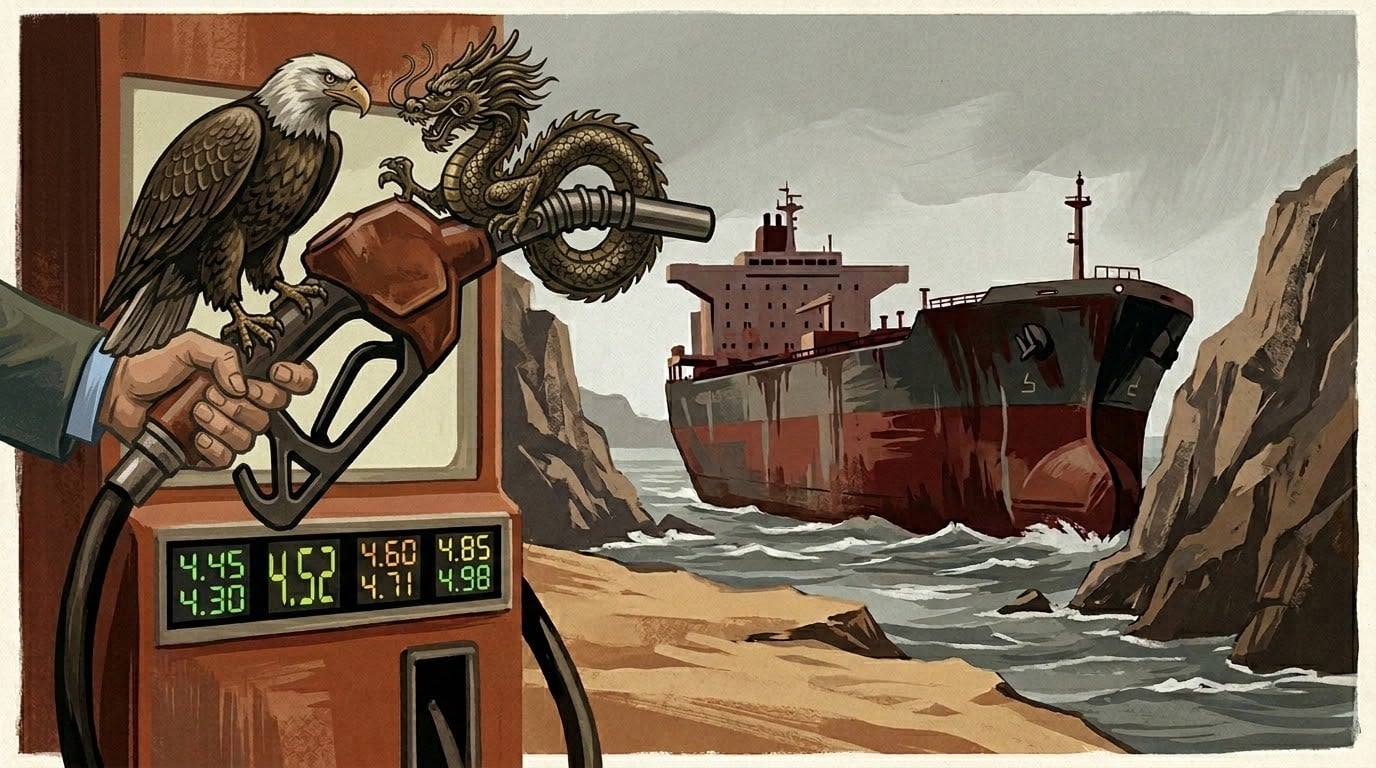

QUICK SUMMARY: Gas prices are averaging $4.52/gallon, up 50% since the Iran war began, with no domestic fix capable of reversing the trend. The Trump-Xi summit on May 14-15 is the single highest-stakes event for fuel costs this summer. China buys 90% of Iran’s oil, giving Beijing leverage over Tehran that Washington does not have.
Gas is averaging $4.52 a gallon nationally, up more than 50% since the Iran war began. Rising fuel costs have no domestic fix in sight. The only party with enough leverage over Iran to change that is China. Trump flies to Beijing this week for a May 14-15 summit with Xi Jinping. What they agree to may be the most important thing to happen to your fuel bill this summer.
Trump rejected Iran’s counter-proposal Sunday and called it “totally unacceptable.” He boards a plane to China this week. The May 14-15 summit with Chinese leader Xi Jinping is now the single most consequential event for rising fuel costs since the war began.
Here is why China matters more than anything Washington has tried so far.
Why Does China Have More Leverage Over Iran Than the United States?
China is Iran’s largest oil customer, giving Beijing a lever over Tehran that Washington does not have.
China buys roughly 90% of Iran’s exported oil. Tehran cannot afford to lose that relationship. Treasury Secretary Scott Bessent has confirmed that Iran will be on the summit agenda. Analysts at the Center for Strategic and International Studies say the Iran war will dominate the Beijing talks, leaving little room for the tariff and trade discussions that were the original focus of the trip.
The Beijing summit is primarily an energy and Iran conversation. Your gas bill is on the agenda, even if no one in Washington is saying it that way.
How Much Are Rising Fuel Costs Actually Costing American Families?
At $4.52 a gallon, the average American household is paying roughly $876 more per year than before the war started.
Diesel is at $5.67, up from $3.54 a year ago. Every good delivered by truck absorbs that cost. It shows up in your grocery bill, your utility bill, and anything shipped to your door.
“The egg price story isn’t about eggs. It’s about whether my grocery bill is going to keep eating into what I planned to retire on.” That is how one reader in a conservative economic forum put it earlier this year. That calculation has only gotten sharper since.
What Has the White House Already Tried and Why Has It Fallen Short?
Every domestic tool the administration has deployed has fallen short of offsetting a war-driven supply shock.
The White House tapped the Strategic Petroleum Reserve. It waived the Jones Act to ease fuel shipments at U.S. ports. Energy Secretary Chris Wright said Sunday on NBC’s Meet the Press that the administration is “open to all ideas,” including suspending the federal gas tax. A suspension would cut the price by roughly 18 cents per gallon at most. However, it would require an act of Congress. And it cannot offset a war-driven supply shock.
None of those moves can replace the one thing that would actually bring rising fuel costs down: reopening the Strait of Hormuz. That requires Iran. And Iran, at this point, responds to China.
What Should You Watch for When the Trump-Xi Summit Concludes on May 15?

Watch crude oil prices the morning of May 15 — they will be the first signal of whether a real agreement is taking shape.
If the summit produces a named deliverable on the Strait, gas prices have a path down. If it produces statements of goodwill and nothing else, prices stay elevated through summer. Moody’s Analytics projects gas settling around $3.50 by year’s end. That is still 50 cents above pre-war prices, and it assumes progress that has yet to happen.
Eight weeks ago, Energy Secretary Wright told NBC’s Meet the Press that Americans would see gas below $3 by summer. The national average has climbed every week since.
Later this week, watch what Xi says, or does not say, about Iran when the summit concludes on May 15. That will be your signal if rising fuel costs will change directions.
More likely is that fuel prices will not be coming down on their own. While the Beijing outcome plays out this week, there are steps you can take now to limit what you pay at the pump and protect your household budget.
While Washington figures out Beijing, you can start cutting what you spend at the pump right now. The ScanGauge II plugs directly into your vehicle’s diagnostic port and tracks your real-time fuel economy, cost per mile, and consumption with no app, no subscription, and no ongoing fees. Drivers who use it consistently report measurable reductions in fuel spend within the first tank.

Frequently Asked Questions
Why does China have influence over Iran’s decision to reopen the Strait?
China buys roughly 90% of Iran’s exported oil. Tehran depends on that revenue. When Beijing signals it wants the Strait reopened, Iran has a financial incentive to listen that it does not have with any other party.
How much could gas prices drop if the Strait of Hormuz reopens?
Analysts project oil prices could fall 15% or more on a confirmed reopening agreement. At current levels, that could bring average gas prices down by 60 cents or more per gallon, though relief would take several weeks to reach the pump.
What is the federal gas tax suspension and would it actually help?
The federal gas tax is 18.3 cents per gallon. Suspending it would require an act of Congress and would shave roughly 10 to 18 cents off your price at the pump. It does not address the underlying supply disruption from the Strait closure.
When will we know if the Beijing summit changed anything on rising fuel costs?
The Trump-Xi summit runs May 14-15. Oil markets will react to any joint statement on Iran within hours of its release. Watch crude prices the morning of May 15 for the first signal of whether a deal framework is taking shape.