
QUICK SUMMARY: After federal agents killed two citizens in Minneapolis, Democrats vowed to block DHS funding until Republicans agreed to operational conditions. Instead, the GOP rejected those conditions, split the funding vote, and used budget reconciliation to fund ICE and CBP anyway. Did Congress just remove one party’s only real oversight tool?
After federal agents killed two U.S. citizens during immigration enforcement in Minneapolis, Democrats demanded operational reforms before approving DHS funding. Republicans rejected those conditions, split the funding vote, and are now using budget reconciliation to approve the department’s budget for ICE and CBP operations without Democratic input.
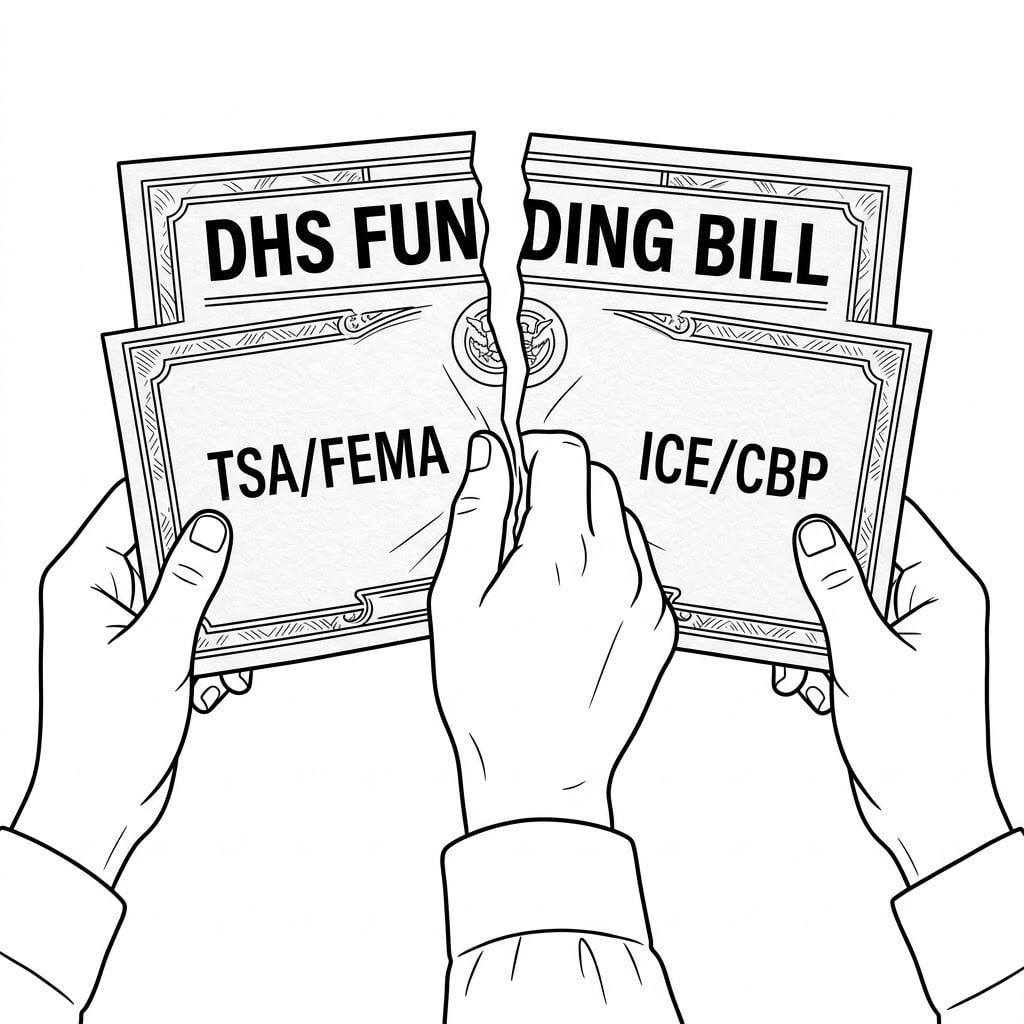
On April 30, 2026, Congress passed and President Trump signed a DHS appropriations bill that ended a 76-day shutdown. TSA, FEMA, Coast Guard, and Customs all got approved. But as of May 8, ICE and CBP remain unfunded. That wasn’t an accident. It was a deliberate split designed to give Republicans a path around Democratic conditions.
The Democrats’ Leverage Disappears
The shutdown began on February 14 after federal agents killed Renee Good and Alex Pretti during operations in Minneapolis. Democrats said they would support DHS funding only if Republicans agreed to operational conditions on ICE and CBP. Republicans refused. That left Congress with a choice: approve the whole department with conditions, or split it and isolate the agencies from oversight.
Speaker Mike Johnson initially blocked the Senate bill, which lacked ICE and CBP funding. However, Johnson, working with Senate Majority Leader John Thune, announced they had found a path forward: fund TSA and FEMA with bipartisan votes, fund ICE and CBP through budget reconciliation.
“No one is going to vote to fund Homeland without money for ICE and CBP,” said Rep. Jodey Arrington of Texas, the House Budget Committee chair. That statement was the key. Arrington was signaling that the GOP caucus would not allow ICE and CBP to be left unfunded, even if it meant using a procedural tool that bypassed Democratic input.
Democrats’ original leverage point was simple: no DHS funding until conditions are met. Republicans removed that leverage by splitting the vote.
Reconciliation Bypasses the 60-Vote Threshold
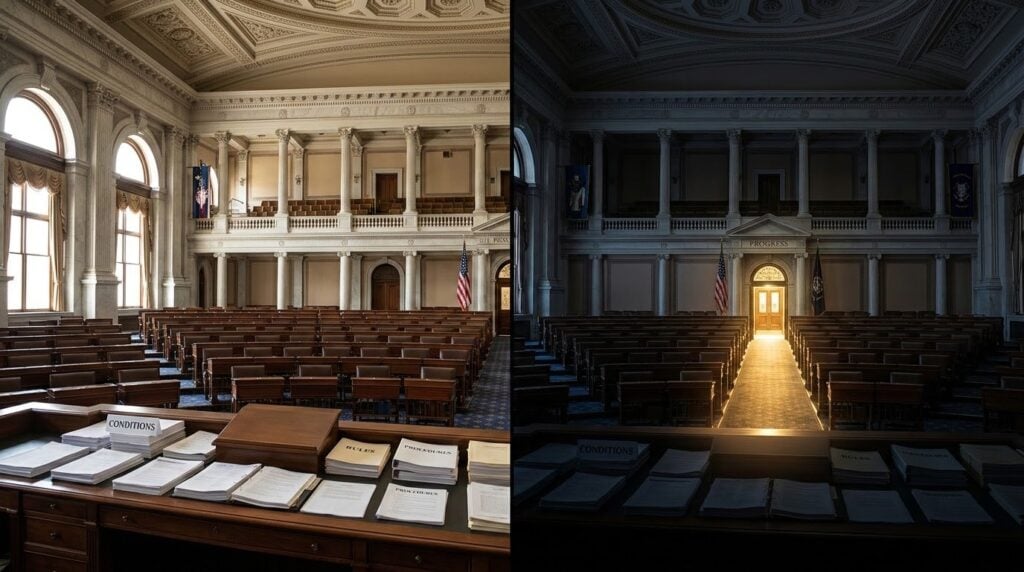
Budget reconciliation is a Senate procedure that allows certain bills to pass with 51 votes instead of 60. Normally, most Senate bills require 60 votes to overcome a filibuster. That threshold gives the minority party real power. If you control 41 seats, you can block almost anything.
Reconciliation removes that power. With 51 votes, the party in control can pass spending bills alone.
Now ICE and CBP will get approved through June 1 without any Democratic conditions. The agencies that killed two U.S. citizens will continue operating with stable, multi-year DHS funding, and Congress will have removed the only real lever Democrats had to demand change.
Can Congress Demand Accountability Before Approving Funding?
This is not a story about whether ICE and CBP should be funded. Reasonable people disagree on that. This is a story about how institutional oversight actually works when one party controls everything.
The question Congress was answering was: When federal agents kill citizens, can Congress use the funding power to demand institutional changes before those agencies get more money?
The answer, as of May 8, 2026, is: Only if both parties agree. If one party controls the House, Senate, and presidency, it can bypass that lever.
This matters because oversight depends on leverage. Leverage depends on the ability to say no to DHS funding until conditions are met. Budget reconciliation removes that ability. Once it’s gone, the party in power is structurally unconstrained.
This is not a scandal. This is how power works when consolidated. Democrats would use the same tool if they controlled Congress.
DHS Funding Remains Incomplete
ICE and CBP remain unfunded as the House and Senate work toward Trump’s June 1 deadline to pass the reconciliation bill. Until then, the agencies are operating on emergency-redirected funds running low.
The reconciliation bill will provide multi-year DHS funding through 2029. The Congressional Budget Office estimates ICE will receive roughly $30 billion over four years and CBP roughly $22 billion. Both amounts significantly exceed what Congress normally appropriates in a single year. In 2025, Washington provided $10 billion for ICE and $7.5 billion for CBP.
Frequently Asked Questions:
What is budget reconciliation?
Budget reconciliation is a congressional procedure that allows certain budget-related bills to pass the Senate with 51 votes instead of 60. It bypasses the filibuster rule that normally requires 60 votes.
Why did this split happen on DHS funding?
Because Democrats wanted conditions and Republicans didn’t. Neither side had 60 Senate votes, so Republicans used the 51-vote option to get what they wanted without Democratic input.
Are ICE and CBP completely unfunded right now?
No. They’re operating on emergency-redirected funds. The reconciliation bill will provide stable, multi-year funding.
Will the reconciliation bill pass?
Republicans control Congress and President Donald Trump supports the majority. Yes, it almost certainly will pass by June 1.
Reader Poll: