
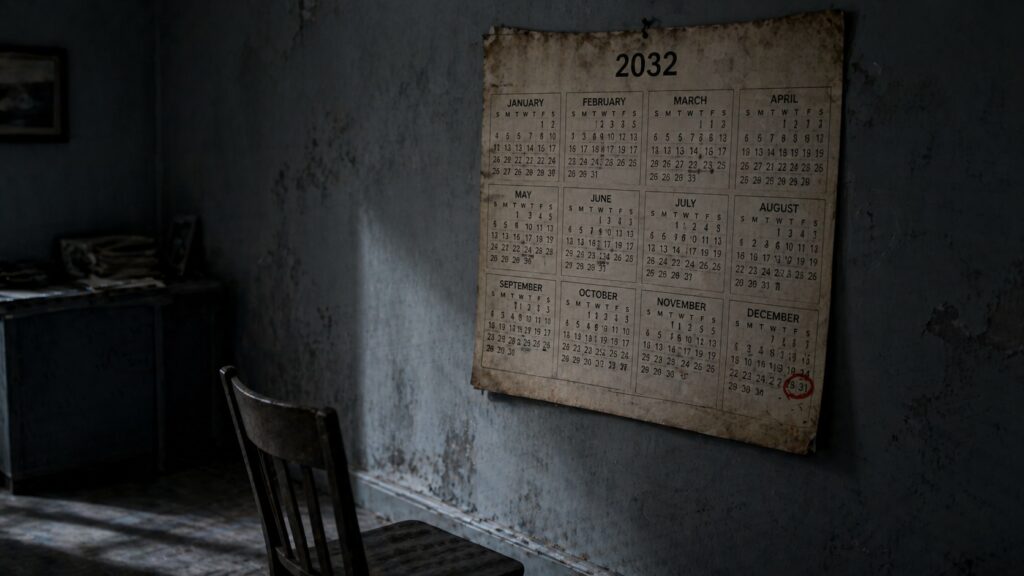
<div class=”aeo-summary speakable-summary”> QUICK SUMMARY: The Congressional Budget Office’s February 2026 update moved the Social Security trust fund depletion date to fiscal year 2032, a year earlier than last projected. That means Social Security benefit cuts of roughly 28 percent could hit retirees as soon as 2033. For an average couple retiring that year, the cut works out to about $18,100.</div>
The Congressional Budget Office moved the Social Security trust fund’s depletion date forward by a year, and the math behind that single change means Social Security benefit cuts are coming for every household planning to claim in the next decade.
For an average retired worker collecting $2,071 a month today, the projected post-depletion cut works out to roughly $1,491 a month, a loss of about $6,960 a year. For an average couple, the monthly check drops from $3,208 to about $2,310, costing them more than $10,700 a year. The Committee for a Responsible Federal Budget estimates a dual-earning couple retiring at the start of 2033 would face roughly $18,100 in lost benefits annually.
That is not a forecast. That is what the law says happens if Congress does not act before the trust fund runs out.
What the CBO Said About Social Security Benefit Cuts
In its February 2026 Budget and Economic Outlook, the Congressional Budget Office projected that the Old-Age and Survivors Insurance trust fund will be exhausted by fiscal year 2032. The 2025 Social Security Trustees Report had set the depletion date at 2033. The CBO update moved that date forward by a full year.
Once the fund hits zero, the Social Security Administration cannot legally pay benefits beyond what it collects in real time from payroll taxes and income taxes on benefits. The agency is required by law to cut payments to match incoming revenue. CBO’s illustrative scenario suggests cuts would start at about 7 percent in 2032 and grow to an average of 28 percent per year from 2033 through 2036. The CRFB estimates an across-the-board cut of roughly 24 percent at the moment of insolvency, deepening from there.
The numbers are not abstract. They are what show up in the deposit notification on a checking account.
Why the Social Security Benefit Cuts Timeline Moved
Two forces are at work, and they need to be named in the right order.
The first is structural. The U.S. birth rate sits at a historic low. Legal migration into the country has declined significantly since the late 1990s. Both of those trends shrink the worker-to-retiree ratio that funds the program. Social Security is built on workers paying in to support retirees collecting out, and the math of that ratio has been deteriorating for a long time. The program started tapping its trust fund reserves in 2021 when total costs first exceeded non-interest income. CBO projects spending from the OASI fund will climb from $1.5 trillion in fiscal 2026 to more than $2.5 trillion by 2036.
That is the structural reason the cuts are coming. It pre-dates any current administration and any current bill.
The second force is policy. The One Big Beautiful Bill Act, signed into law on July 4, 2025, made permanent the lower income tax rates from the 2017 Tax Cuts and Jobs Act and introduced a temporary $6,000 standard deduction for seniors. That deduction is real tax relief for retirees and meaningfully lowers the share of Social Security recipients who owe federal income tax on their benefits. It is also the reason the depletion timeline moved.
The Social Security Administration’s Office of the Chief Actuary estimated the law will cost the trust funds roughly $169 billion over ten years. The reduced revenue from income taxes on benefits is what pushed the depletion date forward. The same bill that delivered tax relief to seniors also accelerated the timeline to the cuts those same seniors will eventually face. Both of those things are true. Naming the trade-off honestly is part of the story.
What the Social Security Benefit Cuts Mean If You Are Eight Years From Claiming
The question readers are actually asking right now is what this means for their Social Security, not what economists think about it in the abstract. So here is the direct answer.
The 1983 Social Security crisis is the closest historical comparison. The trust fund came within months of running dry before Congress passed the Social Security Amendments of 1983, which raised the full retirement age, made benefits partially taxable, and increased payroll taxes. Those reforms were phased in gradually and largely spared people already near retirement.
If that pattern holds, the people most exposed to the 2032 timeline are workers in their early to mid-fifties. These are the same workers whose retirement plans have been built around the benefit numbers the program currently projects. The CRFB analysis breaks the exposure down by household type. A typical single-earner couple would face a $13,600 annual cut. A dual-earner low-income couple would face an $11,000 cut. High-income couples could see closer to $24,000. The absolute number is smaller for lower-income households, but the share of monthly income lost is larger, which means the practical pain is concentrated where the cushion is thinnest.
Anyone within a decade of claiming should be doing three things right now. Pull the personalized benefit estimate from the my Social Security account on ssa.gov. Run the math on whether the household budget survives the 28 percent cut scenario. Talk to a spouse, if applicable, about claiming strategy and timing. None of that fixes the program. All of it puts the household in a stronger position to absorb whatever Congress eventually decides.
For readers within ten years of claiming, the single highest-leverage move right now is making sure the claiming strategy itself is optimized. The decision of when to claim, whether at 62, at full retirement age, or delayed to 70, can change lifetime benefits by tens of thousands of dollars per household, and the calculation gets meaningfully more complicated when one spouse has been the higher earner. Get What’s Yours: The Secrets to Maxing Out Your Social Security by Laurence Kotlikoff, Philip Moeller, and Paul Solman remains the most thorough plain-English walkthrough of claiming strategy available, and the revised edition reflects the current rules.
[

Affiliate disclosure: BreakingNewsAlerts.com may earn a commission from qualifying purchases made through this link, at no additional cost to readers. This does not influence editorial selection.
A book is not a substitute for running the numbers on a personal benefit estimate. For households facing the eight-year window, the cost of an unoptimized claiming decision dwarfs the cost of the book.
What Congress Can Actually Do
Any change to Social Security has to clear a 60-vote threshold in the Senate, which means the planned Social Security benefit cuts will need support from both parties. The 2026 class of senators is the first group whose six-year term will run squarely into the depletion date, which is a kind of pressure that does not show up in any other piece of federal policy.
The proposals on the table fall into three categories. The first is raising the payroll tax cap above the current $184,500. About 77 percent of seniors support eliminating the cap entirely, according to The Senior Citizens League’s 2025 Senior Survey, and the SSA Office of the Chief Actuary projects that doing so would extend solvency through at least 2090 without any benefit cuts. The second is raising the full retirement age, which is a benefit cut by another name and falls hardest on workers in physically demanding jobs who cannot easily delay claiming. The third is means-testing or capping benefits at the top. The Committee for a Responsible Federal Budget’s “Six-Figure Limit” proposal would close about three-fifths of the 75-year shortfall by capping payments at $50,000 per person.
None of those options is painless. The choice is between fixing the program now in a way that distributes the pain or letting the law cut every check by 28 percent in 2033. Doing nothing is also a choice. It is the choice that produces the deepest Social Security benefit cuts, hitting the most vulnerable retirees first.
The window to make a different choice is closing.
Frequently Asked Questions
When exactly would the cuts take effect?
Under current CBO projections, the Old-Age and Survivors Insurance trust fund is exhausted in fiscal year 2032. CBO’s illustrative scenario shows cuts starting at about 7 percent in 2032 and averaging 28 percent per year from 2033 through 2036. The CRFB estimates an across-the-board cut of roughly 24 percent at the moment of insolvency.
Will the cuts apply to people already collecting benefits?
Under current law, yes. If the trust fund runs out, the Social Security Administration is legally required to cut payments to match incoming revenue, and the cut applies across the board. Historically, Congress has acted before depletion to phase in changes that spare current retirees. Whether that pattern holds this time depends on Congress.
How does the One Big Beautiful Bill affect Social Security if it gave seniors a tax break?
The One Big Beautiful Bill Act introduced a $6,000 standard deduction for seniors, which lowers federal income taxes on Social Security benefits for eligible retirees. That same deduction reduces the income tax revenue that flows back into the Social Security trust fund. The SSA Office of the Chief Actuary estimated the law will cost the trust funds about $169 billion over ten years, which is what moved the depletion date forward by roughly a year.
What can someone eight years from claiming do right now?
Pull a personalized benefit estimate from the my Social Security account at ssa.gov. Stress-test the household budget against the
28 percent cut scenario. Review the claiming strategy with a spouse if applicable. Increase savings contributions where possible. None of those steps fix the program, but they put the household in a stronger position regardless of what Congress eventually decides.