
QUICK SUMMARY: The U.S. Navy started the Strait of Hormuz blockade at 10 a.m. ET today, April 13. Oil topped $103 a barrel overnight. JPMorgan says the world’s pre-war oil supply runs out around April 20. After that date, prices move entirely based on what is physically getting through the Strait now. As of Friday, that was two ships. Neither carried oil.
The U.S.-Iran ceasefire held for six days at the most. Then the talks failed.
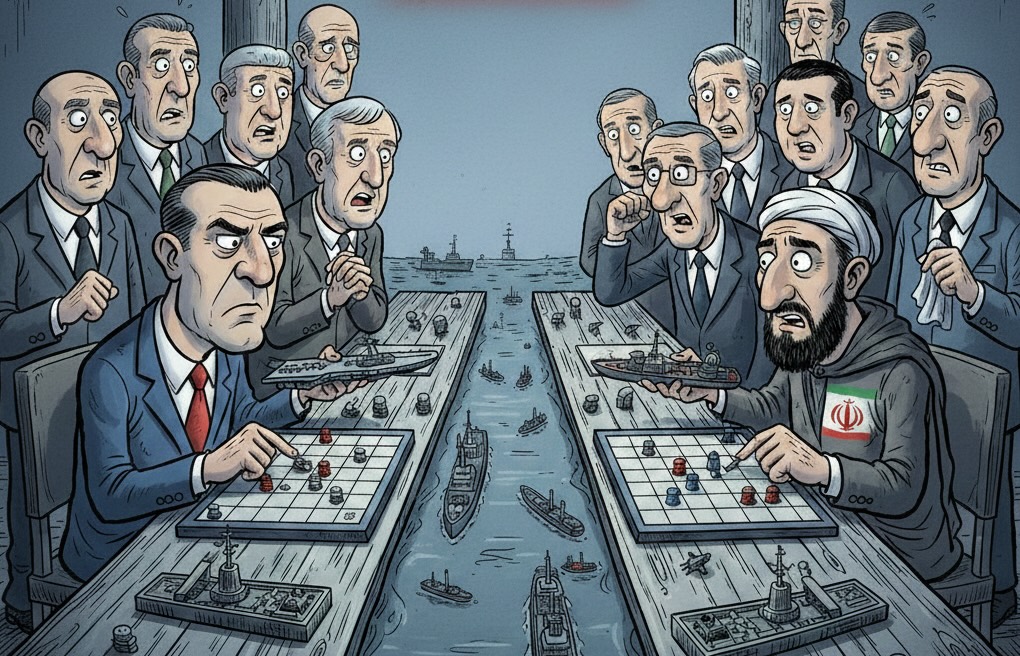
On Sunday, after more than 21 hours of negotiations in Islamabad, JD Vance told reporters the U.S. and Iran could not reach an agreement. Iran rejected U.S. demands on its nuclear program, regional proxy funding, and Strait of Hormuz access. Within hours, President Trump announced on Truth Social that the U.S. Navy would blockade the Strait of Hormuz effective immediately.
U.S. Central Command followed with a formal operational order. The Strait of Hormuz blockade takes effect at 10 a.m. ET today, April 13, targeting all maritime traffic entering and exiting Iranian ports. CENTCOM confirmed that vessels transiting to and from non-Iranian ports will not be impeded. The distinction between Trump’s “any and all ships” announcement and CENTCOM’s narrower operational order is significant, and oil markets are already pricing the gap between them.
Before the war began on February 28, roughly 130 ships crossed the Strait daily. By last Saturday, that number was 17. On Friday, two ships crossed. Neither carried oil or gas. Lloyd’s List Intelligence reported that all remaining traffic stopped Sunday night when Trump made his announcement, before the formal order even took effect.
What the Strait of Hormuz Blockade Actually Covers
Trump said the Navy would blockade “any and all ships trying to enter or leave the Strait of Hormuz.” CENTCOM’s operational statement said the Strait of Hormuz blockade covers vessels entering and exiting Iranian ports specifically. Ships transiting to non-Iranian destinations remain unimpeded per CENTCOM.
These are two different things. Markets are trading on the uncertainty between those two positions, not on either one alone.
Iran’s Revolutionary Guard responded the same day. Any military vessel approaching the Strait, the IRGC said, would be considered a ceasefire violation and “will be dealt with severely.” The U.S. flatly rejected that framing. The ceasefire technically remains in effect until approximately April 22. Whether it survives the first enforcement contact is the question every oil trader is pricing right now.
The April 20 Date That Changes Everything
JPMorgan’s commodities desk issued a specific warning Sunday: the last oil tanker to clear the Strait of Hormuz on February 28 reaches its destination around April 20. That is the date by which the pre-closure oil inventory willbe fully exhausted from the global supply chain.
Before April 20, markets run on stored supply. After April 20, prices move entirely on what is physically moving through the Strait in real time. As of Friday, real-time flow was two ships, zero oil tankers.
Brent crude hit $103 a barrel overnight, up more than 8%. It peaked at $119 last month before the ceasefire briefly pulled it down. Bloomberg is reporting that traders are beginning to price $170 to $200 per barrel as a tail-risk scenario if the Strait of Hormuz blockade holds past mid-April. That is not a prediction. It is the range serious money is hedging against right now.
“When you have to cross-reference three sources to confirm what your email digest said, that’s when you know the mainstream press buried it.” The April 20 supply cliff is the number the mainstream coverage is burying under the daily announcement noise.
Beyond Oil: Food, Fertilizer, and Everything Else
The Strait of Hormuz carries roughly 20% of global seaborne oil trade and a significant share of the world’s liquefied natural gas. It is also the transit route for more than 30% of global urea exports. Urea is the primary ingredient in agricultural fertilizer. Fuel prices move first. Food prices follow.
Heating oil jumped 10% in early trading today. Wholesale gas spiked 6%. Jet fuel has already climbed 95% since the war began February 28, with airlines adding baggage surcharges. Shipping carriers, including USPS, Amazon, and FedEx, have implemented fuel surcharges.
Karen Young, senior fellow at the Middle East Institute, told CNN: “Think about everything you buy at a retail, big-box store.” Food prices, packaging costs, and shipping surcharges all trace back to the same supply chain that the Strait of Hormuz feeds.
Iran’s parliamentary speaker delivered a direct message to American consumers Sunday: “Enjoy the current pump figures. With the so-called blockade, soon you’ll be nostalgic for $4 to $5 gas.”
For context on how gas prices have moved since the Iran war began, see our earlier breakdown: US Gas Prices: Will the Iran War Ceasefire Change Anything?
Three Signals to Watch This Week
April 20. JPMorgan’s supply exhaustion date. If the Strait of Hormuz blockade holds through April 20 with no oil moving, the pre-war inventory buffer is gone and prices move on real-time supply only.
The first enforcement contact. Iran’s IRGC has warned it will treat any military vessel near the Strait as a ceasefire violation. The U.S. rejected that position. Watch for the first direct confrontation between U.S. Navy enforcement and Iranian vessels.
The G7 emergency call. Energy and finance ministers from G7 nations are scheduled for a video call today with the IEA, IMF, and World Bank. The IEA has already published guidance on demand reduction measures. Watch for coordinated strategic reserve releases as the first policy response.
The UK has already said it will not join the blockade. Prime Minister Keir Starmer told the BBC the UK “is not getting dragged in.” The U.S. is running the Strait of Hormuz blockade without its closest ally.
Stay ahead of what the mainstream press buries. Subscribe to Breaking News Alerts

Frequently Asked Questions
What is the Strait of Hormuz blockade and why does it matter?
The U.S. Navy began blocking all maritime traffic entering and exiting Iranian ports in the Strait of Hormuz at 10 a.m. ET today, April 13. The Strait carries roughly 20% of global seaborne oil trade. Iran effectively closed the waterway when the war began February 28. The U.S. blockade of Iranian ports is a new pressure layer on top of a Strait already running at near-zero traffic.
Does the Strait of Hormuz blockade cover all ships?
No. CENTCOM’s operational order targets vessels entering and exiting Iranian ports specifically. Ships transiting the Strait to and from non-Iranian destinations are not impeded per CENTCOM’s statement. President Trump’s announcement used broader language covering “any and all ships,” and the gap between the two positions is what oil markets are currently pricing.
What happens to oil prices if the blockade holds past April 20?
JPMorgan identified April 20 as the date the last pre-war oil shipment reaches its destination, exhausting the global inventory buffer built before the Strait closed February 28. After that date, prices move entirely on real-time supply through the Strait. As of Friday, real-time flow was two ships with zero oil tankers. Bloomberg reports traders are pricing $170 to $200 per barrel as a tail risk scenario if the closure holds.
Why is the UK not joining the Strait of Hormuz blockade?
UK Prime Minister Keir Starmer told the BBC on Sunday that Britain will not support the blockade and “is not getting dragged in” to the Iran war. The UK’s position leaves the U.S. operating the blockade without its closest military ally, which affects both enforcement capacity and the diplomatic signal the blockade sends to Iran.
READER POLL: