
Image Source: YouTube
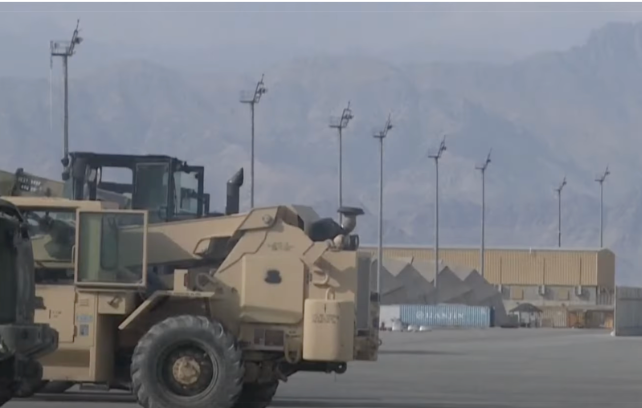
President Donald Trump reignited tensions with Afghanistan this weekend by demanding that the United States retake Bagram Air Base. In a fiery post on Truth Social, Trump warned the Taliban government that “bad things” would happen if the sprawling facility, once the hub of U.S. operations in the country, was not returned. His remarks set the stage for a new standoff with the Taliban four years after America’s chaotic withdrawal left Bagram in their control.
The Taliban quickly dismissed the demand on Sunday, rejecting outright the idea of surrendering the base. The clash highlights not only the enduring symbolic weight of Bagram Air Base but also Trump’s willingness to revisit unresolved chapters of the U.S. exit from Afghanistan. Built by American forces and long viewed as the centerpiece of the war effort, the base represents both military power and national pride for many in the United States.
Trump Threatens “Bad Things” Over Bagram Air Base
Trump’s statement was direct and uncompromising. He framed Bagram Air Base as rightfully American, built with U.S. resources and therefore deserving of U.S. control. His warning to Afghanistan was less a diplomatic request than a threat of consequences if the Taliban failed to comply. By choosing such strong words, Trump positioned himself once again as a president unafraid of confrontation with America’s adversaries.
The context of his comments matters as well. Trump has made the Afghanistan withdrawal a recurring theme in his political messaging, pointing to the 2021 pullout under President Joe Biden as a disaster that tarnished U.S. credibility. By calling for the return of Bagram, he not only reignited debate over foreign policy but also drew a sharp contrast between his approach and Biden’s handling of the end of the war.
Taliban Defiance Marks a Claim to Sovereignty
For the Taliban, rejecting Trump’s demand was a show of sovereignty. Officials in Kabul emphasized that Bagram Air Base is now firmly under their control and is part of Afghanistan’s national territory. Returning the base, they argued, is not negotiable. The refusal illustrates the Taliban’s determination to assert legitimacy on the world stage, particularly as they continue to seek broader international recognition.
The exchange also carries global implications. Regional powers such as China, Russia, and Iran are watching closely, as each has interests in Afghanistan’s stability and U.S. involvement there. A revived U.S. push to control Bagram could unsettle regional balances and invite new diplomatic friction. For many Afghans, the situation revives memories of foreign intervention and the heavy toll of two decades of war.
A Forgotten War Still Shapes U.S. Politics
Trump’s remarks may not lead to immediate U.S. action, but they serve as a political marker. Supporters view them as proof that he remains committed to projecting American strength abroad. Critics warn that threats without clear strategy risk destabilizing a fragile region. Either way, the call to retake Bagram ensures that Afghanistan remains in the American political spotlight, long after most assumed the war was over.
For the Taliban, the refusal reinforces their image as defiant rulers unwilling to bow to foreign pressure. For the United States, it raises difficult questions about whether military assets abandoned in 2021 can or should ever be reclaimed.
Do you think the United States should pursue efforts to retake Bagram Air Base from the Taliban? Tell us what you think.