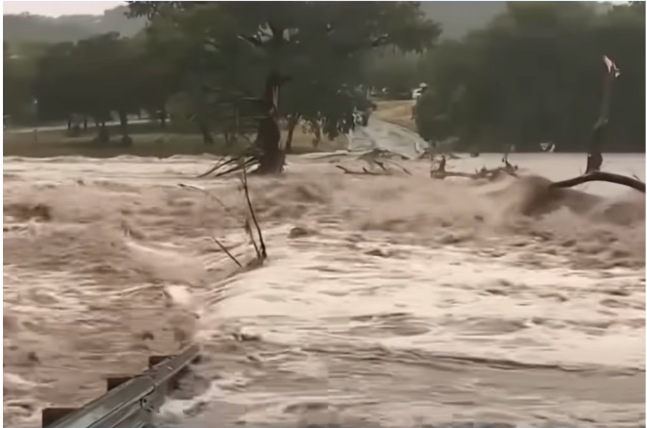

Source: YouTube
Texas floods have killed at least 80 people and left dozens missing as local officials struggle with emergency response failures and more rain is expected. The state’s central region continues to face a deadly flood crisis after torrential rain overwhelmed the Guadalupe River and surrounding lowlands. Authorities now report at least 80 people dead across the area, with 41 still missing. Rescue efforts remain underway, but worsening weather could delay operations further.
Texas Governor Greg Abbott declared Sunday a statewide day of prayer and confirmed that President Donald Trump plans to visit affected areas on Friday. Officials warned that more rain could cause additional flooding in the next few days, especially in Kerr and Gillespie Counties. The Texas Military Department has already rescued over 500 people, but the threat remains as the saturated ground struggles to absorb more water.
Evacuation Failures and Missing Campers Raise Questions
The most severe losses occurred in Kerr County, where flash floods swept through Camp Mystic, a Christian summer camp for girls. Ten campers and one counselor remain missing. Witnesses described how water rose so quickly that campers and staff had little time to react. Floodwaters reached cabin porches within minutes, giving many no chance to escape. At least 28 children and 40 adults have been confirmed dead in Kerr County alone.
While the National Weather Service (NWS) issued flash flood warnings before the disaster, residents and visitors said they either did not receive the alerts or were unaware of the area’s flood risks. Local officials in Kerr County did not issue their first emergency push notification until two days after the disaster began. Survivors like Melinda Cortez, who was visiting from Austin, reported that evacuation alerts arrived only after water had already flooded cabins. The Guadalupe River surged by over 26 feet in just 45 minutes, overwhelming campgrounds and residential areas. Local leaders admitted the severity of the flood was unexpected, but Central Texas is one of the most flash-flood-prone regions in the United States. Longtime residents and emergency experts said this part of the Hill Country frequently faces dangerous flash floods, yet no county-managed warning siren system was ever implemented.
Why Storm and Flood Warnings Came Too Late
The tragedy highlighted the gaps in Kerr County’s flood response systems. Officials have discussed installing outdoor sirens for years but repeatedly delayed the project over funding concerns. A previous attempt to secure federal grant money for an early warning system failed, with most funds redirected to other disaster recovery efforts after Hurricane Harvey. The county made some progress by adding flood gauges at low water crossings, but a comprehensive flood monitoring system was never completed.
Some blamed spotty cellphone coverage and a public desensitized to repeated weather alerts. Kerrville City Manager Dalton Rice said people in the region are used to flash flood warnings and may not always respond quickly. Residents reported that flood alerts, when they did arrive, provided too little time to evacuate safely. Meanwhile, budget cuts to the National Oceanic and Atmospheric Administration (NOAA) and the National Weather Service under the Trump administration have reduced forecasting capacity. Critics argued that these staffing cuts may have contributed to gaps in coordination with local emergency managers, though the NWS said its offices in the area had adequate staff on duty during the storm.
Officials Push for Reforms As More Flood Risks Continue
More rain remains a serious threat in the coming days. Emergency teams have already evacuated parts of the Guadalupe River as officials brace for another potential wall of water moving through the area. Volunteers and rescue crews face growing risks as they continue searching for the missing.
President Trump has signed a major disaster declaration for Texas, activating the Federal Emergency Management Agency (FEMA) and deploying U.S. Coast Guard helicopters to assist local teams.
The disaster has reignited calls for better flood warning systems. Residents and safety advocates are now demanding modern siren networks to cover flood-prone areas, arguing that simple alerts could have saved lives.
Survey