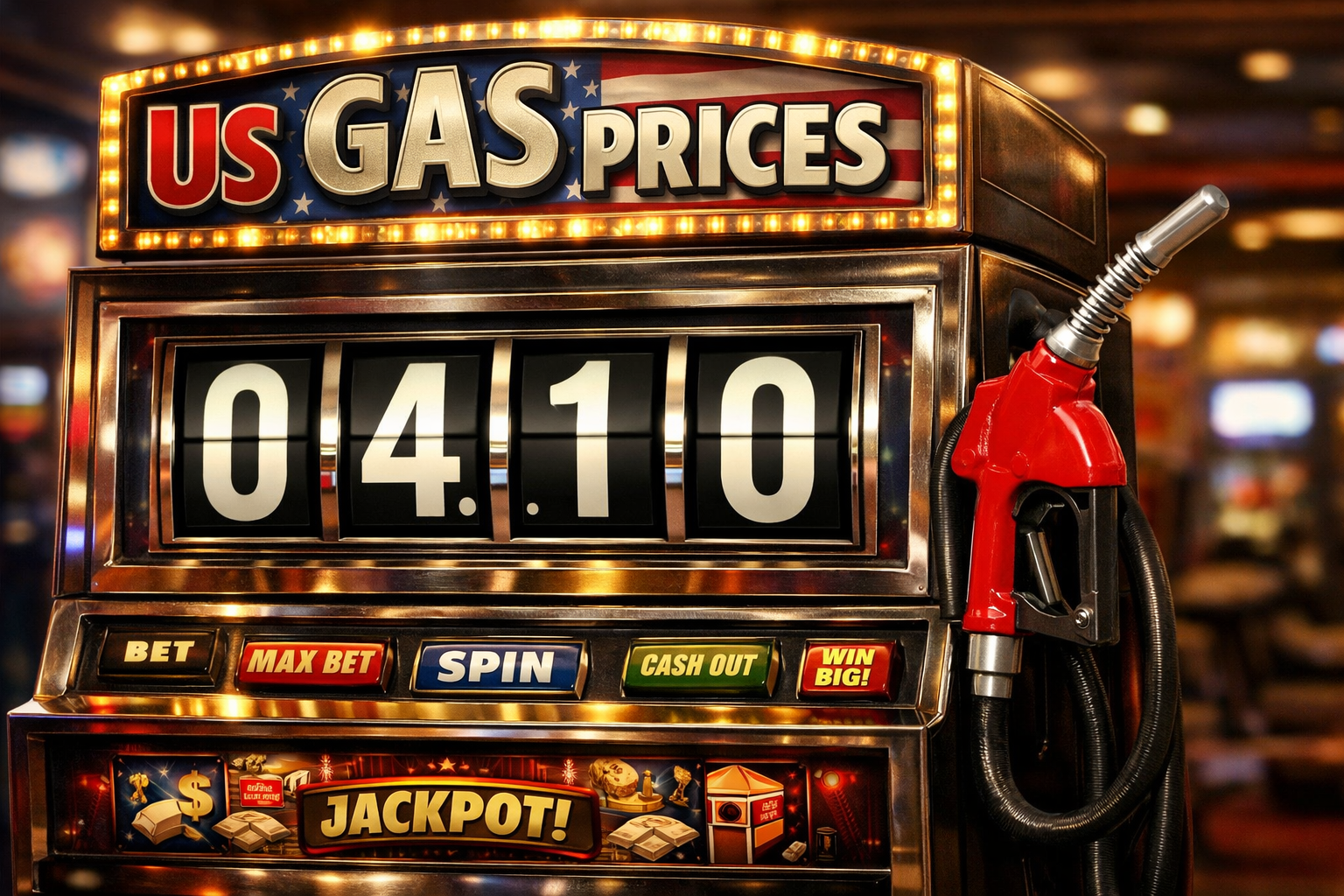

US gas prices were under $3 a gallon six weeks ago, then hit $4.14 this week. On Tuesday night, Trump announced a two-week ceasefire with Iran that sent oil prices into their biggest single-day freefall since the 1991 Gulf War.
Good news, right? Maybe. But less than 24 hours after the announcement, Iran’s military said the Strait of Hormuz is closed again. The White House called that false. Both cannot be right. And until someone is, your pump price is not going anywhere permanently.
Here is what is actually happening, what it means for US gas prices and your wallet, and what to watch over the next two weeks.
The Gap Between $4.14 and $3.70 Depends on One Waterway
The math is straightforward: If the ceasefire holds and the Strait of Hormuz reopens fully, analysts at GasBuddy and Raymond James project the national average to fall from $4.14 to around $3.70 a gallon within one to two weeks. Patrick De Haan of GasBuddy said US gas prices could start dropping by a few cents a day within 48 hours. Raymond James analyst Pavel Molchanov put a specific number on it: a 45-cent drop at the pump once oil markets stabilize.
That is real money. The Iran war has already cost the average American driver an estimated $235 extra at the pump this year alone, according to an analysis using oil futures data. Factor in groceries, heating, and anything shipped by diesel truck, and the number climbs further.
But Andy Lipow of Lipow Oil Associates added the caveat that matters most: “You’re going to see prices spike again” if the ceasefire collapses. And right now, the ceasefire is under active stress.
What the Official Statements Are Not Telling You
Two tankers actually transited the Strait of Hormuz on Wednesday, per MarineTraffic ship-tracking data. Those were the first vessels through since the Iran war began in late February. That is a real data point.
Everything else coming out of official channels is a contradiction.
Iran’s Revolutionary Guard says the Strait is re-closed following Israeli strikes on Lebanon. White House press secretary Karoline Leavitt called those reports “false.” Iran’s parliament speaker says the U.S. has already violated three ceasefire conditions. The White House says Iran’s 10-point plan “was completely discarded.” Pakistan, which brokered the deal, says the ceasefire covers everywhere, including Lebanon. Netanyahu, Vance, and the White House say it does not cover Lebanon at all.
These are not nuanced disagreements about diplomatic language. There are direct contradictions about whether the deal is currently in effect.
Mark Levin on Fox News Tuesday night said what a lot of BNA readers are already thinking: “I don’t trust the enemy. The enemy has shown for half a century that every deal it signs, it violates.” That skepticism is not paranoia. It is a reasonable prior given the track record. And this ceasefire has not yet produced evidence to the contrary.
Even a Successful Ceasefire Will Not Fix the Bigger Problem

Here is what most coverage is glossing over. Even if the deal holds and US gas prices drop by 45 cents, they are not going back to where they were before the Iran war started. They were under $3. They are heading toward $3.70 at best. That gap is permanent.
Andy Lipow again: “The oil market isn’t going to return to pre-conflict levels because they’re going to price in higher geopolitical risk. If Iran was able to shut down the Strait of Hormuz once, they could do it again.”
The infrastructure damage makes it worse. Qatar’s Ras Laffan complex, which supplies roughly 20 percent of global liquefied natural gas, is running at 17 percent below capacity after strikes during the conflict. That does not get repaired in two weeks or two months.
The OECD now projects US inflation at 4.2 percent for 2026, up from 2.68 percent last year. That is the number Raymond should be watching more closely than the daily oil price. The pump price is a symptom. The inflation rate is the disease. And six weeks of the worst energy disruption in modern history is now baked into the 2026 economic outlook, regardless of what happens in Islamabad on Saturday.
When inflation runs above 4 percent and a single waterway can move US gas prices by 45 cents overnight, people start asking the same quiet question: what do I actually own that holds its value when the dollar doesn’t?
Invalid table id.Three Things to Watch That Will Actually Tell You Where This Goes
If you’re concerned about US gas prices and want to know if they’ll go up or down in the next few days, take a closer look at the following:
- The Strait of Hormuz. Not what the White House says about it. Not what Iran’s state media says about it. What the ships are doing. MarineTraffic tracks vessel movements in real time. Two tankers made it through Wednesday. The pre-war norm was 130 a day. Watch whether that number moves.
- Lebanon. Iran has tied Strait access directly to whether Israel stops striking Hezbollah. Israel has said explicitly it will not stop. That is the fault line. If it cracks, the ceasefire goes with it.
- Islamabad. VP Vance, Steve Witkoff, and Jared Kushner lead the U.S. delegation in talks starting Saturday. The distance between what Washington wants, an end to uranium enrichment and Iranian influence in the region, and what Tehran wants, sanctions lifted, reparations paid, and control of the Strait formalized, is not a gap that closes in two weeks. Watch whether Saturday produces a framework or a breakdown.
The ceasefire bought time. Whether it bought anything else depends on what happens next.
Frequently Asked Questions
Will US gas prices go down after the Iran ceasefire?
Analysts project a drop of roughly 45 cents per gallon, from $4.14 to around $3.70, within one to two weeks if the ceasefire holds. Prices are not expected to return to pre-war levels below $3, regardless of the outcome.
What is the Strait of Hormuz and why does it affect US gas prices?
It is a narrow waterway between Iran and Oman that handles roughly 20 percent of the world’s seaborne oil supply. When Iran closed it during the Iran war, US gas prices rose more than 40 percent in six weeks.
Is the Iran ceasefire confirmed or still being disputed?
The ceasefire was announced Tuesday night and two tankers transited the Strait on Wednesday. However, Iran’s Revolutionary Guard claims the Strait is re-closed and its parliament speaker says the U.S. has already violated three ceasefire conditions.
Why won’t US gas prices return to pre-war levels even if the ceasefire holds?
Once Iran demonstrates it can close the Strait, that geopolitical risk is permanently priced into global oil markets. Infrastructure damage to Qatar’s Ras Laffan LNG complex, now running 17 percent below capacity, adds further long-term pressure.
What does the Iran war mean for inflation in 2026?
The OECD projects U.S. inflation at 4.2 percent in 2026, up from 2.68 percent last year, with elevated energy costs from the Iran war as a primary driver. That affects purchasing power, fixed incomes, and retirement savings well beyond the pump price.
What should I watch to know if the Iran ceasefire is actually holding?
Watch three things: tanker movements through the Strait via MarineTraffic, Israeli military activity in Lebanon, which Iran has tied directly to Strait access, and whether Saturday’s Islamabad talks between Vance and Iranian negotiators produce a framework or a breakdown.