
QUICK SUMMARY: The Trump administration deferred $1.3 billion in Medicaid payments to California on May 13 and froze new hospice and home health enrollments in Medicare nationwide for six months. Vice President JD Vance, leading the White House anti-fraud task force, also tied 50-state fraud unit funding to prosecution rates. In this latest Medicaid fraud crackdown effort, the prevailing methodology questions remain unresolved.
Vice President JD Vance announced on May 13 that the Trump administration is deferring $1.3 billion in Medicaid reimbursements to California, freezing new hospice and home health enrollments in Medicare for six months nationwide, and sending warning letters to all 50 state Medicaid Fraud Control Units. CMS Administrator Mehmet Oz called it the largest deferral the agency has ever made.
For Americans within a decade of needing in-home care, the moratorium changes the provider landscape immediately. The deferral and the methodology behind it remain open questions.
What Did the Medicaid Fraud Crackdown Actually Do?
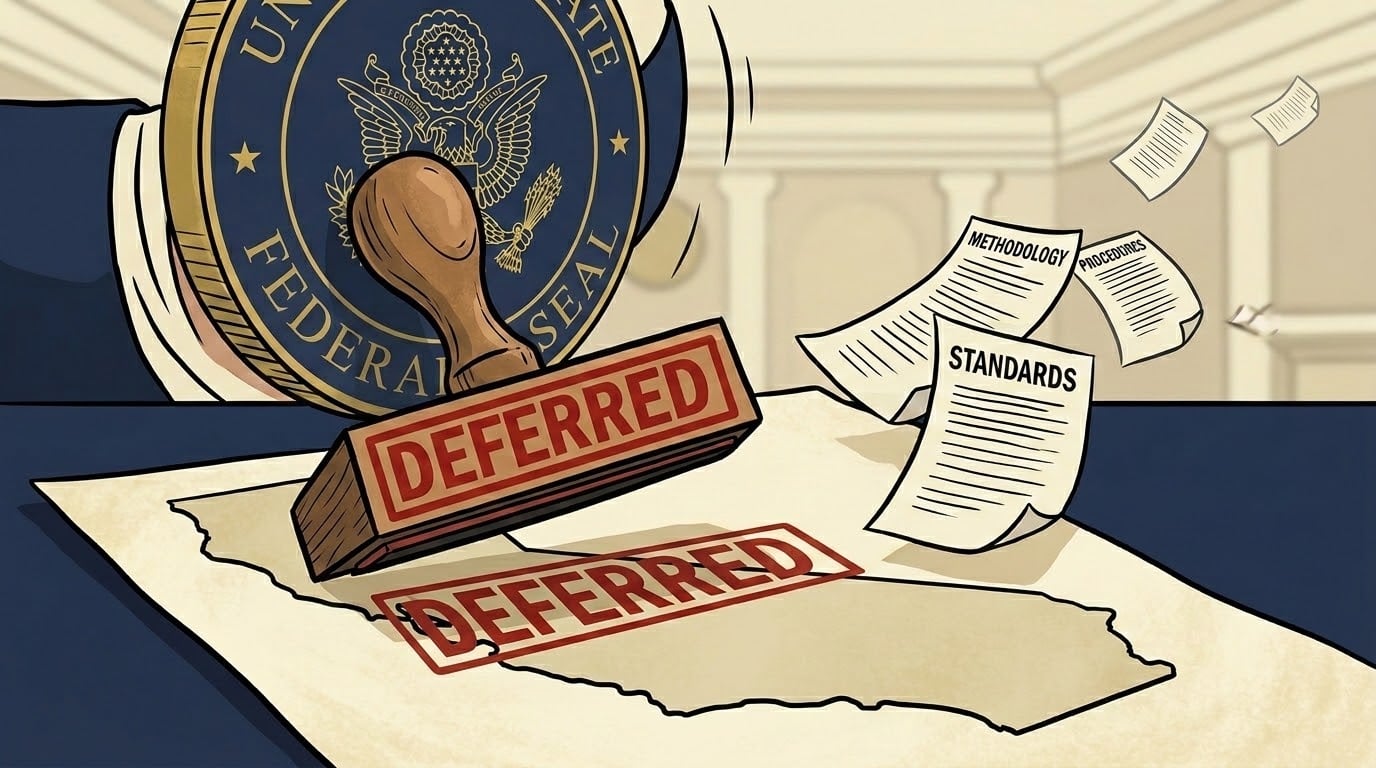
CMS deferred $1.3 billion in California Medicaid payments, froze new Medicare hospice and home health enrollments nationwide for six months, and put all 50 state fraud units on prosecution-rate notice.
Oz broke the deferred amount into three buckets: $630 million tied to billing from the top 5 percent of outlier providers in California, $500 million tied to personal care services growth, and $200 million in expenditures the agency calls questionable. The six-month moratorium prevents new hospice and home health providers from enrolling in Medicare anywhere in the country. Existing providers continue to operate.
The Department of Health and Human Services inspector general sent letters to state attorneys general telling them that fraud control unit funding is now contingent on prosecution rates. The administration has already suspended roughly 800 hospice and home health providers in Los Angeles County for suspected fraud, with combined billing of $1.4 billion last year.
How Does the Hospice Freeze Affect Your Retirement Care?

The six-month freeze prevents any new hospice or home health provider from enrolling in Medicare anywhere in the country, locking the provider pool to what already exists.
The enrollment freeze is national, not just Californian. If your parents are weighing in-home care, or if you are within a decade of needing it yourself, the providers available to you over the next six months will be the ones already in the system. New legitimate providers cannot join until the moratorium lifts.
The National Alliance for Care at Home has warned that the freeze raises access concerns in areas where patient demand is already outpacing capacity. The deferral lands on top of broader Medicaid spending changes the CBO has documented, making the access question more acute. The deferral also sits inside a larger federal budget picture, where defense spending and entitlement programs continue to compete for the same federal dollars.
The question for Americans nearing retirement is not whether the fraud crackdown is justified. It is whether the care infrastructure will still meet them when they need it.
Why Did the Medicaid Fraud Crackdown Target California First?
California’s Medi-Cal is the largest Medicaid program in the country at roughly $222 billion, and the task force has already pursued Minnesota and is investigating at least five states.
California’s program covers about 15 million Californians for the budget year starting July 1. Federal matching funds make up the bulk of it. The deferral lands as Medicaid cuts are already pressuring state budgets nationwide. Vance is scheduled to travel to Maine the day after the announcement, where Senator Susan Collins faces a competitive race, and Governor Janet Mills has already called the federal pressure a political attack.
What Verification Gap Has CMS Not Yet Closed?
CMS acknowledged to the Associated Press in April that it made a significant error in the figures used to justify a fraud probe in New York, and the agency did not provide concrete documented fraud examples for California at Wednesday’s announcement. This is the part that did not make most of the Medicaid fraud crackdown headlines. The April acknowledgment raised a methodology question that has not yet been answered. The Georgetown Center for Children and Families has documented the pattern across the administration’s first three months of state fraud actions.
At Wednesday’s announcement, Oz cited statistical outliers and growth rates but did not provide concrete documented fraud examples for California. Andy Schneider, a research professor at Georgetown University’s McCourt School of Public Policy, has questioned whether withholding $1.3 billion will actually reduce fraud or help the Californians who rely on Medi-Cal for access to care.
Vance, who is widely reported as a likely 2028 contender, has used his Medicaid fraud crackdown role on the campaign trail for Republican candidates in primary states. Both facts go in the record without dispute.
What Did Newsom and Bonta Say?
California Governor Gavin Newsom’s office disputed the fraud framing, and Attorney General Rob Bonta said the state appears to have been targeted for political reasons.
Newsom’s press office posted on X: “We hate fraud. But that’s NOT what this is.” The office argued that California’s home care growth has kept seniors out of more expensive nursing homes, not enrolled them in fraudulent services. State Medicaid Director Tyler Sadwith said CMS has used what was once a routine payment reconciliation process to undermine federal home and community-based services policy.
What Happens Next for California and the Other 49 States?
Minnesota’s lawsuit failed in federal court, California has not yet filed, the 50-state Medicaid Fraud Control Unit audit is underway, and the deferred $1.3 billion remains withheld. A federal judge denied Minnesota’s request to restore funding after its earlier deferral. The administration has approached at least five states with fraud investigations to date. For readers in any state, the verifiable next step is to check your state’s published Medicaid Fraud Control Unit performance review through the HHS Office of Inspector General and to confirm that any home health or hospice provider your family uses is not on the current CMS suspended-provider list. Until then, watch out for any new instances of the federal government’s Medicaid fraud crackdown.
Frequently Asked Questions
Will this affect my Medicare hospice coverage if I already have it?
No. Existing hospice and home health providers continue to operate normally. The six-month moratorium applies only to new providers seeking to enroll in Medicare for the first time.
Does the California deferral mean Medi-Cal patients will lose coverage right now?
The deferral withholds federal reimbursement to the state. It does not directly remove patients from the program. California is challenging the basis for the action and has the option to seek emergency relief, as Minnesota did earlier this year.
How can I check if my state’s Medicaid Fraud Control Unit is at risk of losing federal funding?
Every state has a publicly listed Medicaid Fraud Control Unit. The HHS Office of Inspector General publishes annual performance reviews. Your state attorney general’s office can confirm the current status of your state’s unit.
How much of California’s Medi-Cal budget is federally funded?
Federal matching funds make up the majority of California’s roughly $222 billion Medi-Cal program for the budget year beginning July 1, 2026, which covers about 15 million residents.
Has any state successfully challenged a CMS deferral in court?
Not yet. Minnesota sued CMS after its earlier deferral, and a federal judge denied the state’s request to restore funding. California has not yet filed.
Why was the Medicaid fraud crackdown announced while Trump is in China?
The timing is not officially explained. The announcement came one day before Vance traveled to Maine to discuss the task force’s work ahead of the state’s competitive June 9 primary races.