
QUICK SUMMARY: Health Secretary Kennedy told the Senate there are no Medicaid cuts. The CBO shows a $911 billion reduction against the spending baseline. The One Big Beautiful Bill, enacted July 2025, is projected to cost 7.5 million people their health coverage. To keep Medicaid under the new law, adults under 64 must document 80 hours of work per month starting January 2027. Most people who will lose coverage won’t fail that test. Instead, they’ll lose coverage because of missed deadlines and forms they never got.
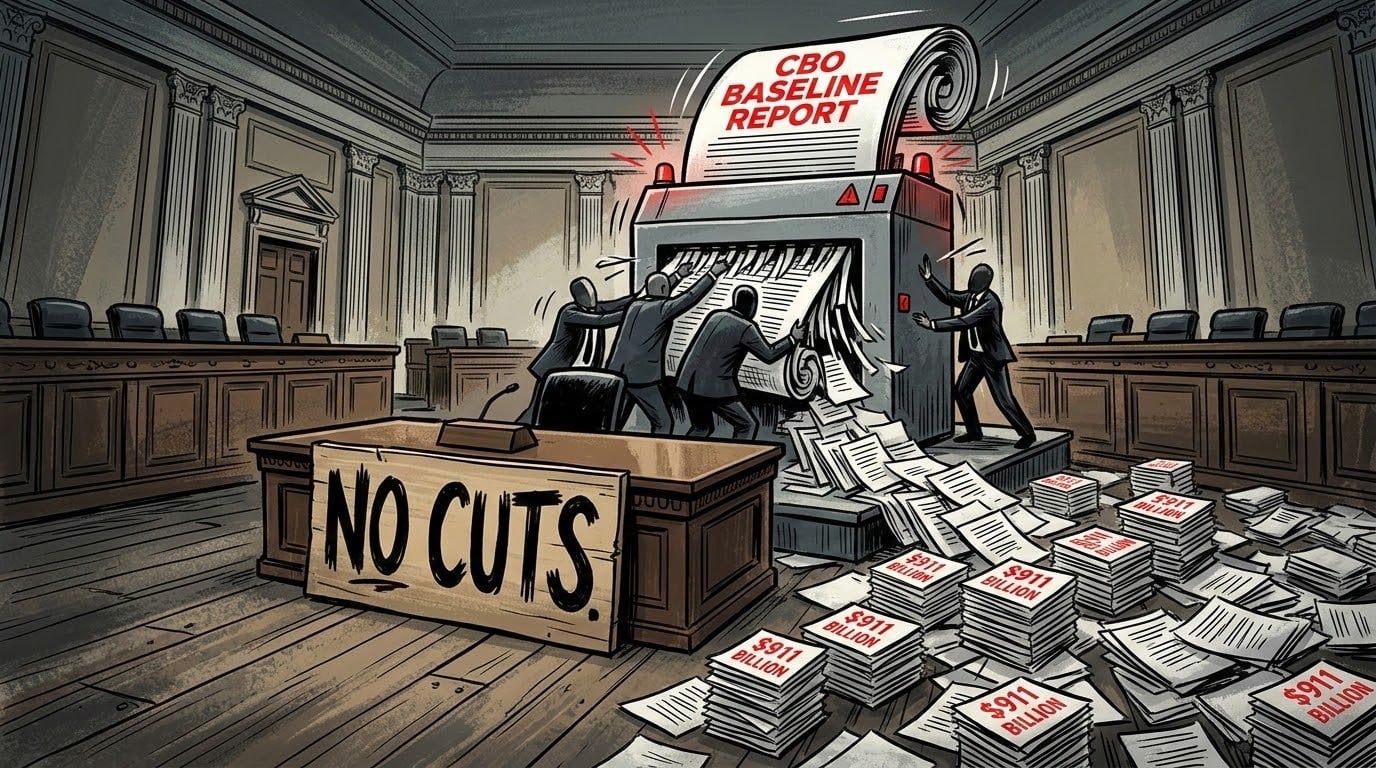
Health Secretary Robert F. Kennedy Jr. told the Senate Finance Committee on April 22 that the One Big Beautiful Bill contains no actual Medicaid cuts. The Congressional Budget Office says the law cuts $911 billion from Medicaid over the next 10 years.
Both statements are based on the same CBO document.
Kennedy’s argument was straightforward. Federal spending on Medicaid is projected to rise from $668 billion this year to $981 billion in 2036. “How is that a cut?” he told the committee. “That is only a cut in Washington, D.C.”
What he left out is the rest of the same report.
What Did the CBO Find About the Actual Medicaid Cuts?
Before the One Big Beautiful Bill passed last July, Medicaid spending was projected to grow to just over $1 trillion by 2035. The law reduced that projection by $911 billion. Kennedy cited the line showing nominal spending growth. He did not cite the line showing the reduction against the baseline from the same document.
“The federal government is spending nearly a trillion dollars less than it otherwise would have in the absence of the legislation,” said Edwin Park, a research professor at Georgetown University.
The $911 billion figure is not a reduction in the dollar amount spent — it is a reduction against what would have been spent without the law.
Medicaid spending can rise in dollar terms and still be cut, because the cut is measured against the projected baseline. “Every time there’s an executive order I have to go find out what it actually does to my benefits — nobody just says it straight.” That is the translation Kennedy did not provide to the Senate.
How Many People Will Lose Medicaid Coverage Under the New Law?

The CBO estimates 7.5 million people will lose health coverage over the next decade, with total Medicaid enrollment falling by 13.1 million people by 2035. The majority were already working, in school, or legally exempt at the time they lost coverage, according to the CBO. They lose coverage because the law now requires adults between 19 and 64 to document 80 hours per month of work, school, or community service, prove eligibility twice a year instead of once, and navigate a reporting system that most states are still building.
Federal guidance that states need to define key exemptions, including what medical conditions are severe enough to waive the work requirement, is not expected from CMS until June 2026, seven months before the nationwide January 2027 deadline. According to a KFF survey of Medicaid officials from 42 states, more than half reported they have insufficient time to add new data sources needed for compliance verification, and ongoing costs are a major concern.
Arkansas ran a version of this before a federal court stopped it. According to a KFF analysis of the program, more than 18,000 people lost Medicaid in the months it was active. Researchers found no significant change in employment. Most people who lost coverage had been working the whole time. The paperwork system failed them, not the eligibility standard.
The One Big Beautiful Bill requires all states to implement the same work documentation requirement starting January 2027.
When Do the Medicaid Deadlines Take Effect, and Which States Are First?
Nebraska was the first state to begin enforcement on May 1 of this year. Montana follows on July 1, 2026. Iowa will implement on December 1, 2026. All remaining states face the federal January 2027 deadline, with extensions available to January 2029 for states that can demonstrate a good-faith compliance effort.
Eligibility redeterminations shift from annual to semi-annual for all states on the same January 2027 timeline. Some states, including Indiana and New Hampshire, plan to go further, checking compliance quarterly rather than every six months.
States that accepted ACA Medicaid expansion funding face compounding pressure. The law phases down the enhanced federal matching rate those states relied on to sustain their expanded rolls, shifting more cost to state budgets. The Trump administration’s $1.5 trillion defense budget proposal has already put Medicare and Medicaid directly in competition with military spending priorities, leaving less room for states to absorb the difference.
Protect Your Coverage Before January 2027: Better Watch Out
Your state’s implementation plan determines how much risk your family faces. Three states are already enforcing work requirements. The remaining 40 will follow by January 2027, and several plan to apply more verification checks than federal law requires.
If you or a family member receives Medicaid through the ACA expansion, the specific risk is documentation, not eligibility. The exemptions for caregivers, students, people with disabilities, and those with medical conditions are broad on paper. Whether you keep your coverage will depend on whether your state’s reporting system is built in time, whether you receive and return the right paperwork, and whether the state processes it correctly.
The CBO’s $911 billion number is a line item in the same document Kennedy cited when he told the Senate there were no actual Medicaid cuts.
Frequently Asked Questions:
What are the actual Medicaid cuts in the One Big Beautiful Bill?
The One Big Beautiful Bill Act, signed into law on July 4, 2025, reduces federal Medicaid spending by $911 billion over 10 years compared to what would have been spent without the law. The cuts come primarily from new work requirements, more frequent eligibility checks, and limits on how states can raise their share of Medicaid funding.
What did RFK Jr. say about actual Medicaid cuts in the Senate hearings?
At the Senate Finance Committee hearing on April 22, 2026, HHS Secretary Kennedy repeatedly stated there are no Medicaid cuts, citing CBO projections showing nominal spending growth from $668 billion in 2025 to $981 billion in 2036. Budget analysts say Kennedy cited only one line of the CBO report while omitting the baseline reduction figure of $911 billion.
How many people will lose Medicaid coverage under the new law?
The CBO estimates that 7.5 million people will lose health coverage over the next decade, with total Medicaid enrollment projected to decline by 13.1 million people by 2035. Most losses are expected to result from paperwork barriers and missed deadlines rather than people failing the actual eligibility requirements.
When do the Medicaid work requirements start?
Nebraska implemented work requirements on May 1, 2026, becoming the first state to do so. Montana follows on July 1 and Iowa on December 1. The federal mandate for all remaining states takes effect in January 2027, with extensions available to January 2029. Eligibility redeterminations shift from annual to semi-annual on the same timeline.
Which states face the biggest Medicaid exposure under the new law?
States that accepted ACA Medicaid expansion funding face the steepest risk. The law phases down the enhanced federal matching rate those states relied on to sustain expanded enrollment, shifting more of the cost to state budgets. States have until January 2029 to comply if they apply for an extension, but the financial pressure begins immediately.