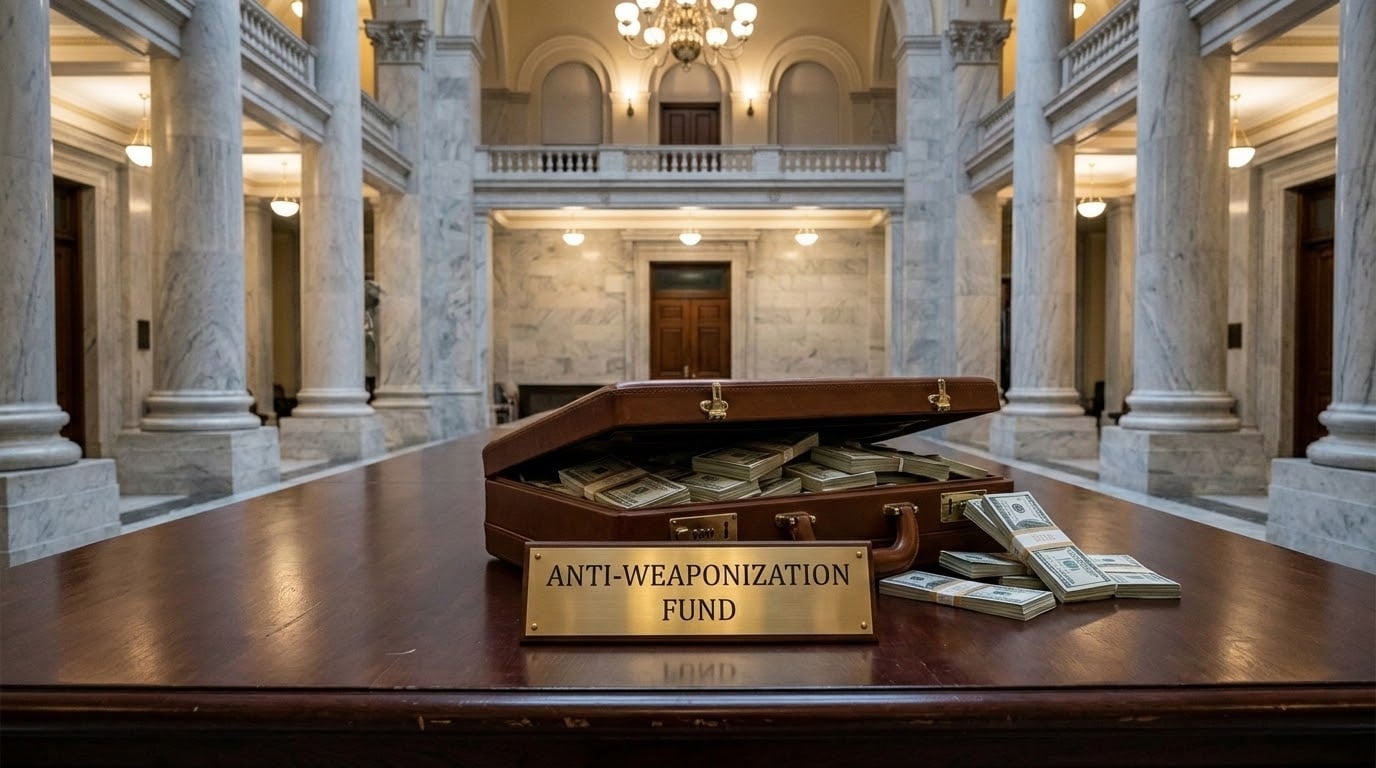

Acting Attorney General Todd Blanche announced on Monday the creation of the anti-weaponization fund. Prior to his appointment, Blanche served as Trump’s personal criminal defense attorney. He created the fund by settling a lawsuit Trump filed against the Internal Revenue Service. However, no member of Congress voted on the fund’s creation. No federal judge is overseeing how the money gets distributed.
What Is the Anti-Weaponization Fund and Who Created It?
The fund is formally administered by a body called the Truth and Justice Commission. Blanche personally appoints all five commission members, and no eligibility criteria have been made public.
The settlement also resolves separate administrative claims Trump brought against the DOJ over the Mar-a-Lago search warrant and the Mueller investigation. Asked Wednesday about the public backlash, Blanche dismissed it. “There’s nothing to be outraged about,” he told CNN. “The outrage is us doing something that is completely legal, allowed under our laws, and has been done before.” The federal judge overseeing the IRS case closed it days after the settlement was announced, before she could scrutinize the conduct of the DOJ attorneys involved.
Where Does the $1.776 Billion Actually Come From?
The payments come from the DOJ Judgment Fund, a congressional appropriation of taxpayer dollars held specifically for government lawsuit settlements. No new law was needed to redirect this money. The fund was created through a settlement agreement that Blanche negotiated on behalf of the federal government while his former client stood to benefit directly.
Most DOJ staffers were cut out of the process entirely. They only learned about the fund when it was publicly reported, according to sources familiar with the matter.
Why Did Trump Sue His Own IRS in the First Place?
In January 2025, Trump filed a $10 billion lawsuit against the Internal Revenue Service in his personal capacity. The lawsuit accused the IRS of failing to protect his tax returns from an unauthorized leak in 2019 and 2020. A government contractor who leaked the returns has since been prosecuted. The lawsuit claimed the disclosure caused Trump and the Trump Organization reputational and financial harm.
It was an unprecedented legal move. Joseph Thorndike, a contributing editor at Tax Notes magazine, told CNN he was unaware of any other president suing the IRS in this manner.
The case was already in legal trouble before the settlement was announced. Harold Krent, a law professor at Chicago-Kent College of Law, told WTTW Chicago Tonight the lawsuit had very little to stand on, and the statute of limitations had likely passed. Days before Judge Kathleen Williams was scheduled to rule on the case’s legitimacy, the DOJ announced the settlement. The judge closed the case shortly after, before she could scrutinize the involved attorneys’ conduct.
CNN reported Thursday that Trump campaign advisers had planned a political ally compensation fund since late 2023, but shelved it due to a lack of a funding source. When the IRS lawsuit began to falter, the settlement provided the answer.
Can January 6 Defendants Apply for Payments?
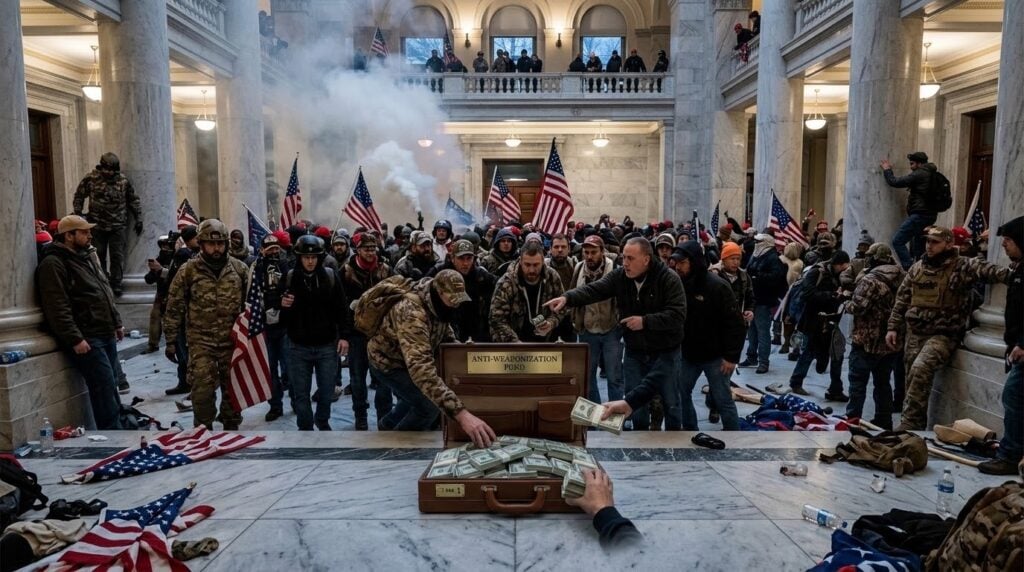
At a Senate hearing Tuesday, Blanche told lawmakers that “anybody can apply” and declined to rule out payments to the roughly 1,600 people charged in connection with the January 6 Capitol attack. Blanche left eligibility decisions entirely to the commission — a commission he appoints.
Jenny Cudd, a January 6 defendant who pleaded guilty to misdemeanor trespass, told CBS News that “all J6ers will apply for restitution. All of us.” A DOJ official had told a Republican ally months before the announcement that payouts to January 6 defendants were coming, estimating the figure at around $40 million. The fund ended up far larger.
What Does the IRS Immunity Clause Mean for Taxpayers?
The settlement includes a clause that received almost no coverage in early reporting. As part of the agreement, the IRS permanently agreed it cannot bring claims against Trump, his family, or the Trump Organization for past tax issues.
That agreement was not subject to a congressional vote. It was secured through the same settlement mechanism that created the fund. Thorndike told CNN he was unaware of any prior president securing a settlement of this kind with the IRS.
Why Did Senate Republicans Walk Out Over Trump’s Own Fund?
The White House did not anticipate the reaction from its own party. Senate Majority Leader John Thune said Tuesday he was “not a big fan” of the fund and saw no purpose for it. By Thursday evening, Senate Republicans had left Washington without voting on the $70 billion ICE and Border Patrol funding bill, the centerpiece of Trump’s second-term immigration enforcement push. The House canceled its Friday vote the same day.
One Republican senator called the fund a “payout pot for punks.” Sen. Mike Rounds of South Dakota said plainly: “When other extraneous things get in the middle of it, it makes it more difficult.” The White House had not adequately anticipated the Republican revolt, and Senate Majority Leader Thune has not announced a new vote timeline.
The Republican caucus needed near-unanimous support to pass the border bill through reconciliation. The fund generated enough internal opposition that Democratic amendments to block the money appeared likely to pass with GOP votes. Leadership pulled the bill rather than allow that outcome.
What Happens to the Border Bill and the Fund Now?
The border bill was moving through budget reconciliation, a process that bypasses the Senate’s 60-vote filibuster threshold but opens legislation to unlimited amendment votes. Democrats were preparing to force a vote on an amendment to block the fund. Enough Republican senators publicly opposed to the fund that the amendment appeared likely to pass with bipartisan support. If it had, the amended bill would have faced a certain veto from Trump or a collapse in the House. Pulling the vote was the only way to keep the border bill alive.
Meanwhile, the anti-weaponization fund is already facing legal challenges. Two Capitol Police officers who defended the building on January 6 filed suit Wednesday to block the fund, calling it illegal and a sham. Democratic senators are pursuing amendments to defund it. Republican senators are negotiating eligibility guardrails. The June 1 deadline Trump imposed for the border enforcement bill is now in serious jeopardy.
Senate Majority Leader Thune controls the floor schedule. The mechanism owner for what happens next is not the White House.
Frequently Asked Questions
Where does the $1.776 billion actually come from?
The money comes from the DOJ Judgment Fund, a taxpayer-funded account Congress set aside for government lawsuit settlements. No new appropriation was required, and no congressional vote approved this specific use of the funds.
Who decides who gets paid?
A five-member commission appointed by Acting AG Blanche decides who qualifies. No eligibility criteria have been made public. Blanche told the Senate that “anybody can apply” and did not rule out payments to January 6 defendants.
What does the IRS immunity clause mean for taxpayers?
As part of the settlement, the IRS agreed it cannot bring claims against Trump, his family, or the Trump Organization for past tax issues. That agreement is permanent and was not subject to congressional approval.
Why did the border bill collapse over this fund?
Senate Republicans needed near-unanimous party support to pass the $70 billion ICE and Border Patrol bill through reconciliation. The fund created enough Republican opposition that Democratic amendments appeared likely to pass with GOP votes. Leadership pulled the vote on Thursday to avoid that outcome.
Is this fund legal without a congressional vote?
The fund was created through a settlement of a lawsuit Trump filed against his own IRS, using the pre-authorized DOJ Judgment Fund, a mechanism that does not require new congressional approval. Legal challenges are expected.