
QUICK SUMMARY: Japan’s Cabinet approved scrapping the country’s ban on lethal weapons sales abroad on April 21, opening Japan arms exports to 17 partner countries for the first time since World War II. The list will expand to 20. The first deals on the table include warships for the Philippines and a $7.15 billion frigate program with Australia. Here is what changed, and what it means.
On April 21, the Cabinet of Japanese Prime Minister Sanae Takaichi approved the biggest change to the country’s defense export rules since the constitution that ended World War II. Japan arms exports are now legal to 17 partner countries, including lethal systems that were banned for the previous eight decades.
Tokyo will be allowed to sell warships, fighter jets, missiles, and other lethal weapons to a defined list of allies. The list is expected to grow to 20 in the coming months. Mitsubishi Heavy Industries, Mitsubishi Electric, Toshiba, and ShinMaywa are the named contractors lining up to handle the orders.
Philippines, Australia, Poland Among Recipients
The Cabinet decision formally revised the Three Principles on Transfer of Defense Equipment and Technology. Under the new framework, export approvals will be made jointly by the Prime Minister, Chief Cabinet Secretary, Foreign Minister, and Defense Minister. Japan’s parliament is notified after approvals are issued rather than holding a substantive review before them.
PM Takaichi announced the change on X the day of the Cabinet approval. “No single country can now protect its own peace and security alone,” she wrote. She also said there is “absolutely no change” in Japan’s commitment to its 80-year pacifist tradition.
The named deals are already lined up. Australia signed a $7.15 billion contract with Mitsubishi Heavy Industries for three Mogami-class frigates with eight more to be jointly built in Australia. Used Japanese frigates are expected to go next to the Philippine Navy, which is in active maritime confrontation with China in the South China Sea. Poland is in talks for drones and electronic warfare systems. Japan is jointly developing a sixth-generation fighter jet with the United Kingdom and Italy.
No Change to Jaan’s Pacifist Commitment
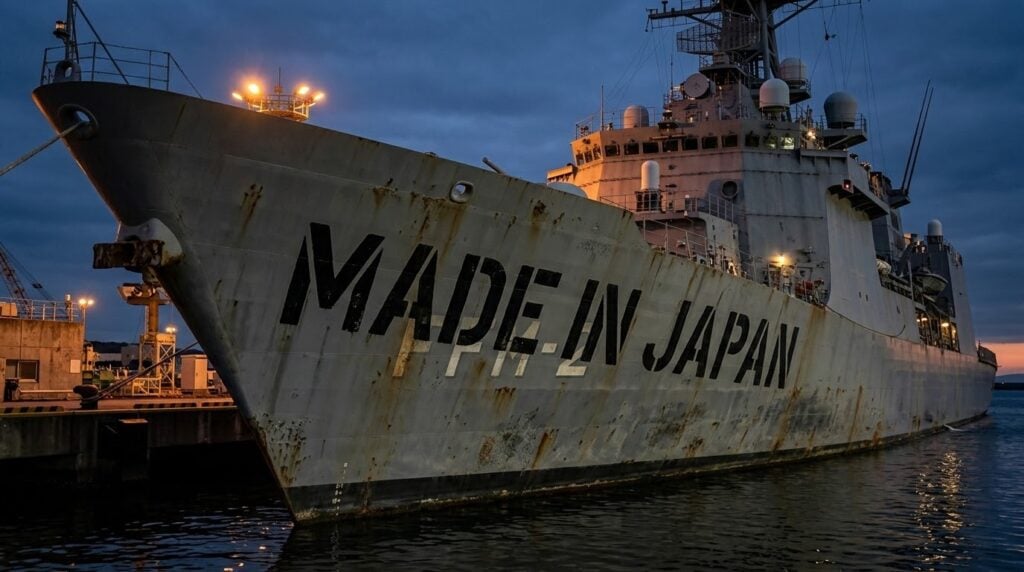
PM Takaichi stated there is “no change” to Japan’s pacifist commitment. The same Cabinet meeting authorized lethal weapons exports for the first time since 1945. Both statements are on the record. The reader can weigh them.
The dominant Western framing of the story rests on something different. Reuters reported that Japan acted because allies were “rattled by Trump.” That framing was sourced to three anonymous European diplomats. It is not in the official Cabinet record. The named record points to a documented decade-long shift driven by China’s expansion in the Pacific, North Korea’s missile development, and strain on American weapons production from simultaneous Iran and Ukraine demand.
What Japan Arms Exports Mean for American Security
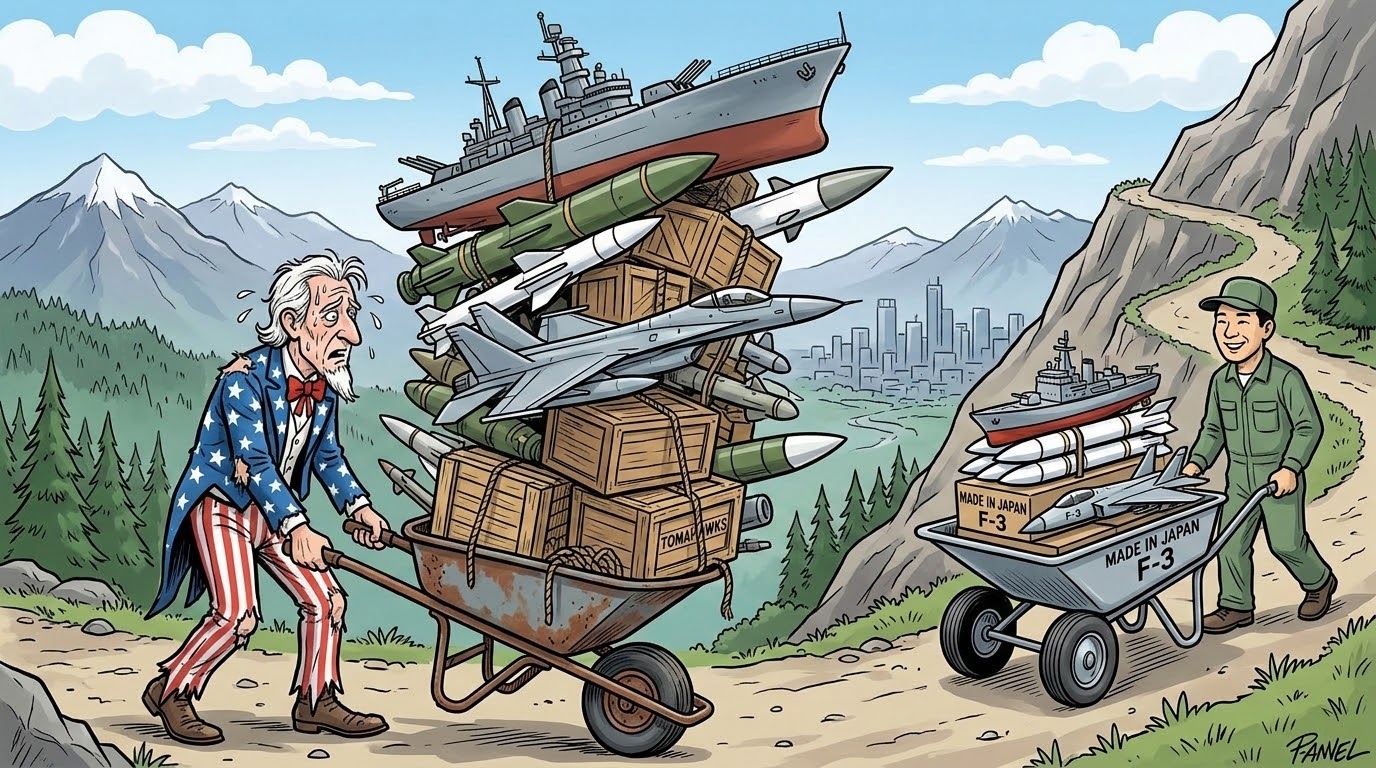
The US has accounted for roughly 95 percent of Japan’s defense imports between 2021 and 2025, according to the Stockholm International Peace Research Institute. American defense manufacturers have been carrying not only US Pacific commitments but most of Japan’s procurement on top of it. With Pentagon production strained by simultaneous Iran and Ukraine demand, the math has been getting harder.
Japan arms exports relieve some of that pressure. Pacific allies including the Philippines and Australia now have a second source for warships and missile systems. NATO partners who have asked Washington for burden-sharing for decades are finally seeing it materialize in production capacity, not just budget percentages.
The strategic consequence is straightforward. The Pacific deterrent against China strengthens. The US shifts from sole supplier to network supplier. American manufacturers face less pressure to fill every Pacific ally’s order book. The security architecture in the Indo-Pacific moves from a hub-and-spoke model centered on Washington to a network model with Tokyo as a major node.
Eighty years is a long time. The country that ended World War II under American occupation is now a defense exporter to seventeen democracies. Watch what gets sold, who buys it, and how Beijing responds.