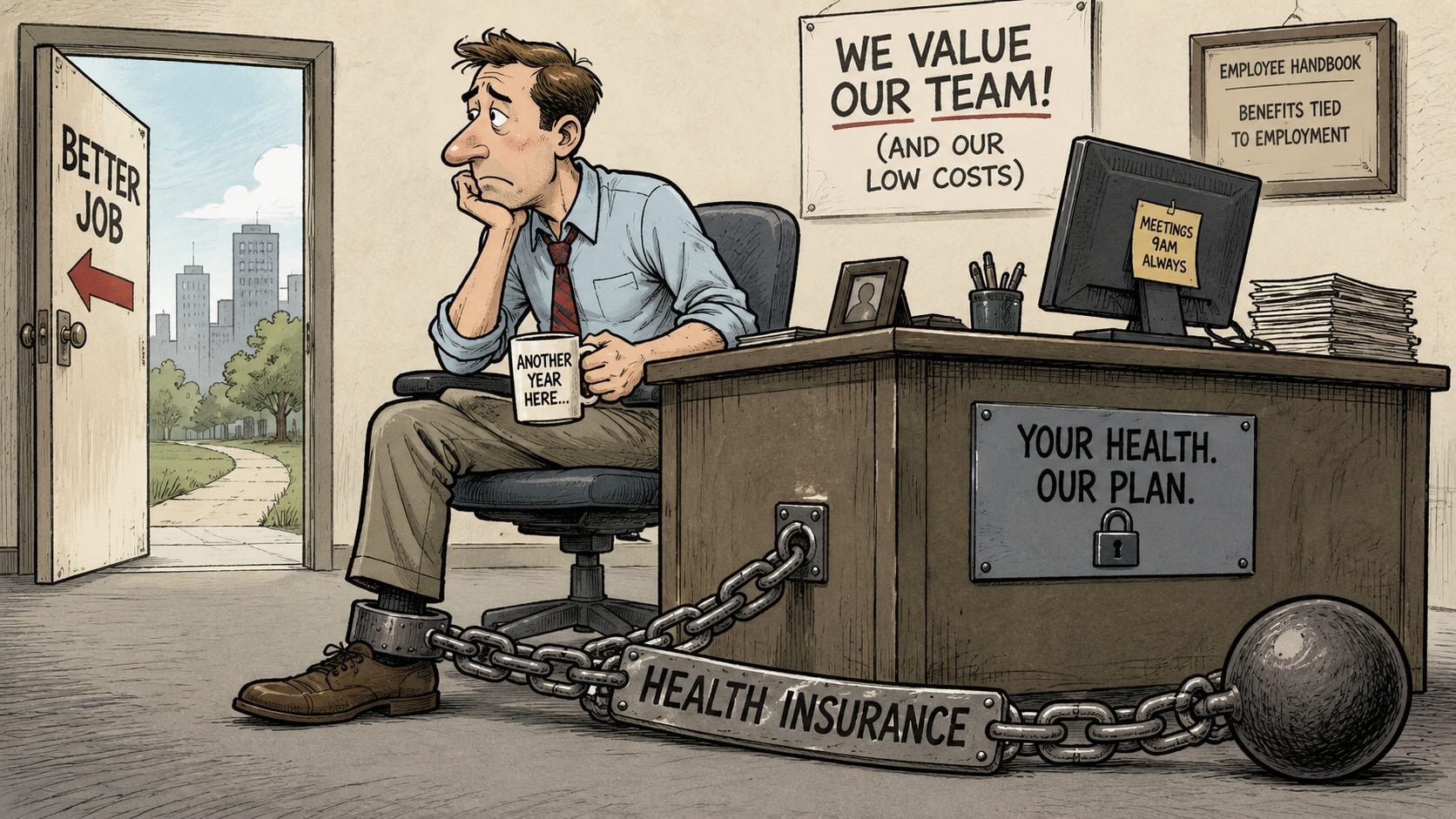

Nearly a quarter of American workers with job-based health coverage say they’re staying in a job they want to leave for one reason: they can’t afford to lose the insurance that comes with it.
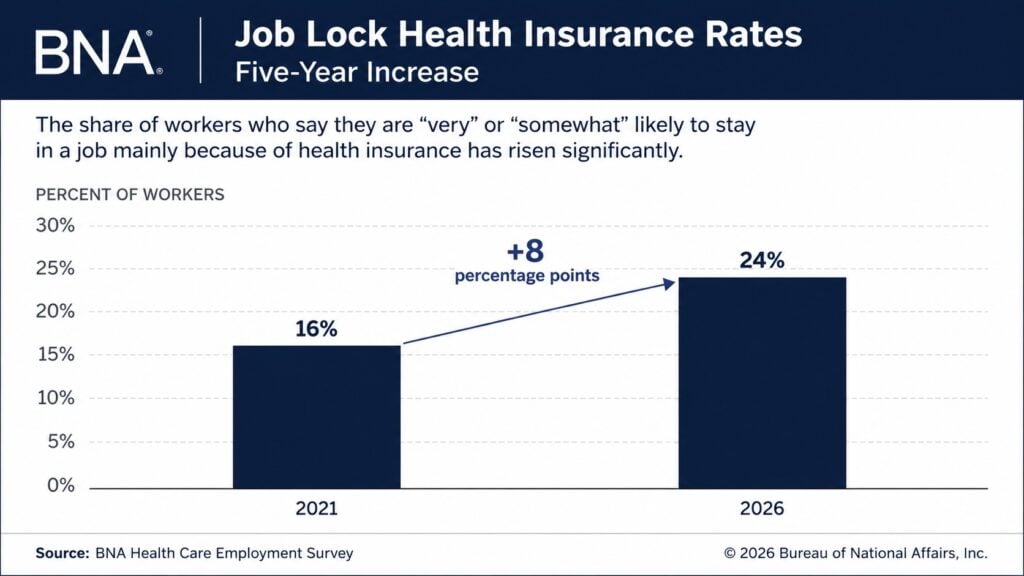
New data from the West Health-Gallup study puts a hard number on job lock health insurance for the first time in years. Roughly 23 million adults, 24% of employed Americans who get coverage through work, report staying put solely to keep their benefits. That’s up from 16% in 2021. For workers managing three or more chronic health conditions, the number climbs to 41%.
What Is Job Lock Health Insurance, and Why Is It Getting Worse?
Job lock describes workers who stay in a job they’d rather leave because losing employer coverage isn’t a realistic option, and the safety valve that once softened it has disappeared.
Sen. John McCain campaigned against this in 2008, telling voters that “job lock” reduces opportunities for American workers because they often pass up new jobs for fear of losing their health care coverage, and promising a plan where coverage would follow the family from job to job. Nearly two decades later, it’s worse than when he said it. Enhanced Affordable Care Act marketplace subsidies, expanded during the pandemic and extended once by Congress, expired on January 1, 2026, after Democrats and Republicans spent a 43-day government shutdown fighting over whether to renew them. Neither side got what it wanted. The subsidies lapsed, and marketplace premiums for millions of Americans doubled overnight.
“Anybody having to stay in a job just to keep their health insurance, knowing that they want to leave, is crazy,” said Ellyn Maese, a research director at West Health-Gallup. “That is a concerning figure, even if it’s 10%. But when we’re seeing it rise to 1 in 4 employees, that’s pretty serious.”
Who’s Getting Blamed for the Subsidy Expiration?
Conservative commentators and free-market critics agree job lock is real, but split hard on why, and BNA isn’t picking a side without a document behind it.
“The blame for that falls squarely on Barack Obama and the Democrats’ shoulders,” Newsmax’s Jennifer Kelly said on air the day the subsidies lapsed. Others point instead at the underlying system the subsidy was patching over. Michael Cannon, director of health policy studies at the libertarian Cato Institute, put it differently: “Everyone acknowledges that job lock is real,” Cannon said. “Whether the extent of job lock is 8%, 24%, or something else, favoring employer-sponsored health insurance creates coverage gaps, reduces income mobility, and is crying out for reform.” Sen. Chuck Grassley has accused the expired subsidies of having “left Obamacare, a program already riddled with problems, wide open to new waste, fraud and abuse.”
What Does This Mean If You’re Planning an Early Exit?
Leaving a job before Medicare eligibility at 65 now means paying a marketplace premium without the subsidy cushion that used to exist, or staying in a job you’d rather leave until you qualify.
Larry Levitt of KFF, who was not involved in the Gallup study, said the finding tracks with what his own organization’s polling has shown. “Healthcare tops the list of economic worries right now,” he said. That math compounds directly with what BNA has already reported on Medicare benefits costing more this year, Part B premiums crossing $200 a month in 2026, eating most of the 2026 COLA increase before it ever reached a retiree’s account. And the fight over what to do about the subsidies isn’t over. Consultant Debbie Curtis called the renewed attacks on the ACA “laying the groundwork for the big fight next year.” Whatever comes out of that fight, it won’t arrive before workers today have to make their own decisions about staying or leaving.
What Should Workers Nearing Retirement Do Before They Decide?

Review your full benefits picture, Social Security timing, Medicare eligibility date, and the actual cost of a marketplace plan before assuming you can afford to leave.
The 2027 Social Security COLA outlook is already shaping up to matter here too: a smaller COLA next year means less room to absorb a health insurance gap if you leave a job before 65. For anyone doing this math for the first time, Get What’s Yours for Medicare, the same benefits guide BNA has pointed readers to before, walks through exactly how coverage, premiums, and enrollment timing interact with a retirement decision.
Frequently Asked Questions:
What is job lock health insurance?
It’s the situation where a worker stays in a job they’d rather leave solely to avoid losing employer-provided health coverage.
How many Americans are affected by job lock health insurance right now?
Roughly 23 million adults, or 24% of workers who get coverage through their job, according to a 2026 West Health-Gallup study.
Why did job lock health insurance get worse in 2026?
Enhanced ACA marketplace subsidies expired on January 1, 2026, after Congress failed to renew them during a government shutdown, raising the cost of leaving employer coverage.
Does job lock health insurance affect people with health conditions more?
Yes. Among workers with three or more chronic conditions, 41% report staying in a job specifically to keep their insurance
Can I keep my coverage if I retire before I’m eligible for Medicare?
Yes, marketplace coverage is available, but premiums are notably higher now that the enhanced subsidies have expired. A licensed insurance advisor can walk through your specific numbers before you decide.
What’s the connection between job lock health insurance and my Social Security COLA?
A smaller COLA in 2027 means less cushion to cover a health insurance gap for anyone who retires before Medicare eligibility at 65.