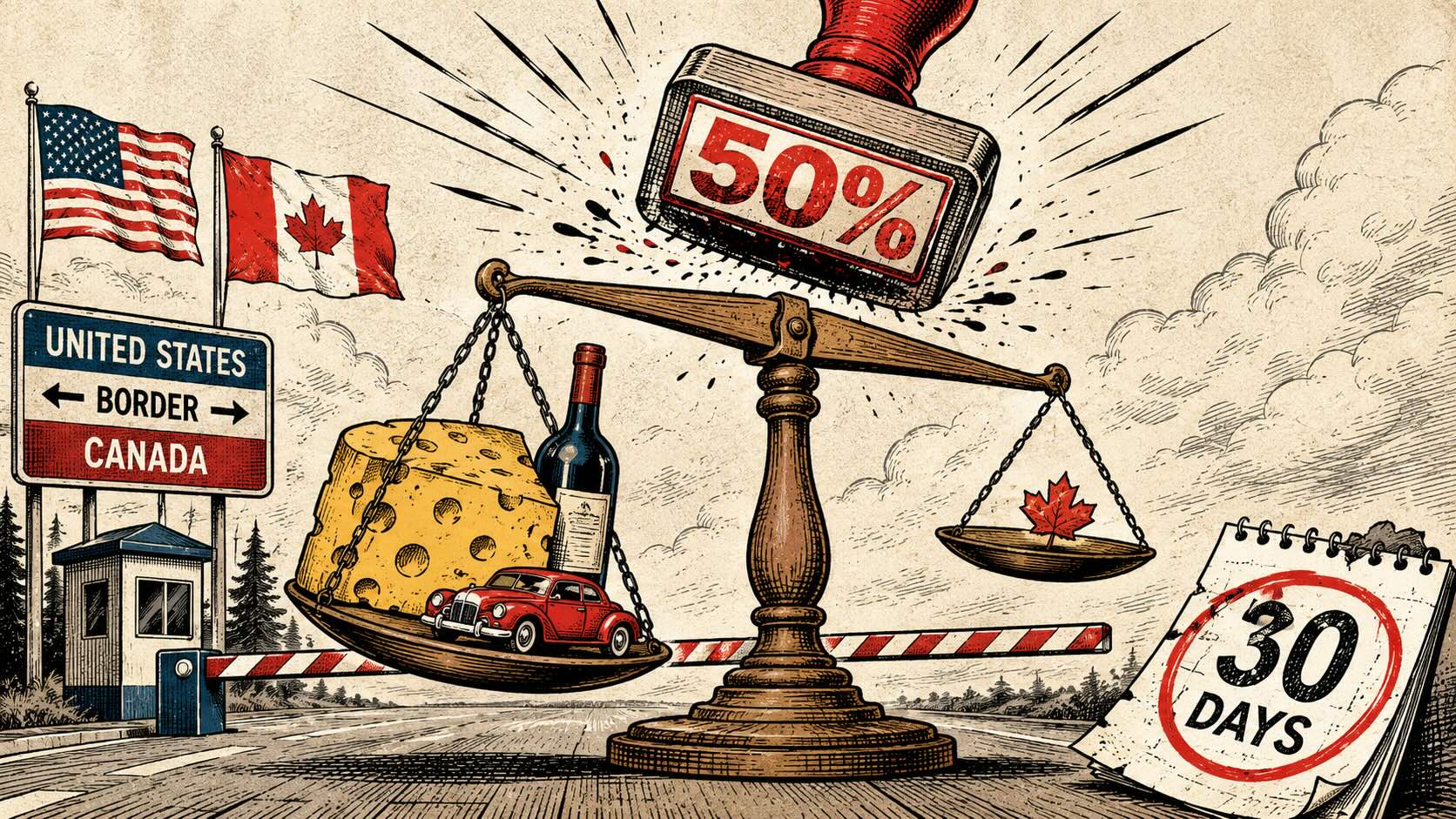

President Trump signed three proclamations Monday putting 50% tariffs on Canada goods such as dairy, alcohol, and vehicles. The tariffs take effect in 30 days, and this time there’s no exemption for goods previously protected under the US-Mexico-Canada trade agreement. This carve-out shielded consumers from the worst of earlier tariff rounds.
The administration is using Section 338 of the Tariff Act of 1930, a law that lets the president impose duties up to 50% on countries found to be discriminating against US trade. It hasn’t been used this way in decades. “Canada has to be held accountable for this continued discrimination,” US Trade Representative Jamieson Greer said on a call with reporters Monday. The White House says the tariffs cover roughly $20 billion in Canadian imports, spanning three separate proclamations, one for motor vehicles, one for alcohol, one for dairy. The full product list runs from wine and cheese to hockey sticks and cement. Energy products, critical minerals, and potash are excluded.
Why Your Grocery Bill Is Actually Exposed This Time
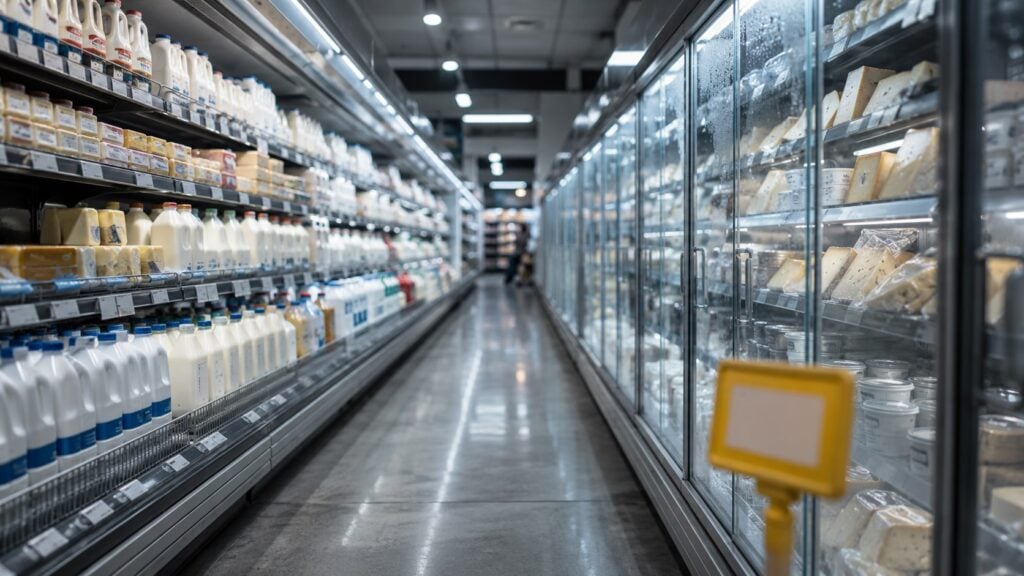
The missing USMCA carve-out is the detail that changes your grocery bill. Economists have pointed to that exemption as the main reason earlier tariffs on Canada never fully showed up at checkout; importers could route protected goods around the tax. This round closes that route. Dairy and alcohol products that dodged past price increases are exposed now. Retailers typically raise shelf prices as new import costs work through their supply chains rather than on the effective date itself, so expect the increase to show up gradually over the weeks after the tariffs land, sometime around mid-to-late August
How These Tariffs on Canada Differ From Earlier Rounds
Canada has absorbed several separate tariff actions from this administration in 2026 alone: a fentanyl-linked tariff earlier in the year, a 50% tariff on steel and aluminum in March, and now this 50% tariff on dairy, alcohol, and autos under a different legal authority entirely. These are the first tariffs on Canada signed without the usual trade-deal exemption attached, which is why this round is different.
Separately, a 10% global tariff under a different law is set to expire July 24 and be replaced with a new global tariff structure covering other countries. That’s a different policy, different countries, different statute. If two tariff headlines crossed your feed this week, they’re not describing the same fight.
Canada’s Response So Far
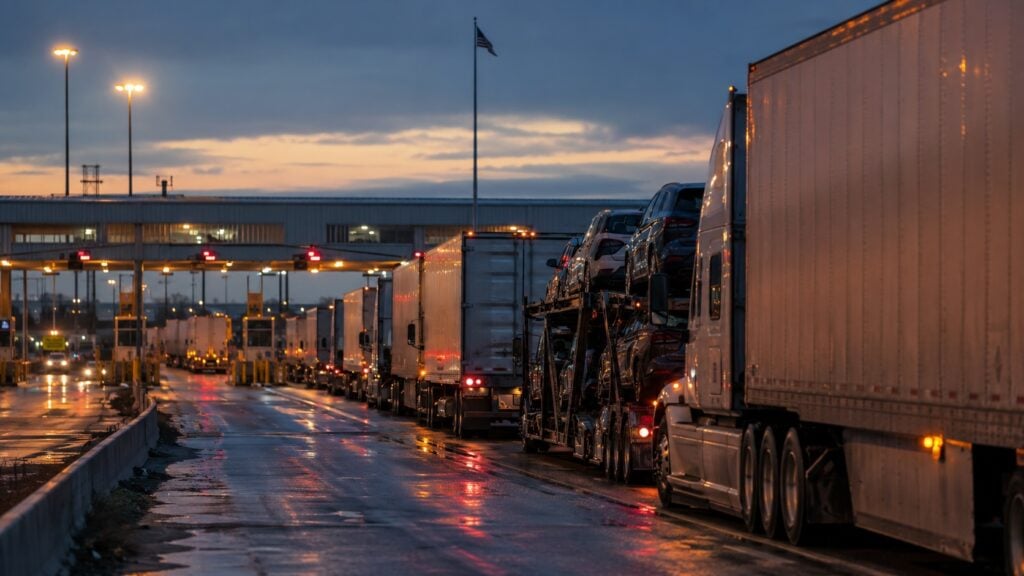
Canada’s government pushed back within hours. Prime Minister Mark Carney called the new tariffs a violation of the USMCA and said his government would push to intensify trade negotiations. Ontario Premier Doug Ford went further, calling on Ottawa to respond “tariff for tariff, dollar for dollar.” Neither government had announced a retaliation package as of Monday night. The 30-day window before the tariffs take effect leaves room for a negotiated change, though nothing on the record right now suggests one is close.
Frequently Asked Questions
What products are covered by the new tariffs on Canada?
Motor vehicles, alcohol, and dairy, plus a wider list that includes wine, cheese, hockey sticks, and cement. Energy, critical minerals, and potash are excluded.
When do the tariffs on Canada actually take effect?
30 days from Monday’s signing, landing in mid-to-late August. Retailers usually pass costs through gradually, not on day one.
Is this the same as the tariff expiring July 24?
No. That’s a separate 10% global tariff under a different law, covering different countries. This is a Canada-specific action under Section 338.
Will Canada retaliate?
Ontario’s premier has called for it publicly. As of Monday night, no formal retaliation package had been announced.
Why didn’t earlier Canadian tariffs raise prices as much as expected?
The USMCA carve-out exempted a lot of covered goods. This round removes that exemption, which is the main reason economists expect more pass-through this time.