
Image source: YouTube
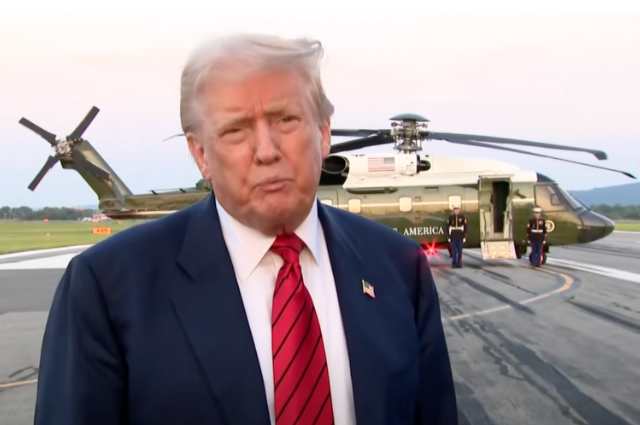
President Donald Trump is preparing to outline a plan to address violent crime and homelessness in Washington, D.C., despite city officials disputing the need for federal intervention. The president is scheduled to hold a press conference Monday morning, following a weekend deployment of 450 federal officers to the capital. This follows his public pledge to evict homeless residents from the city and jail criminals, a proposal raising legal and political questions unique to the federal district.
Washington, D.C. Is Actually Under Federal Control
Trump’s authority in Washington, D.C. differs from that in any state. The president directly controls the National Guard in the capital and oversees federal law enforcement agencies that routinely operate alongside local police. Over the weekend, the administration reassigned more than 100 FBI agents to patrol city streets, an unusual role for the bureau’s investigators. Officials say the federal surge was partly prompted by the recent assault on a young administration staffer, which Trump cited as evidence of inadequate local policing.
Mayor Muriel Bowser, a Democrat, rejects the president’s characterization of the city as unsafe. She points to Metropolitan Police Department data showing violent crime fell 26% in the first seven months of 2025 compared to last year, with overall crime down 7%. Bowser noted that crime rates are at a 30-year low and said her administration has worked closely with federal law enforcement on public safety. “We are not experiencing a crime spike,” she said Sunday, adding that the city’s efforts have steadily reduced violence since 2023.
Eradicating Homelessness at the Center of Trump’s Plan
Homelessness has become a key target of Trump’s proposed crackdown. In Washington, D.C., the Community Partnership, which tracks local housing data, estimates 3,782 single adults experience homelessness on a given night. Most are in emergency shelters or transitional housing, with about 800 sleeping outdoors. Trump has vowed to move homeless individuals “far from the Capital” and provide alternate accommodations, though the White House has not detailed the legal authority for removing people from non-federal property. Under current law, the president controls only federal land and buildings in the district unless Congress changes its governing structure.
Trump has also floated the possibility of overturning the D.C. Home Rule Act, which since 1973 has allowed residents to elect a mayor and city council. Such a move would require congressional approval and could revoke local authority over law enforcement and other municipal matters. The idea has drawn criticism from Delegate Eleanor Holmes Norton, the city’s nonvoting representative in Congress, who called it an affront to the 700,000 residents of Washington, D.C., many of whom are Black and Latino.
Press Conference Could Signal Broader Federal Action
The planned press conference is expected to outline further steps, though past statements by the president suggest it could include more aggressive use of federal personnel. During his first term, Trump clashed frequently with the city’s leadership, but his second term has seen a more measured response from Bowser and most council members, who have avoided direct confrontation while maintaining that public safety has improved. The mayor has expressed appreciation for federal assistance in certain areas, such as park maintenance and event security, while opposing the notion that the city is overrun by crime.
The deployment of FBI agents and other federal officers marks one of the largest coordinated law enforcement surges in recent years. Patrol duties include running license plates to identify stolen vehicles, monitoring for firearms violations, and assisting with street-level enforcement. Critics argue that these assignments divert FBI resources from investigative work, while supporters say the increased presence deters crime.
The coming days will determine whether Trump’s proposals lead to substantial policy changes or remain largely symbolic. Any attempt to impose direct federal control over Washington, D.C., faces both legal obstacles and political resistance, particularly in the Senate. However, the president’s unique authority over the district ensures that his influence on local law enforcement will remain significant, regardless of legislative action.
Should the president have more power over Washington, D.C., or less? Tell us what you think.