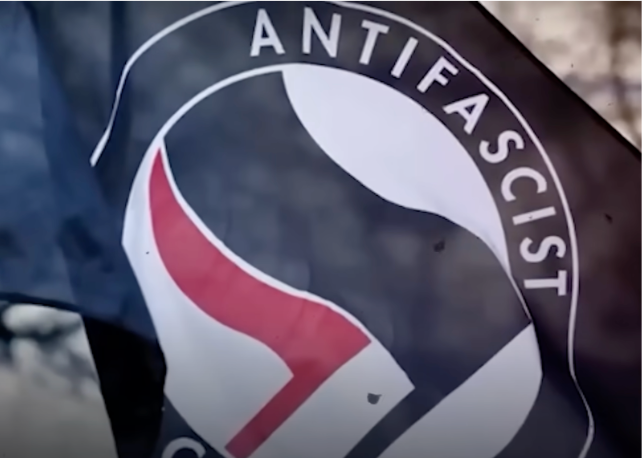

Image Source: YouTube
In a move to counteract increased left-wing violence, President Donald Trump announced his intent to designate Antifa as a terrorist organization. He made the declaration on Truth Social while overseas in the United Kingdom, describing Antifa as “a sick, dangerous, radical left disaster” and calling for investigations into those who provide financial backing. For Trump’s supporters, this represents long-awaited accountability against a movement they see as violent and destructive.
The White House confirmed the plan to designate Antifa is part of a broader effort to confront left-wing organizations accused of fueling political unrest. Officials highlighted that Trump intends not only to apply a terrorism label but also to push financial scrutiny of alleged backers. This announcement followed the murder of conservative activist Charlie Kirk, an event that has intensified calls from Republicans for decisive measures. Trump’s team stressed the need to show strength, presenting the designation as a clear step to protect communities and political speech from intimidation.
Before evaluating the political impact, it is important to outline the legal framework that governs designations and the challenges it poses.
Legal Questions and Executive Limits
U.S. law contains a clear process for designating foreign terrorist organizations under the Immigration and Nationality Act. That designation carries penalties for anyone providing material support. However, there is no comparable pathway for domestic groups, leaving prosecutors to rely on existing tools like conspiracy charges, racketeering laws, and state-level enforcement. This creates an obstacle for a formal designation of Antifa, which is not a traditional organization but a diffuse network of activists with no central leadership.
Trump has already spoken with Attorney General Pam Bondi about exploring racketeering cases, signaling an aggressive legal posture. Civil liberties groups are preparing lawsuits, warning of potential violations of free speech and association rights. Still, Trump’s allies argue that such challenges highlight the seriousness of his approach, not its weakness. They believe the attempt to designate Antifa, even symbolically, forces courts and lawmakers to confront the rise of radical left-wing activism. For his base, the lack of a straightforward legal path is secondary to the message of strength and resolve.
The legal fight will unfold alongside political battles that could redefine how the nation addresses domestic threats.
Political Stakes and National Response
Supporters view Trump’s decision to designate Antifa as proof of his commitment to law and order. They see it as an effort to deter agitators and protect conservatives who feel threatened by radical activism. Republicans frame the move as overdue recognition of violence tied to Antifa demonstrations. The announcement gives them a rallying point, reinforcing Trump’s image as a president who acts decisively when American safety is at stake.
Democrats and civil liberties organizations argue that the plan risks conflating dissent with terrorism. They warn of constitutional challenges and potential misuse of government power. Yet these criticisms resonate less with voters who have witnessed repeated clashes tied to Antifa activity. For many citizens, restoring order takes precedence, even if it requires pushing existing legal boundaries.
The practical effects may emerge in stages. Federal and local law enforcement could receive new directives to treat Antifa-linked activity as a higher priority. Prosecutors may use conspiracy and RICO statutes more aggressively. Social media platforms might face greater pressure to shut down accounts tied to alleged Antifa organizing. Nonprofits and donors could see investigations into their spending and connections. These measures, while not creating a domestic terror list, still signal a shift toward treating Antifa as a serious national threat.
Trump’s announcement forces a national conversation about domestic extremism, the limits of executive power, and the line between protest and violence. Whether courts block the effort or not, the political impact is immediate: the federal government is no longer willing to dismiss Antifa as an amorphous protest movement. Instead, it is treating Antifa as a destabilizing force that requires direct action. For Trump’s supporters, that message is clear and welcome.
How should America respond to Antifa after Trump’s announcement? Tell us what you think.