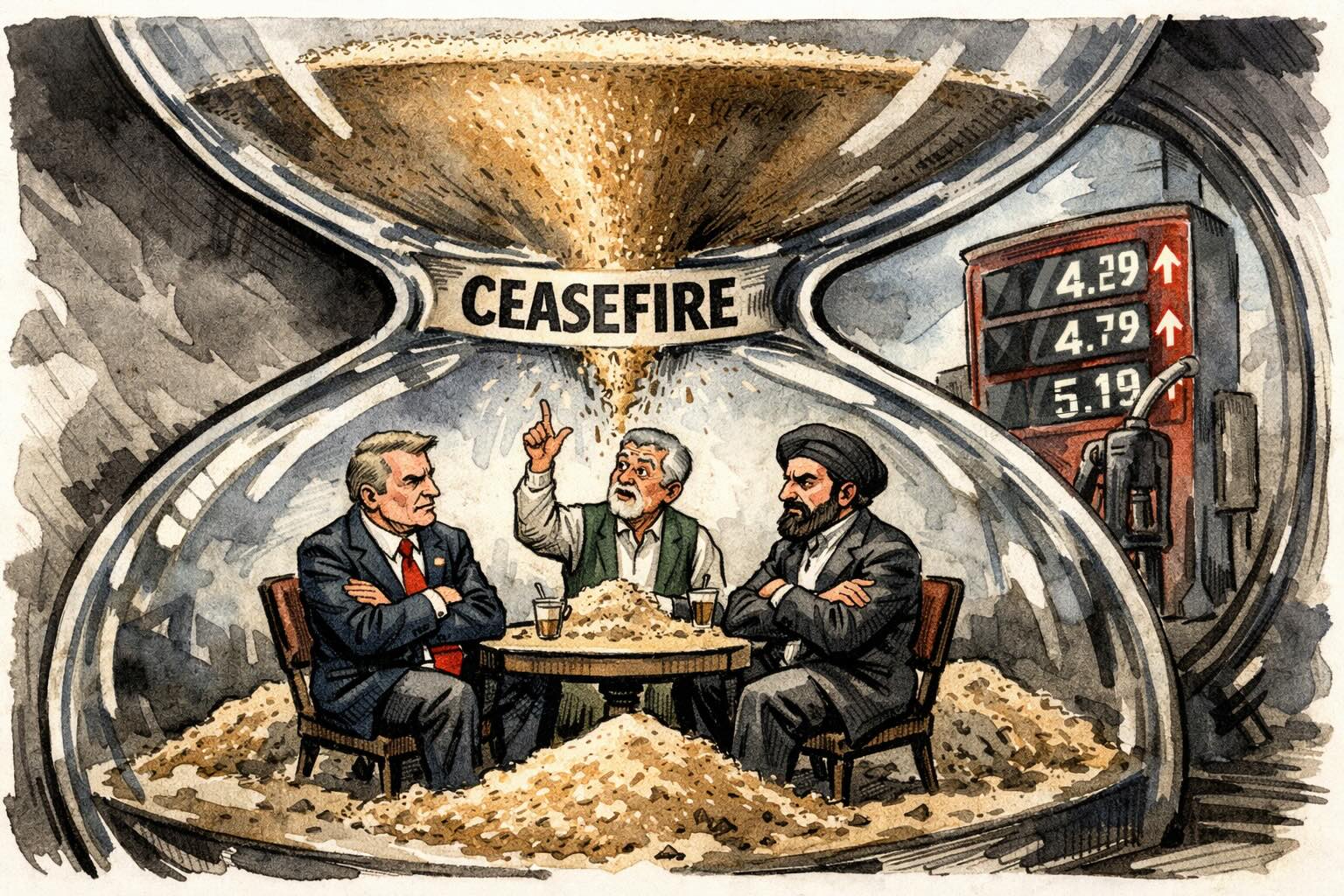

QUICK SUMMARY: The already-shaky Iran ceasefire expires on Wednesday, April 22. Pakistani mediators are shuttling between Tehran, Riyadh, Doha, and Ankara to close a two-week extension. Iran pulled out of the Islamabad talks last Sunday after the US Navy seized an Iranian tanker. With gas currently at $4.05 a gallon, Energy Secretary Chris Wright says that sub-$3 gas may not return until 2027. If the Iran ceasefire extension collapses, there will be repercussions on your fuel budget for the next six months.
The chances of an Iran ceasefire extension are fading fast, with 48 hours left before the Wednesday expiration date. Iran is now refusing to attend the scheduled Islamabad talks after the US Navy seized an Iranian tanker in the Gulf of Oman on Sunday. As a result, the Strait of Hormuz is closed again, which means one-fifth of the world’s oil supply is choked off.
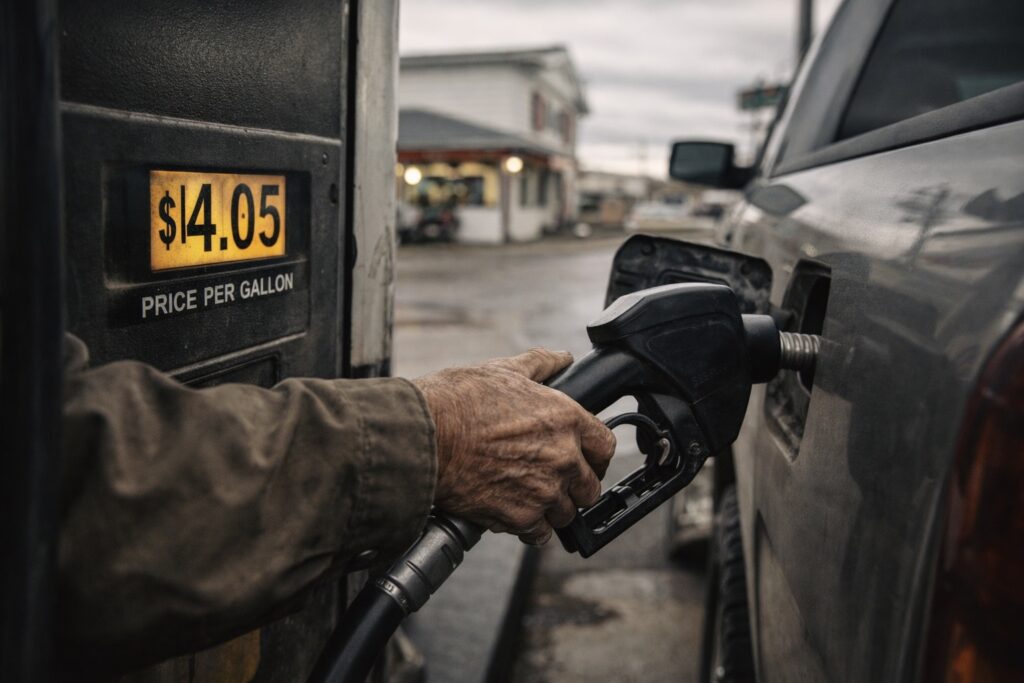
With the U.S. national average price at the pump at $4.05 per gallon, Energy Secretary Chris Wright told CNN on Sunday that gas prices may not return below $3 per gallon until “next year.” That means the pump price you paid this weekend is closer to the price you will pay for the rest of 2026 than the price you paid in December. If you fill up twice a week with a 15-gallon tank, the move from December’s $3.00 a gallon to today’s $4.05 is about $32 more a week, or roughly $1,600 more a year. This difference is not your average news cycle anymore. It’s now a line item in your budget.
Two tracks are running on the Iran ceasefire extension
Washington and the news cycle are covering Track One: the dramatic public collapse. Iran pulled out. The Navy fired on a tanker. Trump threatened on Truth Social to destroy Iranian infrastructure.
Track Two is the one that actually decides the fate of the Iran ceasefire extension this Wednesday. Pakistani Field Marshal Asim Munir and Prime Minister Shehbaz Sharif are running shuttle diplomacy across the region. Sharif is traveling to Saudi Arabia, Qatar, and Turkey this week. Munir led a delegation to Tehran last Wednesday and embraced Iranian Foreign Minister Abbas Araghchi on the tarmac. Mediators are pushing for a two-week extension of the ceasefire itself, and according to Associated Press reporting, both sides gave “in principle agreement” to extend.
However, “in principle” simply means the Iran ceasefire extension remains unsigned. And the gap between Track One and Track Two is narrowing faster than the extension track can close it.
The mechanism owners on the US side are Vice President JD Vance, Middle East envoy Steve Witkoff, and Jared Kushner. On the Iranian side, you have parliamentary speaker Mohammad Bagher Ghalibaf and Foreign Ministry spokesperson Esmaeil Baqaei. Pakistan’s Munir and Sharif are the intermediaries carrying messages between them.
What happened last Sunday that caused the talks to collapse
The two-week ceasefire began last April 8 and is set to expire on Wednesday, April 22. Only one formal negotiating session has happened: 21 hours in Islamabad on April 11, which ended without any agreements made.
Sunday’s sequence began with Iran reclosing the Strait of Hormuz, citing “breaches of trust” over the ongoing US naval blockade. Hours later, the US Navy destroyer USS Spruance intercepted the Iranian-flagged cargo vessel Touska in the Gulf of Oman, firing on and seizing the ship after a six-hour warning window, according to US Central Command. Iran responded by sending drones toward US military ships, per Iranian state agency Tasnim. By Sunday evening, Iranian state media and Foreign Ministry spokesperson Baqaei confirmed Iran had no plans to attend the next round of Islamabad talks.
- Trump then posted on Truth Social that he would destroy Iranian bridges and power plants if a deal was not reached.
- Both sides are performing for their own domestic audiences. Read their public statements as negotiating positions, not facts.
- Trump on Truth Social: “We’re offering a very fair and reasonable DEAL, and I hope they take it.”
- Ghalibaf on Iranian state TV: “If the ceasefire is not implemented, we will not continue negotiations, and we will start the war.”
- Baqaei at Monday’s Foreign Ministry press briefing: “As of now, we have no plans for the next round of negotiation, and no decision has been made in this regard.”
- Iran’s First Vice President Mohammad Reza Aref called the American approach “childish.” That is the register of a side that expects to be blamed if the extension falls apart.
What an Iran ceasefire extension actually buys you
An Iran ceasefire extension is not a deal. It just buys the world two more weeks of the current status quo.
This status quo is: the Strait remains contested or closed. Gulf Arab oil infrastructure, including the Ras Laffan complex in Qatar, remains damaged as export capacity fell 17%. In fact, rebuilding the regional energy infrastructure is seen to cost $25 billion and could take up to five years. Observers expect Iran to impose a toll for transit through the Strait at roughly $1 per barrel, which will undoubtedly go straight to US consumers’ wallets. Shipping insurance is structurally higher. Gas prices, as one analyst put it to The Hill, go up like a rocket and come down like a feather.
A 70-year-old Washington, DC resident interviewed by CNBC on April 14 said: “I have to curtail what I would normally do in terms of driving different places, because the gas is really too expensive.” That is the math every American household over 50 is doing right now.
An extension means $4.05 holds. A lapse means the pump gets worse, fast.
What should readers watch out for?
Wednesday, April 22. Ceasefire expires. If Pakistani mediators close the extension by Wednesday night, the status quo holds for another two weeks. If they do not, the truce lapses and hostilities can resume.
The Strait of Hormuz. If Iran keeps the vital waterway closed or imposes tolls, the structural floor on prices will stay near current levels for months, extension or no extension.
Energy Secretary guidance. Wright’s timeline has already slipped from “weeks” to “next year.” If it slips again, plan accordingly.
What should households do this month to prepare?
If the Iran ceasefire extension talks fail, you can do more than wishful thinking that fuel prices go down soon. Instead:
- Recalibrate your fuel budget to $4.00 to $4.50 a gallon through the rest of 2026. Build that into your grocery and commuting math now, not later.
- Audit discretionary driving. The DC senior cutting back on CNBC is not doing that because the news told her to. She is doing it because the math stopped working.
- Watch for cascading costs. Fuel is a pass-through. Airline tickets, trucked groceries, utilities, and anything that moves by road are repricing their charges right now.
- When the gas pump is doing this to your monthly budget, the first tool most households over 50 reach for is the one that shaves the margin on every single fill-up.
At $4.05 a gallon, tossing out stale fuel from a gas can or a rarely-used engine is throwing away real money. A stabilizer like STA-BIL keeps gasoline fresh for up to 24 months and prevents the corrosion that ruins small engines.


You already spent the last 90 days watching Washington tell you a deal was close. However, watching the gas pump tells you otherwise. The Wednesday outcome is not the end of the story. It is the hinge. Whatever Pakistan closes or fails to close will decide what you pay for your next six months of fill-ups. It will also decide whether the sub-$3 gas promised to you in December remains a 2026 number or becomes a 2027 one.
Where do you land? Vote in the reader poll below, then tell us what you are doing with your fuel budget this month in the comments.
A note on forecasts: Figures and timelines in this article are based on cited sources as of April 20, 2026, and reflect current market conditions. Fuel prices, ceasefire status, and policy outcomes can change rapidly. Use this context when making personal budgeting decisions.
Frequently Asked Questions
When does the current Iran ceasefire expire?
The two-week ceasefire, which began on April 8, is set to expire on Wednesday, April 22. President Trump has said he will not extend it unless an agreement is reached first. If the deadline passes without a deal or an extension, the war can resume.
What is the Iran ceasefire extension and who is negotiating it?
Pakistani mediators, led by Field Marshal Asim Munir and Prime Minister Shehbaz Sharif, are pushing for a two-week extension of the current ceasefire. According to Associated Press reporting, both sides gave “in principle agreement” to extend, but nothing is signed. An extension buys time without resolving the three core disputes: uranium enrichment, the Strait of Hormuz, and Iranian support for regional proxies.
Why did the US seize an Iranian tanker?
The US Navy destroyer USS Spruance intercepted the Iranian-flagged cargo vessel Touska in the Gulf of Oman on Sunday after repeated warnings over a six-hour window, according to US Central Command. Iran called the seizure “piracy” and sent drones toward US military ships in response.
Will a new ceasefire bring gas prices back under $3?
Not this year, according to Energy Secretary Chris Wright and some analysts. Damaged Gulf oil infrastructure, higher shipping insurance, and potential Iranian tolls on Strait transit mean the structural floor is well above pre-war prices.