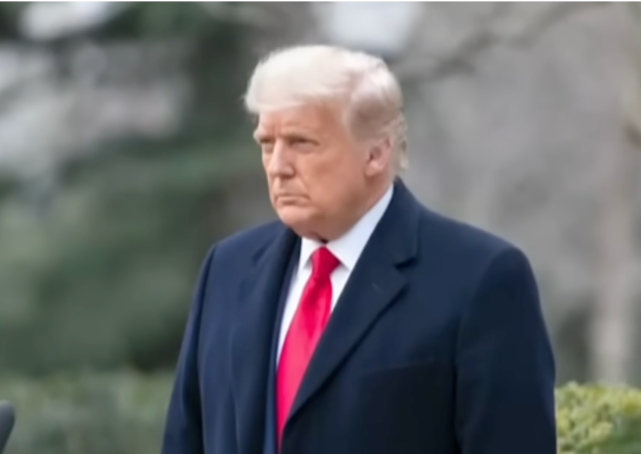

Image Source: YouTube
The YouTube Trump settlement marks the end of a high-profile legal battle between former President Donald Trump and one of the world’s largest online platforms. Google’s YouTube agreed to pay $24.5 million to settle Trump’s lawsuit challenging the suspension of his channel after the January 6, 2021 Capitol riot. The agreement closes more than three years of litigation and reignites debate over free speech, corporate power, and political influence in digital media.
YouTube Trump Settlement Closes a Political and Legal Rift
Trump filed suit against YouTube and its parent company, Google, in 2021, arguing that the platform unfairly censored him and other conservatives when it suspended his account. The channel, which had millions of followers, was taken offline after Trump posted videos questioning the results of the 2020 election and praising supporters who stormed the Capitol.
YouTube stated at the time that the suspension was meant to prevent further violence and misinformation. The company maintained that its actions complied with its policies but ultimately agreed to settle rather than continue years of appeals. The YouTube Trump settlement includes no admission of wrongdoing by either side, but it allows Trump to resume uploading videos under current community guidelines.
Trump’s legal team described the agreement as “a victory for fairness and free expression.” In contrast, YouTube said the settlement reflected “a shared desire to move forward and refocus on platform integrity.”
Free Speech and Platform Accountability Revisited
The YouTube Trump settlement underscores how disputes over online speech have evolved since 2021. Conservatives have repeatedly accused major technology companies of political bias, citing bans and content moderation practices that disproportionately affect right-leaning figures. Supporters of stricter moderation argue that platforms have a responsibility to curb misinformation and prevent violent rhetoric from spreading.
Legal analysts say the case highlights how fragile the balance remains between corporate responsibility and individual expression. “The First Amendment doesn’t directly bind private companies, but their decisions now shape public discourse more than ever,” said legal scholar Daniel Lyons of Boston College Law School. “That’s why the Trump lawsuits against Big Tech continue to resonate beyond politics.”
The YouTube Trump settlement follows similar outcomes involving Meta and X (formerly Twitter), both of which restored Trump’s accounts after previously banning him. While Trump has largely shifted to posting on Truth Social, his campaign has sought broader digital reach ahead of the next election cycle.
A Broader Reckoning for Big Tech Regulation
The YouTube Trump settlement may influence how lawmakers and regulators approach tech oversight. Congressional Republicans argue that the settlement proves social media companies act with excessive discretion over political speech. Democrats maintain that the agreement does not change the need for consistent moderation standards across major platforms.
The case also revives questions about Section 230, the federal law shielding tech companies from liability for user content. Some experts believe settlements like this could push Congress to revisit the scope of legal protections that have long governed digital communication.
Media experts view the $24.5 million payout as largely symbolic given Google’s size but significant in its implications. “It’s not the money—it’s the precedent,” said Clara Hong, a digital policy analyst at the University of Chicago. “It shows that even tech giants are willing to compromise when political and legal pressure converge.”
Political Reactions Reflect a Divided Public
Public reaction to the YouTube Trump settlement has followed familiar partisan lines. Trump supporters celebrated it as vindication against Big Tech censorship, while critics dismissed it as a pragmatic move by Google to avoid further litigation.
Observers note that the case’s timing, just as the election season intensifies, adds new weight to long-standing debates about the limits of online speech. “Social media remains the battlefield for modern politics,” said strategist Mark Halperin. “Every ruling, settlement, or suspension becomes a proxy fight for free speech itself.”
Do you think the YouTube Trump settlement is a win for free speech or a warning about Big Tech’s influence? Tell us what you think.