
Nearly half of Republican voters disapprove of President Trump’s cost-of-living record. Trump promised low gas prices below $2 a gallon within 12 months. In June, the national average is now $4.29. AP-NORC puts Republican disapproval on affordability at 47%, a 20-point gap from his overall base approval rating.
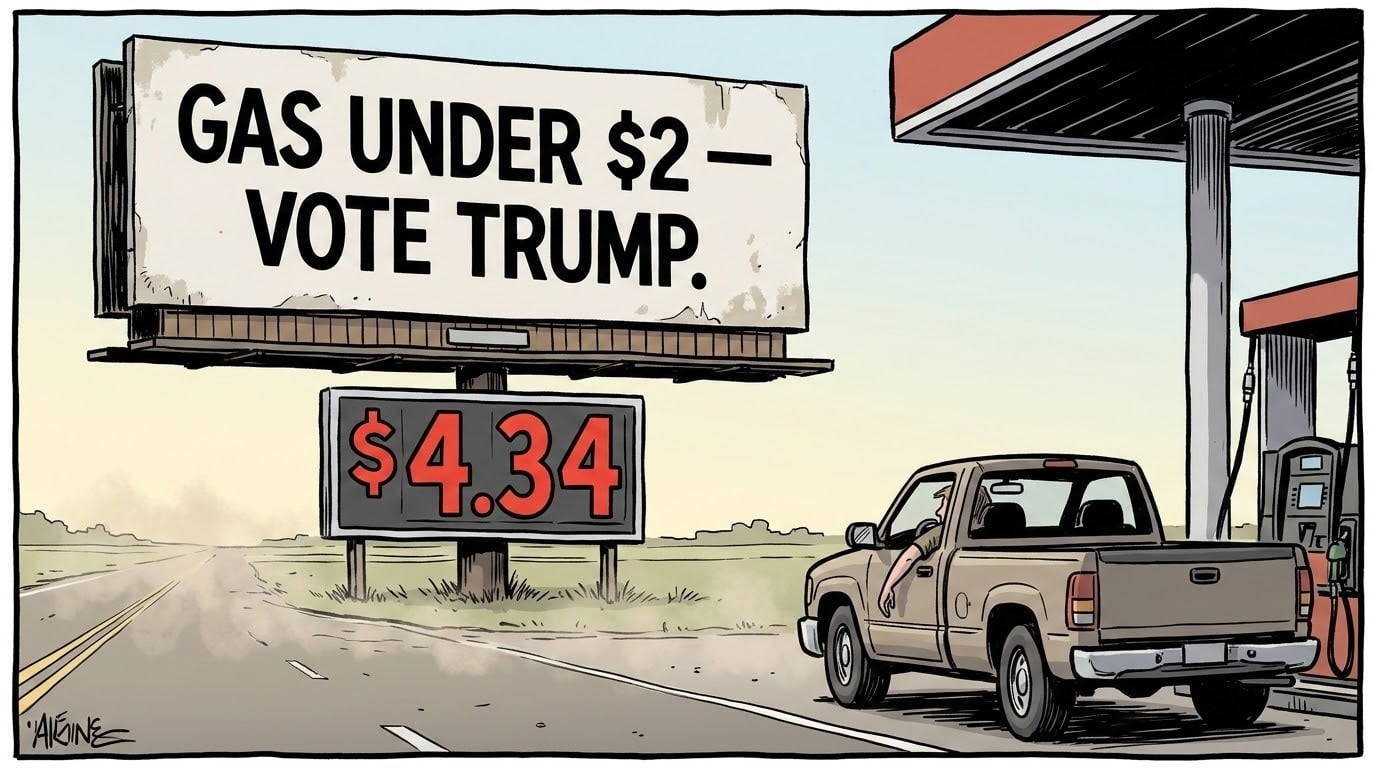
Standing in Detroit on October 18, 2024, Donald Trump made it simple: “I will cut your energy prices in half within 12 months.” Gas below $2 a gallon. Grocery bills down as well. Relief by summer. Republican voters heard it, believed it, and in November cast ballots with that promise in mind. Trump promised low gas prices by 2026. It’s now June. The national average for a gallon of gas is $4.34. Grocery inflation hit 3.3% in March, up sharply from 2.4% in February. Trump officials spent the spring promising gas prices would come down before summer. They have not.
An AP-NORC poll conducted April 16-20 found that 47% of Republican voters now disapprove of how Trump is handling the cost of living, the first time that figure has been measured this year, and a number his own party did not see coming.
This is not a story about Republicans abandoning Trump. Among voters who identify with the MAGA movement, 9 in 10 still approve of his overall job performance. On the economy specifically, that falls to 7 in 10. The 20-point gap between overall approval and affordability approval is the story. It is a promise audit. Republican voters are the ones conducting it.
Trump Promised Low Gas Prices, But Here Is What the Pump Says
The mechanism behind the shift is specific. Gas prices were declining heading into late 2025. On February 28, 2026, the United States entered the Iran conflict. Prices reversed. By late April the national average had climbed past $4.30 per gallon, the highest since 2022. Michigan saw gas jump 72 cents in a single week. Ohio was up 60 cents in the same period.
March CPI came in at 3.3% year over year, the highest reading since Trump returned to office. Republican voters’ long-run inflation expectations are now more than double their February 2025 level, according to the University of Michigan Survey. Gas and groceries are the two prices most households track every week. Both moved in the wrong direction at the same time. Both were the subject of specific campaign pledges.
When asked about gas prices above $4.50, Trump told reporters prices had come down “very substantially.” AAA’s daily data showed prices that day reached $4.56 a gallon, up from $4.39 the week prior. The White House later said these are “short-term, temporary disruptions” and that prices will “plummet” once the Strait of Hormuz normalizes. Republican voters who filled up this week are not operating on that timeline.
What Republican Voters Are Actually Saying at the Pump
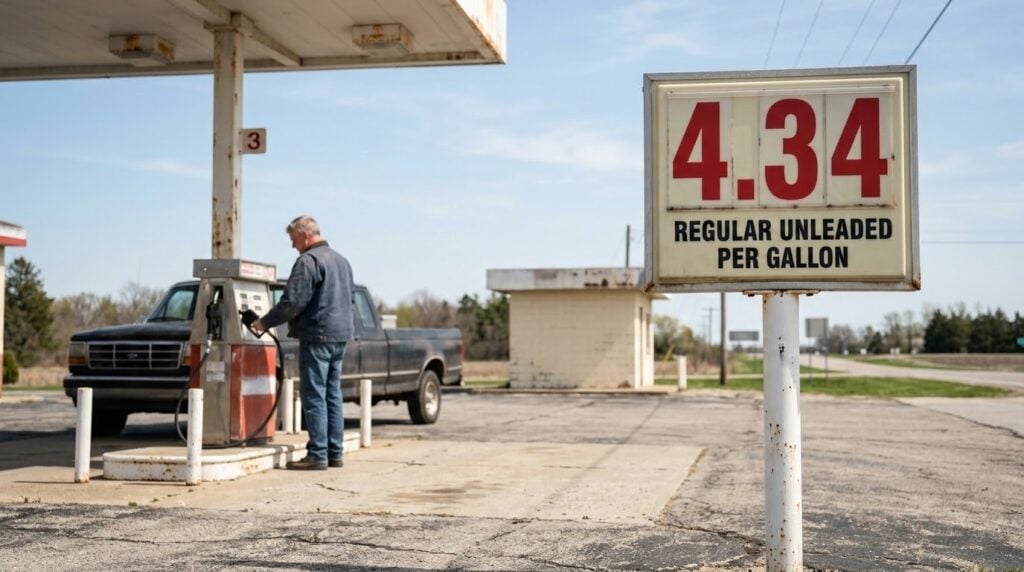
Outside Pittsburgh, a woman who voted for Trump in 2024 and lives on a fixed income told NPR she now uses discount apps to find the cheapest gas station in her area. “I feel very frustrated and kind of shocked when I think about it,” she said. “That was a conversation for sure at the gas station.”
A Philadelphia voter who also backed Trump connected the math plainly: “High gas prices lead to high grocery prices and other prices.”
These are not Democratic talking points. They are Republican voters calculating what they were promised against what they are paying. Trump promised low gas prices, but they’re now among the highest rates in the 2000s. Conservative pollster Whit Ayres put it in plain terms: “Based on the perception of American consumers, the economy has not gotten better, and inflation has gotten worse. That’s a problem when you’ve run on a promise of lowering inflation.”
The numbers confirm what voters are saying. Trump’s economic approval dropped to 30% in April from 38% in March, per AP-NORC. The share of Republicans who say Trump’s policies have made the cost of living rise is up 25 points since last year, per CNN. A Fox News poll found that for the first time since 2010, more voters trust Democrats than Republicans to handle the economy. The Republican-led Congress has no unified affordability plan with less than six months before the midterms.
What This Means for Your Retirement Window
For households within ten years of retirement, the cost-of-living drift is not a political story. It is a purchasing-power story.Trump promised low gas prices, but households are now dealing with high fuel prices, expensive electricity charges, and prohibitive grocery bills.
Every dollar gas rises above the campaign promise is a dollar that does not go toward savings. Every grocery receipt that runs higher than 2024 levels compounds across months and years of a retirement window that cannot absorb it. Social Security adjustments lag behind real inflation. Medicare costs are rising. The math that made a retirement plan look solid in 2024 looks different when both gas and groceries are running more than a dollar per gallon above where the candidate said he would take them.
Financial planners who work with pre-retirees in rising-price environments consistently point toward hard assets, positions that historically hold purchasing power when the dollar loses ground. Precious metals have served that function across decades of inflationary cycles. For readers thinking about how to protect the value of what they have already saved, that conversation is worth having now, before the retirement window closes further.
Frequently Asked Questions:
What did Trump specifically promise about gas prices?
On October 18, 2024, at a rally in Detroit, Trump said: “I will cut your energy prices in half within 12 months.” He also repeatedly promised gas would fall below $2 a gallon and made low energy prices a central pillar of his 2024 campaign platform.
What is the national gas price average right now?
As of early June 2026, the national average is approximately $4.34 per gallon according to AAA, more than double Trump’s $2 target and the highest average since 2022. The spike followed the U.S. entry into the Iran conflict on February 28, 2026.
How many Republican voters disapprove of Trump on the cost of living?
An AP-NORC poll conducted April 16-20, 2026, found that 47% of Republican voters disapprove of Trump’s handling of the cost of living. Among MAGA-identifying Republicans specifically, 9 in 10 approve of his overall job performance, but only 7 in 10 approve of his cost-of-living handling, a 20-point gap.
Why did gas prices spike if Trump was drilling more?
Domestic production hit record levels under Trump’s first year back in office, over 13.6 million barrels per day in 2025. But global oil prices are determined by supply and demand across international markets. When the U.S. entered the Iran conflict, it disrupted oil shipping through the Strait of Hormuz, a chokepoint for roughly 20% of the global oil supply. That disruption overrode domestic production gains and drove prices higher regardless of how much the U.S. was drilling.
Are high gas prices hurting Republicans heading into the midterms?
The data points in that direction. A Fox News poll found that for the first time since 2010, more voters trust Democrats than Republicans on the economy. Cook Political Report finds Democrats hold a 6-point advantage in the 36 House districts most likely to decide which party controls the lower chamber. Republican strategists have privately acknowledged the cost-of-living drag in internal sessions, with some urging an economic pivot before November.
Reader Poll: